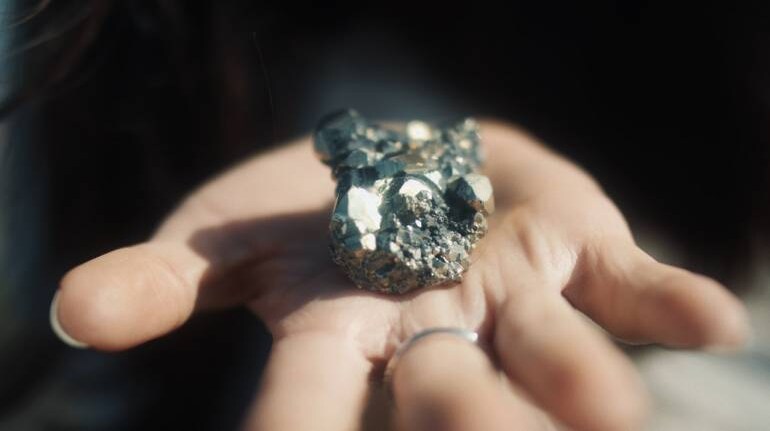
Essel Mining and Industries Limited (EMIL), a subsidiary of the Aditya Birla group, has been unable to operationalise a big diamond project in Madhya Pradesh. The Aditya Birla group has a presence in over 36 countries and revenues worth $46 billion.
The mine is inside a forest in Buxwaha, located 200 kms from Sanchi, a sleepy town synonymous with stupas — hemispherical structures containing relics of the Buddha.
With a potential haul of about 34 million carats of rough diamonds valued at a whopping Rs 55,000 crore, the Bunder diamond block could be among Asia’s largest mines. It has the potential to make India among the world’s top ten rough diamond producers.
In India, Andhra Pradesh (AP), Chhattisgarh, and Madhya Pradesh (MP) are the three states that produce diamonds. Among them, MP accounts for about 90 percent of the country’s diamond resources.
EMIL has flagged its concerns to the MP government, expressing its apprehension about the “violent atmosphere” in the Buxwaha forest and “serious disruptions” caused by a section of the locals under the garb of ``environment protection.”
“It is virtually impossible to work in Buxwaha. It is very tough, there are disruptions all around. The atmosphere is not at all conducive,” a top source at Essel Mining told MoneyControl. “A handful of people are vitiating the atmosphere and creating nuisance, whereas the majority of the villagers want mining to happen,” he said.
The Bharatiya Janata Party (BJP) government in the state has not been able to resolve the crisis.
The Madhya Pradesh government had given the lease to the Mumbai-based company following an open bidding process.
Prior to EMIL, the mining zone was explored for five years and eventually handed over to Rio Tinto of Australia in 2012. The global mining giant secured the requisite project approvals from the Indian Bureau of Mines (IBM) in August 2013. Rio Tinto also got an environmental clearance in August 2015. Yet, it could not mine the diamonds (possibly because the atmosphere then was very volatile due to protests by activists), handed back the project to the state government, and left.
The state government, which had allocated a whopping 954 hectares to Rio Tinto for mining, reduced the area to 364 hectares, almost a 60 percent reduction, aimed at conserving the overall environment.
The block was auctioned again. Quoting a revenue share of 30.05 percent to the state government, EMIL won the block on December 19, 2019. The MP government was to get Rs 275 crore for granting the lease and earn a whopping Rs 28,000 crore over the lifetime of the project.
But activists still opposed the mine. These included Narmada activist Medha Patkar, Yogendra Yadav of Swaraj India, and Ishwar Chandra Tripathi, who calls himself Vindhyachal Lion. Some of the other activists belong to the Left parties, and the radical students’ body AISA (All India Students Association).
The local administration at Sagar, the administrative division under which Buxwaha forest falls, claimed that none of the activists had visited the area to be mined. Nor had they asked the villagers whether they wanted the mine, or whether they wanted the forests instead.
“It will be sad if Essel backs out. There will be no development of the region. Essel should have spoken to the villagers and developed the mines,” Avinash Chanchal, a respected social worker in Sagar, told MoneyControl.
“The locals want development, which Rio Tinto had started. These activists came and ruined the plot,” said Chanchal, adding: “It is the loss of Sagar, the loss of the villagers. Even the state government is falling for this vicious propaganda.”
The controversies surrounding the Bunder project have a striking similarity with the coal mine next door in Chhattisgarh. There, the Adani group is being pilloried for mining coal as a contractor for the Rajasthan government, which needs coal for its power stations.
The activists in Sagar argue without any rationale, scientific or otherwise. Tripathi, one of the most strident voices against the Bunder diamond project, told MoneyControl that he believed the entire forest cover of Buxwaha would be destroyed due to mining.
“India’s top diamond merchants have brought shame to the nation. We do not want diamonds, everything will be destroyed in Buxwaha,” Tripathi told this reporter.
"Diamonds are products for the rich. The masses do not need diamonds, they need jobs, food, homes, argues Tripathi. He says a huge tribal population would be displaced if the mine starts operations," he added.
Photographs of activists hugging trees in the jungle that would purportedly be mined have spread through social media. They present a narrative about the rich snatching resources from the poor, who only have the forests for their livelihood.
“But this is not the reality,” said Ramesh Singh, a veteran politician in Sagar. Singh told MoneyControl that the mining issue had snowballed into a needless war of words. “The state government has sanctioned the mine, the villagers want the mine, but the activists are creating needless trouble.”
So what is the reality?
The images of activists hugging the trees are from a location that is more than 15 kilometres away from the site of the mine, he says.
Sankalp Jain, an activist, said in a telephonic interview that hugging the trees was a symbolic act. Asked if the site actually has loads of fruit-bearing trees that the tribals / villagers live off, he said he was unaware if a census had been done regarding the same.
Manish Jain, a local shopkeeper of Sagar, said the furore over trees being felled for the project is misplaced.
Essel has not said that it will fell 2.15 lakh trees, the process will be phased over a decade and half. This is per the agreement signed with the state government. Scientific practices will ensure optimal use of land, and an estimated 383,000 trees will be planted. Which is 1.8 times the trees currently in place. The plantation drive will start ahead of the proposed mining operations in 2023.
The first tree will be felled for the mine in 2024, followed by the phased felling over 15 years.
On the issue of human displacement, Manish Jain said, "There are no villages within the lease area. The nearest, Sagoria village, is more than two kilometres away. So, no one is being impacted. The demand of the activists for rehabilitation and resettlement is unreasonable. It is a way to fleece cash from corporations."
Residents of Sagoria village told this reporter that they had benefitted when Rio Tinto was involved in the mining project. “The Australian company had set up 10 borewells near the forests, including in our village. It was of great help. Then they left one day and all development work stopped,” says Atma Ram, a villager.
Though Rio Tinto did not specify a reason for their exit from the project, a team of researchers analysed the likely reasons in a study published in May 2021. “Rio might have left because the diamond business was falling around the world, and is predicted to fall further as more diamonds are mined in African countries and Russia,” said Kuntala Lahiri Dutt, one of the authors of the study, and Professor at the Resource, Environment and Development (RE&D) programme of the Crawford School of Public Policy in the Australian National University, Canberra.
Villagers say they are aware that the project will generate over 4,000 jobs for locals. “We have been told we would be stakeholders in the project ,” says Ashok, another villager.
Ashok says that villagers do go inside the forest to collect firewood, but not from the area of the proposed mine as it is far from where they live.
“Activists claim that 7,000 tribals will be displaced, but there are only 1,000 tribals around the area. The number was authenticated by the state government last year,” Ashok added.
Sagar, a highly-parched region, is badly in need of development. “A large number of people in Sagar are anaemic and need help. We need more hospitals,” says Dr Raviraj Mahariya, a physician at Sagar’s only government hospital that is bursting at the seams with hundreds of patients.
“We cannot expect the government to do everything. Rio Tinto took charge of 15 villages and helped people with medical support, water resources, and schools. We need such work in and around Buxwaha,” adds Dr Mahariya.
What about the medicinal plants that the activists claim will be severely impacted because of the mining?
Sagar’s leading ayurvedic physician, Dasharat Lal, says he sources medicinal plants from Uttarakhand, Chhattisgarh, Odisha, and Bengal. “The only fruit we source locally is Baheda (Terminalia bellirica).” Interestingly, the fruits are collected mostly from the state’s Malwa region. Ayurvedic practitioners consider the astringent fruit a laxative. The Hindus of north India avoid this tree as they feel it is inhabited by demons.
The Buxwaha forest also has the Indian gooseberry, or Amla, and Mahua flowers, used for medicines and country liquor, respectively. The trees also produce edible, almond-flavoured seeds known as Chironji, used in ayurveda and unani medicine. Earlier, the tribals would be exploited and offered salt for the seeds. But now the state government has formed a forest management team and each family has a designated area of collection, and trades their pickings in the local markets.
Manish Jain says the noise over the 30,000-year-old rock paintings is entirely motivated. “It is half of a painting on one big rock, located 15 kms from the site of the mine. How can the activists say the mine will destroy the painting?”
In Bhopal, Pradyumna Singh, the BJP legislator from Bada Malhera, 45 kms from Sagar, said the state government will ensure that EMIL follows every environmental norm. He added that EMIL and the state government are mandated to plant 15 trees for each one that is cut. “Why would the state government allow Essel to violate norms?”
Singh said he has studied the wildlife in the Buxwaha region, which has a sparse population of chinkara, sambar, and chital deer, and a few black panthers. “The mines are located far from the region inhabited by these animals. Nor is it a tiger reserve or an elephant corridor,” Singh explained. Singh said his observation is based on a government survey conducted in the region as recently as 2020.
“Mining must start, the economy of Madhya Pradesh must grow,” added Singh.
An official of the Madhya Pradesh Industrial Development Corporation (MPIDC) said, "EMIL has not walked out of the project. There is a stalemate, and that has gone on for long." He added that a meeting to discuss the project is slated for next month, and was hopeful that the deadlock would be resolved shortly.
Discover the latest Business News, Sensex, and Nifty updates. Obtain Personal Finance insights, tax queries, and expert opinions on Moneycontrol or download the Moneycontrol App to stay updated!
Find the best of Al News in one place, specially curated for you every weekend.
Stay on top of the latest tech trends and biggest startup news.