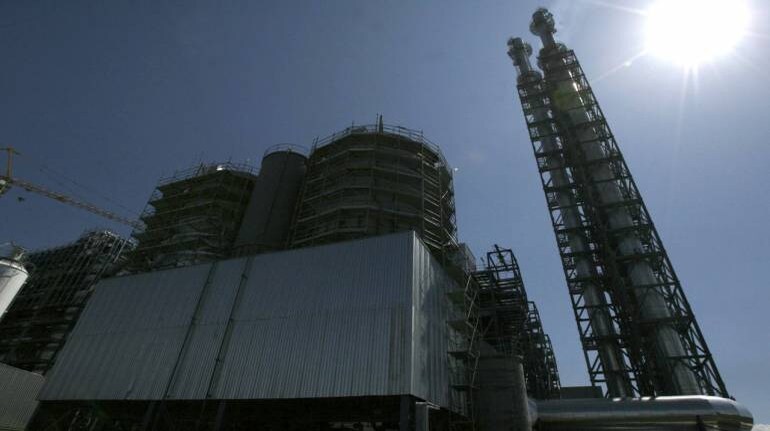
The government’s intent to tap waste-to-energy (WtE) solutions to close old landfills is opening the sector up to private investment, away from the traditional urban local bodies (ULBs) that have spearheaded these projects so far.
In a fresh attempt to tame the mountains of waste at India’s oldest landfill, in Deonar, an eastern suburb of Mumbai, the Brihanmumbai Municipal Corporation (BMC) has proposed a new WtE plant that can process about 600 tonnes of municipal waste a day and generate four megawatts (MW) of electricity.
The Rs 504-crore plant received environmental clearance from the Union Ministry of Environment, Forest and Climate Change earlier this month and is now awaiting approval from the State’s Pollution Control Board (PCB).
In some ways, this plant heralds the return of large WtE plants, which so far had a chequered history in India, managing a small amount of waste to produce a smaller, but very expensive amount of energy. However, they are back in focus after Prime Minister Narendra Modi launched Swachh Bharat Mission 2.0 last October, focusing on processing the 1.5 lakh tonnes of municipal waste generated in the country every day.
A key guideline of the mission is to also provide budgetary support to dismantle waste heaps at dumpsites in 4,372 cities and reclaim this land before March 2023. The Deonar dumpsite, for instance, covers an area equivalent to 247 football fields and is estimated to hold 120 lakh tonnes of waste.
Renewed private-sector interestRam Charan, a Chennai-based chemicals trading firm, recently announced that it has developed technology to convert industrial and municipal waste to energy without harmful residue. It plans to invest Rs 15,000 crore to set up two WtE plants in Tamil Nadu and Gujarat.
In November, India’s largest power producer NTPC agreed to set up a WtE plant in Varanasi for Rs 180 crore.
“To help clean up the environment, we plan to install approximately 40-50 such plants in the next five years,” a spokesperson for NTPC Vidyut Vyapar Nigam (a wholly-owned subsidiary of NTPC) told Moneycontrol. “Each plant will process 500-600 tonnes of waste per day and requires an investment of about Rs 200 crore to set up.”
The company also recently signed a similar agreement with Bhopal’s municipal corporation. NTPC will use the processed waste to create torrefied charcoal, similar to natural coal, to fuel its thermal power plants.
Central government think tank NITI Aayog believes there’s potential to construct 5.7 gigawatts (GW) of WtE plants in India, using everything from urban solid waste and waste from slaughterhouses to distilleries and farm stubble. It has also proposed forming a Waste to Energy Corporation of India, which would set up incineration plants through public-private partnership models, to handle a portion of the 62 million tonnes of municipal waste generated in India annually.
The Ministry for New and Renewable Energy (MNRE), on its part, is offering these projects a 7.5 percent interest subsidy and incentives to ULBs to provide feedstock (a reliable supply of municipal solid waste) free of cost.
A poor recordThe technology used in WtE projects varies depending on the kind of waste used as feedstock (e.g. biodegradable, construction, biomedical waste), the processing involved (combustion, gasification, anaerobic digestion) and the energy produced (electricity, bio-methane or biogas).
WtE projects in India have struggled to be financially and ecologically sustainable in the past. Often, ULBs have failed to reliably supply adequate feedstock, which is particularly important for biogas plants that need to be temperature-controlled. When they did receive feedstock, the lack of segregation at source disrupted the ideal waste composition suited for the plant’s design.
In addition, the cost of power generated by such plants was prohibitive. Power distribution companies balked at the recommended tariff of Rs 7 per kilowatt hour (kWh) of electricity from WtE, especially at a time when prices of solar and wind power had fallen to under Rs 3 a unit.
New tenders from cities“Despite many WtE projects doing poorly in the past, more recently, the concept is starting to become popular again, especially in cities where large quantities of solid waste are generated,” says Sanjeev Nimkar, Managing Director of Kirloskar Oil Engines. His company has tied up with Pune-based Urja Bio Systems to set up WtE plants that can convert wet (recyclable) waste to biogas, which can then generate power with Kirloskar’s biogas generator sets.
“In the last two years, we have seen quite a lot of tenders come from municipal corporations for biogas and WtE plants. Funds have been low during the pandemic but it’s coming back now. About 70-80 percent of the demand is for handling municipal waste,” Nimkar said.
The Indian Biogas Association has estimated that with the government keen to set up 5,000 biogas plants by 2022, where each project costs Rs 40-50 crore, the potential for investment in equipment alone could be upwards of Rs 2.5 lakh crore. The Reserve Bank of India (RBI) has also extended priority sector lending status to biogas plants, making financing for new projects relatively easy.
“At Rs 48 for a kilo of bio-CNG (compressed natural gas), biogas plants are starting to become financially feasible,” a spokesperson for the association told Moneycontrol. “If municipalities can guarantee daily feedstock, the private sector is waiting to invest in waste-to-energy plants.”
Legacy landfills can be cleared through biomining and bioremediation, a process that uses micro-organisms to extract materials of economic value from legacy waste, primarily enriched soil, apart from recyclable materials.
Registered firms such as Zigma Global Environ Solutions, Prakash Constrowell and Bhavani Bio Organics-Coromandel International have ongoing biomining projects in Tamil Nadu, Maharashtra and Andhra Pradesh, according to a 2020 report by the advocacy group Centre for Science and Environment (CSE).
Is it really clean?The Mumbai project, which will simply incinerate the heaps of waste at Deonar, comes at a time when developed countries are turning away from WtE incineration, given that the carbon-intensive process negates global goals of carbon neutrality. The combustion process has been criticised for releasing invisible particulate matter, gaseous pollutants and carcinogens into the atmosphere. In 2021, certain European financial institutions classified waste incinerators as projects that “do significant harm”, withdrawing financial support.
The Mumbai plant is being built in the face of stiff resistance from local residents and environmentalists, who have made repeated representations about the harmful emissions and low power-generation capabilities of waste incinerators.
“Indian cities have a lot of homework to do before they start setting-up WtE plants,” Siddharth Singh, Deputy Program Manager – Environmental Governance and Solid Waste Management, told Moneycontrol.
“Before we arrive at a proposed plant’s processing capacity, we need to know what the composition of waste that each city generates is. This is different in every city but nobody has worked this out yet. In India, about half of all the municipal solid waste generated is organic but most WtE plants use Western technology, which needs a higher percentage of non-biodegradable waste,” Singh pointed out.
The BMC has been planning for a scientific closure of the Deonar dumpsite since 2005. In 2016, the local body floated its first tender for a WtE plant with a capacity of 24 MW; two more tenders followed in subsequent years, each for a WtE plant of 10 MW capacity. No bidders showed interest.
“I don’t think we’re doing anything really different this time compared to the older WtE plants,” Singh said. “Although Deonar is not an active dumpsite anymore, it has been used as one for a hundred years. We don’t know the composition of this legacy waste and the corporation has not allowed us to study it. If investment is coming from the private sector or development banks into WtE again, we must channel it into better projects than one that is simply incineration-based.”
Discover the latest Business News, Sensex, and Nifty updates. Obtain Personal Finance insights, tax queries, and expert opinions on Moneycontrol or download the Moneycontrol App to stay updated!
Find the best of Al News in one place, specially curated for you every weekend.
Stay on top of the latest tech trends and biggest startup news.