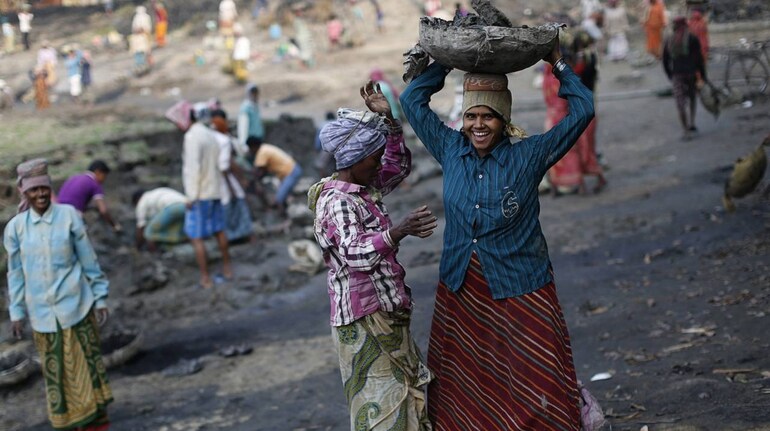
The Viksit Bharat-Guarantee for Rozgar and Ajeevika Mission (Gramin), or VB–G RAM G 2025, is the government’s most ambitious reset of rural employment policy since MNREGA was launched in 2005.
At its core, the new law guarantees 125 days of wage employment per rural household, up from 100 days under MNREGA, for adults willing to do unskilled manual work. But the bigger shift is philosophical: this is no longer just about short-term wage support. It is about using public employment to build durable rural infrastructure, aligned with the government’s long-term Viksit Bharat 2047 vision.
The Act channels all work into four priority verticals:
Every asset created is mapped into a single digital backbone, the Viksit Bharat National Rural Infrastructure Stack, linking village-level works with national planning systems.
How this law breaks from MNREGA
The government is pitching VB–G RAM G as a structural upgrade, not a cosmetic tweak.
More guaranteed work
100 days becomes 125 days, a 25 percent increase in income potential for rural households.
Fewer works, sharper focus
MNREGA allowed a long list of permissible works, often resulting in scattered assets with limited long-term value. VB–G RAM G narrows this to four infrastructure-heavy verticals, explicitly prioritising durability, productivity, and climate resilience.
Planning moves from ad-hoc to mapped
Every Gram Panchayat must prepare a Viksit Gram Panchayat Plan, spatially integrated with national platforms like PM Gati-Shakti. The intent is to stop 'dig–fill–repeat' projects and replace them with coordinated, location-specific planning.
From open-ended demand to normative funding
The scheme shifts to normative funding, using objective parameters for budgeting. Crucially, the legal guarantee remains: if work is not provided, the state must pay unemployment allowance.
Why the government says MNREGA had run out of road
MNREGA was designed for a very different rural India.
Since 2011–12, official data shows sharp declines in poverty, rising consumption, deeper financial inclusion, and more diversified rural livelihoods. Against that backdrop, the government argues that MNREGA’s open-ended, demand-driven model became misaligned with today’s rural economy.
There were also hard governance problems:
What this means for the rural economy
If implemented as designed, the economic impact could be broader than wage support.
Water security as the anchor
Water-related works sit at the top of the priority list. The government points to Mission Amrit Sarovar, which has created or rejuvenated over 68,000 water bodies, as proof that asset-led employment can lift farm productivity and groundwater availability.
Infrastructure that feeds markets, not just muster rolls
Roads, connectivity, storage facilities, and local markets are meant to reduce transaction costs, boost rural enterprise, and link villages more directly to markets.
Climate resilience baked in
Flood drainage, soil conservation, and water harvesting are no longer add-ons. They are central to the scheme, reflecting the growing economic cost of extreme weather.
Higher incomes, lower distress migration
An extra 25 days of guaranteed work raises household earnings and consumption, while stronger local infrastructure is expected to reduce migration driven purely by distress.
What changes for farmers
Farmers were often vocal critics of MNREGA during peak agricultural seasons. The new law tries to address that friction.
States can now notify up to 60 days, aggregated over the year, when public works stop during sowing or harvesting. The idea is to:
At the same time, farmers benefit from better irrigation assets, storage, connectivity, and climate-proofing — infrastructure that MNREGA often promised but delivered unevenly.
What changes for labourers
For workers, the gains are tangible but conditional on execution.
Workers also gain indirectly from the assets they help create, roads, water systems, and livelihood infrastructure that shape daily life in villages.
The funding shift that raises eyebrows
The move from demand-based to normative funding is the most controversial change.
The government argues this aligns rural employment with how most Union schemes are budgeted, improves predictability, and avoids last-minute cash crunches. It insists the legal guarantee remains intact, backed by:
Critics, however, will be watching whether budgeting discipline quietly becomes a cap in practice. The test will be whether workers actually receive work when they ask for it.
Centre-state reset: why it matters
VB–G RAM G becomes a centrally sponsored scheme, not a purely central one.
On paper, VB–G RAM G is sharper, more targeted, and more ambitious than MNREGA. It promises more work, better assets, tighter monitoring, and cleaner governance.
Discover the latest Business News, Sensex, and Nifty updates. Obtain Personal Finance insights, tax queries, and expert opinions on Moneycontrol or download the Moneycontrol App to stay updated!
Find the best of Al News in one place, specially curated for you every weekend.
Stay on top of the latest tech trends and biggest startup news.