






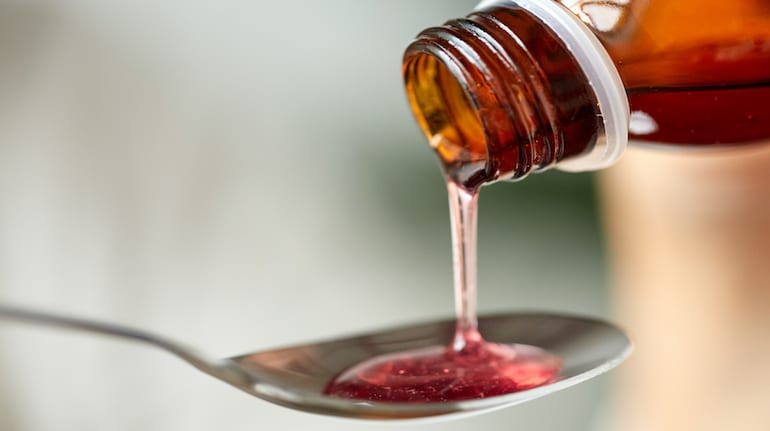

Drug Controller General of India (DCGI) Rajeev Singh Raghuvanshi said on February 23 that the drug regulator has undertaken one of its most extensive quality crackdowns so far in the past year, and the authorities have audited more than 90 percent of the country’s cough‑syrup manufacturers.
The regulator has inspected around 1,100 facilities, or 90 percent of cough syrup-making plants, physically visiting plants and taking enforcement action wherever serious lapses were found.
Speaking on the sidelines of the 11th Global Pharmaceutical Quality Summit organised by industry body Indian Pharmaceutical Alliance (IPA) in Mumbai, Raghuvanshi said the intensified oversight—which mirrors the rigor of India’s risk‑based inspection programme—was aimed at cleaning up a category that has come under global scrutiny.
He declared that regulators expect to “remove the rot of cough‑syrup manufacturing” by the next production season, noting that additional initiatives taken alongside the audits would help ensure higher‑quality syrups for both domestic use and exports.
The regulator believes these interventions will permanently strengthen manufacturing standards in a sector that has faced multiple red flags.
Expanding oversight
Raghuvanshi said the risk-based inspections based on Revised Schedule M of India's Drugs and Cosmetics Rules are being conducted across facilities, irrespective of whether they are medium, small and micro enterprises (MSMEs) or bigger pharma companies. The extension deadline given to MSMEs with an annual turnover of less than Rs 250 crore to comply with the Revised Schedule M (GMP) norms has ended on December 31, 2025.
Raghuvanshi highlighted that India introduced a Corrective and Preventive Action (CAPA) system in April 2025 for all Not of Standard Quality (NSQ) drug samples. Under this system, whenever a product fails on key parameters such as assay, dissolution, impurity, or other major quality metrics, the manufacturer is issued a formal CAPA notice and the product’s manufacturing licence is suspended until a satisfactory CAPA response is submitted.
He said that regulators have already issued about 850 CAPA notices in 10 months, but not a single manufacturer has yet submitted an acceptable CAPA response.
“We initiated the CAPA system… If the products are coming as NSQ because of these four parameters… then we issue a CAPA notice to the manufacturer… and the licence is suspended till we get a satisfactory CAPA. Till now, we have served about 850 CAPA notices in the last about 10 months and… we are still waiting for the first CAPA to come back. This tells us the system is pushing and not accepting just formality submissions.”
He emphasised that this single initiative, if continued rigorously, will “weed out all the issues with quality manufacturing” by forcing non‑compliant companies to either improve or exit the market.

Discover the latest Business News, Sensex, and Nifty updates. Obtain Personal Finance insights, tax queries, and expert opinions on Moneycontrol or download the Moneycontrol App to stay updated!
Find the best of Al News in one place, specially curated for you every weekend.
Stay on top of the latest tech trends and biggest startup news.





