IT parks in Kerala have been witnessing a surge in infrastructure investments in the last few years, reflecting the strong interest by IT companies to operate from the state.
Though Technopark in Thiruvananthapuram came into existence as the first IT park in the country, Kerala could not capitalise on it. By the time Infopark in Kochi and Cyberpark in Kozhikode started operations in the first decade of this millennium, other states had progressed far ahead.
Despite the presence of biggies like TCS, Infosys, Wipro, Cognizant and UST, the parks are still dominated by medium and small companies. This scenario is fast changing. With the outbreak of the pandemic, native IT employees who were working in bigger cities outside the state are now re-locating to Kerala.
The fourth phase of expansion of Technopark is taking place at Pallipuram, around 9 km from the present park. The planned integrated township is named Technocity. Last year, IBM announced its plan to start a software lab in Kochi.
Unstinting support from the Left Democratic Front (LDF) government, led by Chief Minister Pinarayi Vijayan, has helped in attracting more private infrastructure firms to build space in the parks.
The government has encouraged construction by co-developers and the IT firms themselves. Today, big groups such as Embassy, Brigade, Lulu and Trans Asia Shipping have been creating more space in these parks, with their IT realty projects. Several existing firms, like IBS and TCS, also have been expanding their facilities.
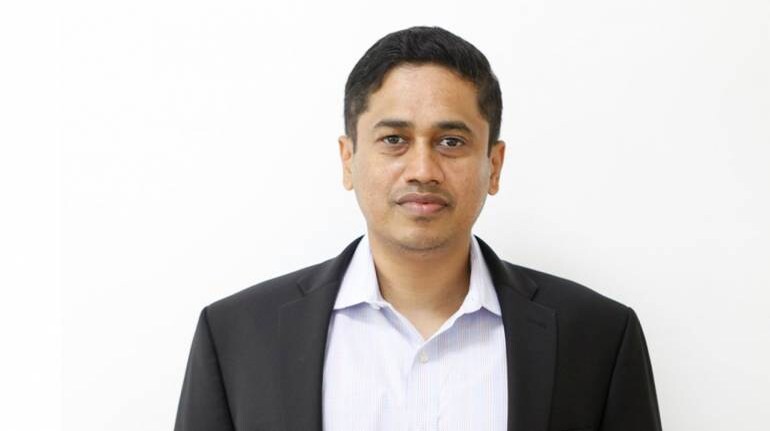
In an interview to Moneycontrol, John M Thomas, CEO, Kerala State IT Parks, spoke about the changing environment in the IT parks and his efforts to make the state a top destination in the IT space.
Excerpts:The last few years have seen increasing infrastructure investment in the IT parks in Kerala. What are the reasons?The IT sector, in general, in the country is seeing exponential growth. The net export revenue is expected to go up from $150 billion to $350 billion by 2025. With the push given by the state government, we will be able to capture a proportionate part of this growth.
Kerala has been promoting the co-developer model in expanding space in the IT parks. This has helped in attracting more IT firms. We have been looking at major partnerships between the government and the private sector. Several companies are scouting for space with our co-developers as well as with us.
A lot of development is happening slowly, and we expect its cascading effect in the years to come.
How much space will be added in the next few years? What is the likely investment by co-developers?We will add 1 crore sq ft space in the next five years. This will incur an investment of around Rs 5,000 crore. At present, we have 2 crore sq ft of space in all the IT parks. This took over two decades to build.
Ongoing flagship projects include the Embassy Taurus Downtown project in 20 acres in Technopark phase 3, the TCS Aerospace hub and the World Trade Centre (WTC) of the Brigade group at Technocity, which is Technopark phase 4.
The new campus of IBS and those by Caspian Tech Parks and Cloud Scapes are coming up at Infopark, Kochi. Brigade has completed a WTC in Infopark, which, along with Lulu Cyber Park and Trans Asia Cyber Park, are already leasing out spaces. Most of the current developments are evenly spread out in Thiruvananthapuram and Kochi.
What is the growth, export revenue and employment you are expecting from these projects?We are looking at a double-digit growth in the next few years. We may grow even faster, if we do things right. The current export revenue is Rs 15,000 crore. We are expecting it to increase by Rs 12,000-Rs 15,000 crore in the next five years.
Last year, the Cyber Park in Kozhikode registered the highest growth, followed by Infopark as the tech space built up earlier got occupied and companies started generating revenues.
But this could be cyclical as Technopark fell behind for want of space. This may change. The next few years may see a spike in revenue from Technopark and Infopark.
IT parks in Kerala have 1,080 companies, with a workforce of 1.25 lakh. By 2025, we hope to generate employment for another 1-1.25 lakh. The objective of the government is to exceed that.
Mid-size and small companies account for a major share of the space in the IT parks. Will they continue to hold sway?Though dominated by smaller companies, the top 10 companies account for 70- 80 percent of the workforce. But the announcements by big companies have been fewer. We have been promoting small and mid-size companies, which may become huge corporations in future.
We are holding talks with several companies, both from India and outside, the names of which we cannot reveal now. We have been getting a lot of enquiries from mid-size companies in West Asia.
After COVID-19 struck, a lot of IT workforce relocated to Kerala to work from home. Will we be able to attract more talent to Kerala as techies have earlier preferred cities like Bengaluru or Delhi for various reasons, including greater scope for recreation?After COVID-19, IT companies are now evaluating whether they should prefer satellite offices in smaller towns, instead of those in larger cities, and how to address attrition by allowing employees to work from smaller towns.
We need to think about how to fit into these plans.
It is a great opportunity for us to make people from other parts of the country feel comfortable working from Kerala. Relocation has happened evenly across the state, perhaps mirroring the demographic concentration of the state.
We are working on creating more recreational facilities in the parks. The Chief Minister has already announced that alcohol facilities will be allowed inside IT parks. It is only a part of the equation. Building walkways, jogging tracks, sports facilities and reducing pollution inside the parks are also part of the plan.
We have done a lot of green initiatives in Technopark -- like solar lighting, rainwater harvesting, EV charging stations, etc. The 300-acre Technocity is coming up as an integrated township with commercial and residential spaces. We are planning a major facelift for Infopark, including building walkways, in the next one year. A football turf is on the anvil in Kozhikode.
Besides metro rail and water metro connectivity, we are going for a four-lane access from Kochi Infopark to NH 47. If we have facilities for employees to get in and out in 30-45 minutes, it will be a huge selling point over Bengaluru, which is notorious for traffic woes.
Will you be strengthening the satellite parks at Cherthala, Koratty and Kundara?At this point of time, there is no demand for these parks. People prefer to work in larger cities. Also, you need to roll out more incentives for decentralised IT development, which takes a lot from the government kitty. There is a natural incentive for companies to operate in larger cities. It is also cost-effective from the government point of view.
Which IT sectors are in demand and how do you plan to attract talent?There is a huge demand for data scientists. Analytics and cloud data platforms, especially around products, and artificial intelligence are the other popular segments. Emerging fields like blockchain and augmented reality, too, have takers.
Kerala has a good availability of talent. We have not capitalised on this. We have around 50,000 people graduating out of engineering colleges a year. We need to focus on training these people. The skilling institutions started by the Kerala government, like ICT Academy, ASAP Kerala and Kerala Digital University are a step in the right direction.
A major reason for the success of Bengaluru as an IT hub is the abundant talent pool. When a lot of talent is available, the risk of setting up a unit or expansion goes down.
How does the turnover rate in Kerala compare with other cities in the country?The turnover rate is half of that in the country. This is a positive factor. In places like Bengaluru, it is easier to build a team but difficult to keep it. But in Kerala, it is a bit more difficult to build a team but easier to retain it.
Do you have a role in helping the co-developers in marketing their projects since only when buildings are fully occupied, the venture can be said to be a success?Though we don’t give any assurance, we need to ensure that the co-developer model is successful. We try to balance their master plan by making sure that there aren’t too many residential complexes or too few IT projects in their model.
If they don’t have a specific facility like school or hospital, we will develop it or invite someone to do it.
We also assist them in marketing. If they are not going for an IT or IT realty conference, we take a delegation and introduce Kerala as a destination with a number of things on offer. This is a better and more powerful proposition than the co-developer doing it alone. Additionally, it provides more opportunities for investment in Kerala.
Will the pandemic and the work-from-home (WFH) model affect your plans for the parks?We don’t think so. Once the COVID wave is over, many IT companies may follow a hybrid model of WFH and office. There are some companies that need to work from offices for reasons related to information security, client mandate etc.
Companies can’t totally avoid operating from office as work from office fosters employee development by helping new staff to interact with experienced employees that aid in their professional growth.
Discover the latest Business News, Sensex, and Nifty updates. Obtain Personal Finance insights, tax queries, and expert opinions on Moneycontrol or download the Moneycontrol App to stay updated!
Find the best of Al News in one place, specially curated for you every weekend.
Stay on top of the latest tech trends and biggest startup news.