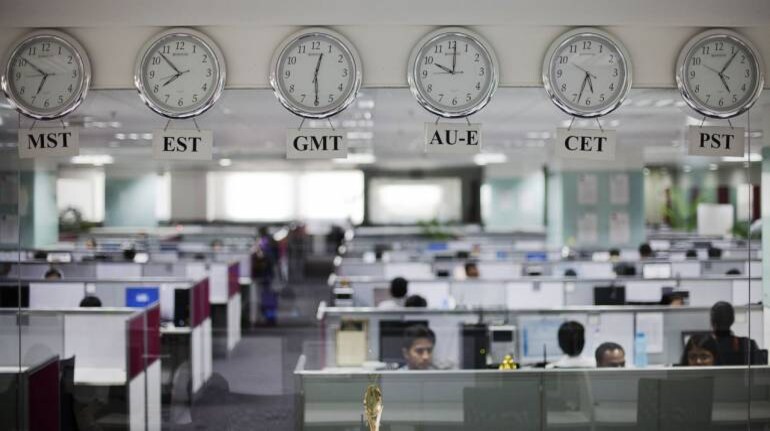
The Centre on Thursday did away with the onerous Other Service Provider (OSP) regulations and issued new guidelines for the IT/ITeS industry. For an industry that employs close to 50 lakh people, this is a significant development and removes the excess compliance burdens, say industry leaders.
IT industry body National Association of Software and Service Companies (NASSCOM), said in a statement that the new guidelines will tremendously reduce the compliance burden of the business process management (BPM) industry.
Nandan Nilekani, non-executive chairman, Infosys, in a tweet said: “The reforms of OSP regulations for BPO/BPM industry is breathtaking in its simplicity.”
What is an OSP?
OSPs are companies using telecom resources for its operations like tele-banking, tele-medicine, tele-trading, e-commerce, call-centre operations etc. OSPs are allowed to operate by using infrastructure provided by various access providers for non-telecom services.
But they have to comply with telecom laws and maintain call detail records (CDR), which is a norm even now.
Ashish Aggarwal, senior director and head, policy and advocacy, NASSCOM, explained to Moneycontrol that OSP was introduced in the 1990s when business process outsourcing (BPO) started in India and the Indian telecom industry was going beyond BSNL.
The government then introduced OSP terms and conditions to help the industry grow and ensure that they don’t suffer due to lack of resources. The conditions included registrations for OSP licence, frequent reporting obligation to track the BPO firms and bank guarantees.
Aggarwal explained that what started as a facilitator became a burden as the industry grew over years.
For instance, in an earlier interaction with Moneycontrol, Aggarwal had explained that a company applying for a licence should pay a bank guarantee of Rs 1 crore per office. So, if the company has 76 offices, it should pay Rs 76 crore as bank guarantee. While a large firm can afford this, it is a burden on smaller companies.
Smaller firms and startups, for whom the bank guarantee puts an additional strain, can relax now.
New guidelines
“Requirements such as bank guarantees, frequent reporting obligations, penal provisions etc. have also been removed. Requirements preventing companies from adopting WFH and ‘Work from Anywhere’ policies have also been removed,” Sanjeev Sanyal, Principal Economic Advisor to the Union government, tweeted.
Sanyal’s tweet further said: “The registration requirement for OSPs has been done away with altogether and the BPO industry engaged in data-related work have been taken out of the ambit of OSP regulations.”
Also, with the concept of remote working picking up and OSP relaxed, it gives a company a choice on how they want their delivery model to be.
In addition, a company needs to get approval for work-from-home (WFH) provision for its employees. At the back of the pandemic, this was especially difficult as these companies had to enable WFH for a majority of its workforce. However, the government relaxed it in March and had extended it till December 2020.
These are the pain points the new OSP guidelines have addressed.
Also, even though a company is called OSP only when there is voice-calling involved, these players will have to adhere to security-related compliance, which, according to the industry, is fair.
So what does this translate to?
The idea is to obviously facilitate WFH or 'work from anywhere', which is likely to stay at the back of the pandemic.
For instance, you can have your employee in the North-East or in any remote corner in India and still take advantage of the remote working set up, pointed out an analyst. This is possible since clients of IT firms are warming up to the new normal.
An IT consultant, who engages with top IT firms, pointed out that top clients of IT companies are comfortable with remote working and would like the model to continue. As a result, IT staffing experts had earlier pointed out that close to 25-30 percent of the IT workforce could move to smaller cities and towns in the next five years.
With OSP regulations no longer a constraint, and offshoring (moving talents to low-cost countries like India) picking up, global companies can expand their India operations quickly. Top global companies have back-office operations in India.
Keshav Murugesh, Group CEO, WNS Global Services, said in a statement that for companies, the biggest advantage is that they can tap into a new talent pool such as the young workforce and retired people with domain knowledge who want to work for a few hours remotely.
Discover the latest Business News, Sensex, and Nifty updates. Obtain Personal Finance insights, tax queries, and expert opinions on Moneycontrol or download the Moneycontrol App to stay updated!
Find the best of Al News in one place, specially curated for you every weekend.
Stay on top of the latest tech trends and biggest startup news.