






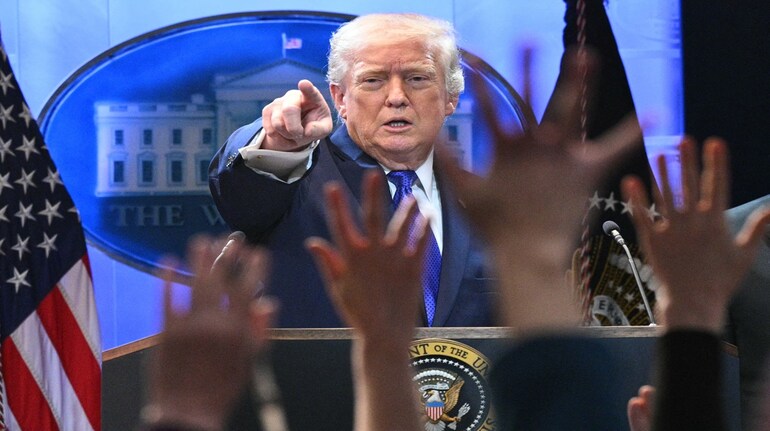

The US Supreme Court, on Friday, struck down President Donald Trump’s sweeping emergency tariffs, a major blow to his second-term trade agenda.
The ruling has, however, left unresolved a critical question - what happens to the $133 billion in tariffs already collected under the 1977 International Emergency Economic Powers Act (IEEPA)?
Companies have already begun filing claims, but the process promises to be complex and drawn out.
Trade lawyers caution that refunds are likely, but navigating the system will be challenging.
Joyce Adetutu, partner at Vinson & Elkins law firm, told the Associated Press, "It’s going to be a bumpy ride for a while. The courts are going to have a hard time. Importers are going to have a hard time. Still, it’s going to be really difficult not to have some sort of refund option given how decisively the Supreme Court repudiated Trump’s tariffs".
According to The Wall Street Journal, the IEEPA tariffs generated roughly $133.5 billion in revenue as of mid-December, accounting for about 67% of all tariff collections in fiscal 2025 and 57% of collections between the end of September and December 14. Including other duties not tied to presidential trade measures, total collections reached around $202 billion during that period, more than double the previous year.
The tariffs included a 10% general levy on imports, along with higher rates for certain countries. Revenue sources included roughly $81.7 billion from general tariffs, $37.8 billion from China and Hong Kong, and smaller amounts from Mexico, Canada, Japan, India, and Brazil. Tariffs on China had peaked at 125%, with an additional 20% levy tied to fentanyl-related imports, before negotiations reduced the rates to 10%.
Trump had defended the tariffs as a core element of his trade strategy, arguing that the revenue could reduce the federal debt, fund citizen rebates, and provide relief to affected sectors, including farmers.
The Supreme Court’s 6-3 ruling found that Trump exceeded his authority under IEEPA, a law originally intended for emergency economic powers, not broad-based tariffs. Two of the three Trump-appointed justices joined the majority.
Justice Brett Kavanaugh, in dissent, slammed the Court for leaving the refund issue unresolved. “The Court says nothing today about whether, and if so how, the Government should go about returning the billions of dollars that it has collected from importers,” he wrote. Kavanaugh warned that “the refund process is likely to be a mess,” echoing language used by Justice Amy Coney Barrett during the case’s November hearings.
Trump himself acknowledged the likely delays, telling reporters, “I guess it has to get litigated for the next two years… We’ll end up being in court for the next five years.”
Meanwhile, Illinois Governor JB Pritzker immediately demanded nearly $9 billion in refunds for his state’s households. "Your tariff taxes wreaked havoc on farmers, enraged our allies, and sent grocery prices through the roof," Pritzker wrote in a letter to Trump, calling for about $1,700 per household, the estimated average burden of tariffs last year.
Cut the check, @realDonaldTrump. pic.twitter.com/NjVJ0tABme— JB Pritzker (@JBPritzker) February 20, 2026
Pritzker shared the letter publicly on microblogging site X, further sharpening the political pressure mounting on the White House to provide restitution.
Ryan Majerus, partner at King & Spalding and a former US trade official, said the government may attempt to streamline refunds, potentially setting up a special portal for importers to claim payments. Legal experts also expect additional disputes, including manufacturers seeking portions of refunds granted to suppliers who raised prices to cover tariff costs.
The end of the IEEPA tariffs could ease inflationary pressures slightly. While refunds, like other tax rebates, could stoke spending and economic growth, the impact on ordinary consumers is likely to be muted. Most of the money collected under these tariffs is expected to return to businesses, not households.
Discover the latest Business News, Sensex, and Nifty updates. Obtain Personal Finance insights, tax queries, and expert opinions on Moneycontrol or download the Moneycontrol App to stay updated!
Find the best of Al News in one place, specially curated for you every weekend.
Stay on top of the latest tech trends and biggest startup news.





