German Chancellor Olaf Scholz on February 22 said the country had halted the certification process of the Nord Stream 2 gas pipeline as a “punitive measure” against Russia for its actions in Ukraine.
Russia has recognised sovereignty of two separatist-held regions in eastern Ukraine and fears are growing that a full-scale invasion is on the horizon.
Follow our LIVE coverage of the Russia-Ukraine crisis hereScholz said his government “decided to reassess the certification of the pipeline” due to the latest developments. Nord Stream 2 has yet to begin operations. The pipeline “will certainly take time” to get started, Scholz told reporters in Berlin.
This is not the first time a western power has threatened the fate of the pipeline over Russia’s moves on its western neighbour.
United States President Joe Biden on February 8 pledged to “end” Nord Stream 2 if Russia invaded Ukraine. He had also stressed unity with Scholz.
Biden has long been an opponent of the decade-old pipeline from Russia to Germany. "If Russia invades, that means tanks or troops crossing the … border of Ukraine again, then there will be … no longer a Nord Stream 2. We, we will bring an end to it," he said. Asked how, given the project is in German control, Biden said: "I promise you, we’ll be able to do it."
So, what is Nord Stream 2 and what can be expected amid recent tensions?
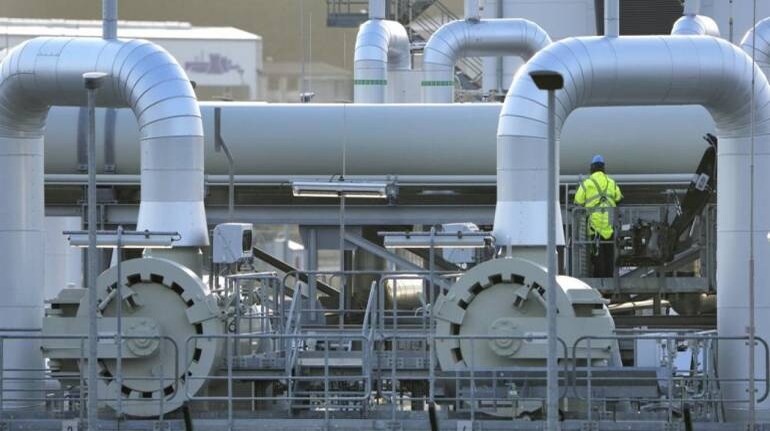
What is Nord Stream 2?Nord Stream 2 is a 1,230-km undersea gas pipeline that runs through the Baltic Sea to Germany’s coast. It directly links Russian gas to Europe and allows state-controlled gas giant Gazprom to transport gas without using existing pipelines that pass through Poland and Ukraine.
Nord Stream 2 runs parallel to Nord Stream and would double its gas capacity to 110 billion cubic meters. Work on the $11-billion pipeline was completed on September 10, 20212 but it is yet to become operational.
Europe imports nearly 40 percent of its gas supply from Russia.
Also Read | Explained: How Western sanctions might target RussiaWhy does Russia want Nord Stream 2?Producer Gazprom said the pipeline would complement existing ones running through Belarus and Ukraine and help meet Europe’s increasing demand for affordable natural gas.
It presents Nord Stream 2 as an alternative to Ukraine’s “aging system which needs refurbishment”, says it saves on transit fees paid to Ukraine, and prevent cut-offs due to payment disputes like in 2006 and 2009.
Gazprom is important for the Russian government, with its sales supporting the country’s budget. Europe is a key market for the company and is also in need of gas as it shifts from nuclear and coal power plants while shoring up on sufficient renewable energy production through solar and wind.
What is the approval hold up?Since its completion, Nord Stream 2 has been filled with gas but is awaiting approval from Germany and the European Commission to begin supply. Scholz’s decision to halt the certification process has now thrown a spanner in the works.
Approvals awaited were from the German utilities regulator which was reviewing compliance in accordance with European regulations on fair competition. This would include a report on how the pipeline would affect energy security.
Scholz’s suspension of the certification means that the report is now being withdrawn.
The action comes after repeated warnings that Russia would “face severe consequences” for its military advances towards Ukraine.
While announcing the sanction, Scholz noted that Russia recognising the two separatist regions “marked a serious break of international law” and a clear signal to Moscow was necessary.
What’s the opposition to Nord Stream 2?White House Secretary Jen Psaki in a tweet welcomed Germany’s move to suspend processes and added that the Biden administration would “follow with its own measures”. Notably, in Congress, both the Republicans and Democrats have long objected to the pipeline in a rare display of unity.
Owned by Gazprom, with investment from several European companies, Nord Stream 2 bypasses Poland and Ukraine (NATO allies), raising objections from both those countries.
The US and NATO allies have expressed fears that the pipeline “increases Europe’s dependence on Russian gas and gives Russia the possibility of using this as a geopolitical weapon”.
Ukrainian President Volodymyr Zelenskyy has described the new pipeline as a powerful geopolitical weapon for Russia, which annexed Ukraine's Crimean Peninsula in 2014 after the ouster of the former Kremlin-friendly president and has thrown its weight behind a separatist insurgency in eastern Ukraine.
The pipeline was approved under Angela Merkel-led Germany and has been a point of contention during US-German meets.
The US only waived previous sanctions against the pipeline after Germany agreed to act in case of Russian attacks on Ukraine or its use of gas as a weapon.
Washington has strongly opposed the construction of Nord Stream 2 but the Biden administration has opted not to punish the German company overseeing the project while announcing sanctions against Russian companies and ships.
Also Read | What are Europe's options in case of Russian gas disruption?Is Europe’s need for Nord Stream 2 immediate?No. German regulators have maintained that the approval process was unlikely to be completed in the first half of 2022. This means that the pipeline was not expected to meet daily needs during the winter such as heating and electricity.
But gas shortages have built distrust against dependence on Russia. The country had held back on short-term sales while powering to completion full-term contracts with European customers. It also failed to fill its underground storage in Europe.
Russian President Vladimir Putin, however, used the shortage as an example for why Europe needs Nord Stream 2, raising concerns the country would use the pipeline as leverage over the continent. He added that the pipeline was a purely commercial project which would strengthen Europe's energy security.
Where alternatives does Europe have?Most of Europe's gas supply comes through Nord Stream 1 pipelines including Yamal-Europe, which crosses Belarus and Poland to Germany. But most countries have cut reliance on Russian gas over the years and there are also more supply routes that bypass Ukraine.
The Center for Strategic and International Studies (CSIS) said Ukrainian transit of Russian gas has been reduced by 70 percent, from over 140 billion cubic meters (bcm) in 1998 to less than 42 bcm in 2021. By last year Ukraine was a transit corridor largely for gas going into Slovakia, from where it continued to Austria and Italy, the CSIS added.
Some countries have other options. For example, Germany, the biggest consumer of Russian gas, can also import from Norway, the Netherlands, Britain and Denmark via pipelines. But Norway, Europe's second largest supplier, is delivering natural gas at maximum capacity and can't replace any missing supplies from Russia, its prime minister has said.
Southern Europe can receive Azeri gas via the Trans Adriatic Pipeline to Italy and the Trans-Anatolian Natural Gas Pipeline (TANAP) through Turkey. Neighbouring countries can transfer gas via interconnectors, but nations may be unwilling to part with gas they might need and importers would have to pay a high price.
On top of all this, European gas storage levels are very low for winter, when demand is traditionally highest.
"Cushion gas" held in underground storage to maintain pressure levels could theoretically be used in emergencies, analysts say.
Longer term, the European Commission has proposed a system for EU countries to jointly buy strategic stocks of gas.
LNG imports to north-west Europe, particularly from the United States, have climbed this year as the price of Dutch gas, the European benchmark, is higher than its Asian LNG counterpart.
But there is a limit to how much LNG suppliers can produce and transport. Global liquefaction capacity is almost fully utilised and so are LNG vessels, think-tank Bruegel said.
Qatar, one of the world's biggest LNG producers, could send some additional gas to Europe but spare supply is scant as most volumes are under contract.
Japan has also said it could divert some LNG cargoes to Europe. The vessels would come from ports in the United States, rather than directly from Japan.
Russian retaliation on the cards?Europe needs Russian supplies and Gazprom needs European sales and this interdependence means that retaliation in form or supply cuts will not materialise even if the conflict escalates.
Further, Russian officials have stated they have no plans to cut supplies to Europe.
The Russia-Ukraine crisis has already led many European countries to seek alternatives such as shipping in liquefied natural gas (LNG) from Algeria or the US and other places.
(With inputs from The Associated Press, Reuters and Press Trust of India)Discover the latest Business News, Sensex, and Nifty updates. Obtain Personal Finance insights, tax queries, and expert opinions on Moneycontrol or download the Moneycontrol App to stay updated!
Find the best of Al News in one place, specially curated for you every weekend.
Stay on top of the latest tech trends and biggest startup news.