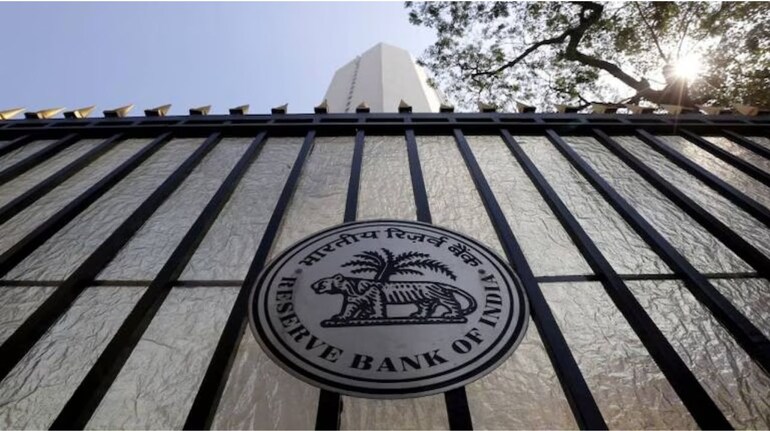
On May 22, the announcement from Mint Street that it will transfer a surplus of Rs 2.22 lakh, the highest such transfer, raised a few eyebrows. Many theories sprang up speculating the reasons for such an unusual bonanza. Remember, the government had budgeted only half of what the RBI transferred - about Rs 1 lakh crore. The surplus transfer was executed based on the Economic Capital Framework (ECF) adopted by the RBI on August 26, 2019 as per recommendations of the Bimal Jalan committee.
What added to the surprise was the fact that the RBI could mop up over Rs 2 lakh crore, despite keeping the contingency risk buffer, or CRB, at of 6.5 percent from 6 percent earlier. CRB is a sort of a cushion the central bank keeps in its kitty to be used in bad times, as mandated by Basel norms. The 6.5 percent CRB is the higher end of the band specified by the Jalan committee.
Since the surplus transfer announcement, the exact calculation that led to such an increase was only speculated upon in some quarters of the media. But the RBI annual report, released on May 30 evening, gives us clarity into the actual calculations that resulted in the Rs2.11 lakh crore surplus figure.
First, why does RBI transfer surplus to government?Before getting into numbers, let’s first understand why the central bank needs to transfer dividend to the government every year. We know that every company that has issued shares to stakeholders typically give dividend--drawing form the profits earned every year. For the Indian central bank, the government is the owner. That’s because although the RBI was formed in 1935 with an initial paid-up capital of Rs 5 crores as a private bank with shareholders. It was nationalised in January 1949 making it a government-owned entity. Since RBI is not a commercial organization like an ordinary bank, the excess transfer is called surplus, not dividend.
What is the legal basis of RBI’s surplus transfer?The answer lies in section 47 of the RBI Act. It says, “After making provision for bad and doubtful debts, depreciation in assets, contributions to staff and superannuation fund and for all other matters for which provision is to be made by or under this Act or which are usually provided for by bankers, the balance, of the profits shall be paid to the Central Government.”
So, this is the legal basis of RBI’s surplus transfer. Typically, the RBI’s central board approves this transfer in May every year.
How does RBI generate surplus?Apart from being a banking regulator and a currency issuing authority, the RBI is also involved in substantial treasury operations in financial markets, both in India and abroad. This involves buying or selling foreign exchange. It also receives income generated from its stock of government securities. The RBI also has investments in securities of global central banks.
The RBI also incurs expenditure in printing currency notes, paying its staff besides offering commissions to banks for undertaking transactions on behalf of the government and to primary dealers, that include banks, for underwriting some of these borrowings.
According to the central bank’s latest annual report, the income in the financial year 2023-24 rose around 17 percent year-on-year due to a significant rise in interest income from foreign securities. Interest income from foreign securities surged to Rs 65,327.93 crore in FY24 as compared to Rs 43,649.26 crore in FY23.
Also, the RBI’s foreign currency assets (FCA) also rose around 14%. In total, the income from foreign sources rose around 23 percent on a year-on-year basis to Rs1.8 lakh crore, while income from domestic sources saw a more modest rise of around 6 percent to Rs88,100 crore.
Overall, the income of the RBI, which consists of interest income and other income surged to Rs 2.76 lakh crore in FY24 as against Rs 2.46 lakh crore in the previous financial year. Regarding expenses, these amounted to Rs 64,694.33 crore in FY24, which was sharply lower than Rs 1.48 lakh crore in the previous financial year.
This was due to lower unrealised MTM losses, on both foreign and domestic security holdings, as yields softened during the year – because when yields soften prices of bonds go up. Thus, even with the Contingent Risk Buffer (CRB) being raised to 6.5 percent of the balance sheet (BS), a record surplus was generated, an Emkay report points out.
Thus, if one subtracts total expense from total income (Rs 2.76 lakh crore minus Rs 64,964 crore) the figure arrived at is Rs 2.11 lakh crores. On May 22, the RBI’s Central Board of Directors approved the transfer of Rs 2.11 lakh crore as surplus to the government for the financial year 2023-24.
This is the highest ever yearly surplus transfer to the government by the Indian central bank. Prior to this, a comparable high value transfer was in FY 2018-19 when RBI transferred Rs 1.76 lakh crores to government.
In other words, though it is a fact that governments—time to time—have been hoping that the RBI transfers bigger amounts as surplus which will help in fiscal management, this year the actual reason for the record transfer was only the surge in interest income and lower-than-expected expenditure.
What is likely to happen in FY25?It is a bit hard to predict as lot will depend on movement of global interest rates and the overall economic situation. However, if global interest rates stay high, foreign currency assets and gold reserves generate decent yields, the RBI can continue to expect higher income.
As per an Emkay report, at the same time, possible Fed rate cuts (and the impact on domestic yields), mean that the unrealized MTM losses on domestic and foreign securities may come down further (or even turn into profits), thereby reducing the need for provisions implying a stable dividend for FY25.
Also, the CRB—the contingency buffer may not need to stay at the higher band if banking system health continued to improve and chances of systemic risks decline. “A possible review of the framework could provide the RBI with more wiggle room for dividends, as well as its FX management strategy," the Emkay report said.

Discover the latest Business News, Sensex, and Nifty updates. Obtain Personal Finance insights, tax queries, and expert opinions on Moneycontrol or download the Moneycontrol App to stay updated!
Find the best of Al News in one place, specially curated for you every weekend.
Stay on top of the latest tech trends and biggest startup news.