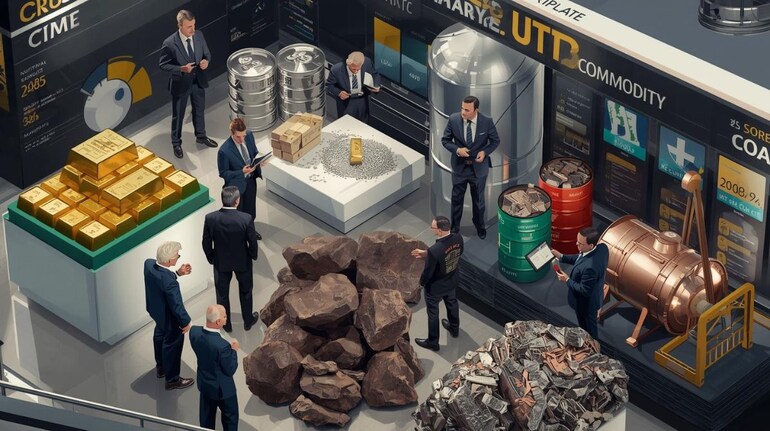

Gold and silver had an excellent run-up in 2025 and continued to rally until January 2026, hitting record highs before retreating sharply and entering a correction. Navneet Damani, Head of Research, Commodities, Motilal Oswal Financial Services, explains why gold prices are holding up despite fluctuations. He says that in the short term, global metal prices are driven by macro noise, while in the long term, they are driven by big structural shifts. “But buckle up for volatility.” He also highlighted the tightness in copper and aluminium supply and why investors should consider each metal separately.
The recent fluctuation in gold prices from its peak has been driven mainly by macro factors, such as Fed rate hikes, ongoing wars, and the dollar’s performance. How do you explain this resilience in gold prices?
Gold's holding up well because the traditional rate sensitivity just isn't playing out the way it used to. Sure, the Fed cut rates three times in 2025, but inflation's stuck around 3 percent, which keeps real rates low—and that's what really matters for gold.
The bigger story is central bank buying. We're seeing 800-1000 tonnes a year, led by China and other emerging markets. These buyers aren't reacting to day-to-day rate moves—they're making strategic decisions about reserves and de-dollarisation. Add in worries about fiscal deficits and geopolitical risks, and gold becomes less of a tactical trade and more of a structural hedge.
What about silver’s surge in demand? Where do you see its price trajectory shaping up in the current global environment?
Silver's got this interesting split personality that makes it both exciting and volatile. On the industrial side, demand is booming—solar panels alone are eating up 25 percent of global supply, and EVs and data centres are pushing growth of nearly 20 percent in some segments. We're talking over 200 million ounces of industrial use annually.
The catch? Most silver comes as a byproduct of other mining, so supply can't easily respond to higher prices. This has led to some unusual market behaviour: we're even seeing backwardation on Comex, which is rare. The silver price tends to move like gold on steroids— bigger rallies during upswings, sharper drops during corrections. The medium-term outlook is positive given the structural deficit and the energy transition, but buckle up for volatility.
What factors are driving the supply of base metals, particularly copper and aluminium?
China is still the 800-pound gorilla here—what happens with their infrastructure spending, grid expansion, and clean energy investments basically sets the tone for copper and aluminium demand. Even small stimulus signals can move prices materially.
On the supply side, we're seeing tightness from multiple angles. Copper's dealing with mine disruptions and smelter bottlenecks. The long-term demand story is solid (for electrification, renewables, EVs, and grid expansion), but recent price strength is mainly due to supply issues, including mine outages, concentrate shortages, and smelter problems.
Supply growth from mines in 2026 is only around 1-1.5 per cent, well below normal, and new projects take forever to come online. Aluminium production is super energy-intensive, so power costs and availability matter hugely. Exchange inventories are historically low, which makes prices react sharply to any news—whether it's China policy, supply disruptions, or energy market moves.
What factors should investors consider when allocating funds in precious and base metals, either for short-term or longer-term?
Think of it this way: short-term is all about the macro noise—inflation prints, Fed speak, dollar moves, inventory data, geopolitical flare-ups. These trades play out over days or weeks and require tight stops due to the leverage involved.
Long-term is about the big structural shifts. For gold, that's central bank buying, fiscal concerns, and de-dollarisation. For silver and base metals, it's the energy transition and electrification—themes that play out over years. Gold and silver also give you flexibility in how you play them: physical, ETFs, or exchange derivatives, depending on your risk appetite and time horizon.
Which factor is presently having the strongest impact on metals markets?
It actually depends on which metal you're looking at. For gold, central bank policy—especially real rates and reserve buying—is the main driver, with currency moves amplifying the effect. For base metals like copper and aluminium, China's demand outlook and physical supply constraints matter way more than what central banks are doing.
Geopolitics creates the headlines and short-term spikes, but central bank behaviour and physical market tightness set the medium-term trend. You should look at each metal separately rather than applying one macro story across the board.

Discover the latest Business News, Sensex, and Nifty updates. Obtain Personal Finance insights, tax queries, and expert opinions on Moneycontrol or download the Moneycontrol App to stay updated!
Find the best of Al News in one place, specially curated for you every weekend.
Stay on top of the latest tech trends and biggest startup news.