






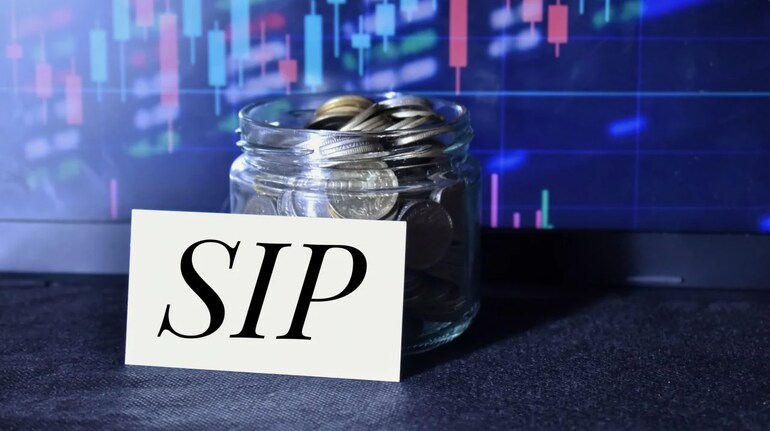

For most investors, the hardest part of investing is not choosing a mutual fund. It is deciding when to put money in — and when to move it around. Markets rarely move in straight lines, and emotions usually do more damage to portfolios than bad fund choices.
This is where two simple tools offered by mutual funds — SIPs and STPs — quietly do a lot of heavy lifting.
A Systematic Investment Plan (SIP) helps you build wealth gradually. A Systematic Transfer Plan (STP) helps you deploy or rebalance money more intelligently. Used well, they can make your portfolio more resilient, more disciplined and, over time, more rewarding.
SIP: The habit that does most of the work
A SIP is the easiest way to start. You invest a fixed amount every month (or quarter) into a mutual fund. Sometimes markets are high, sometimes they are low. You buy more units when prices fall and fewer when prices rise. Over long periods, this averages out your purchase cost.
But the real value of a SIP is not mathematical. It is behavioural.
Most people know they should invest regularly. Very few actually do it unless the process is automated. SIPs turn investing into a habit, like an EMI or a monthly bill. Money goes out before you get the chance to overthink it.
This matters because missing just a few good months in the market can significantly dent long-term returns. SIPs keep you invested through good times and bad, without asking you to make repeated decisions.
They also make goal-based investing simpler. Whether it is a child’s education, a house, or retirement, SIPs allow you to link a monthly investment to a long-term goal and stay on track without trying to time the market.
Why SIPs alone are not always enough
While SIPs are excellent for building wealth steadily, they do not solve every problem.
What if you receive a large lump sum — a bonus, an inheritance, or proceeds from selling a property? Putting it all into equity at one go can feel risky, especially if markets are already high.
What if your asset allocation has drifted? After a long bull market, your equity portion may have grown much larger than you are comfortable with. Or after a long dull phase, you may be sitting on too much debt.
This is where STPs come in.
STP: The smarter way to move money
An STP, or Systematic Transfer Plan, allows you to move money gradually from one mutual fund to another, usually from a debt fund to an equity fund.
Think of it as a SIP, but using your own parked money instead of fresh cash from your bank account.
A common use case is when you have a lump sum. Instead of investing it into equity all at once, you can park it in a liquid or short-term debt fund and set up an STP into an equity fund over, say, 6 to 12 months. This reduces the risk of entering the market at the wrong time, while still ensuring that the money gets invested.
STPs are also useful for rebalancing. Suppose you want to gradually reduce your equity exposure as you approach a goal. You can set up an STP from equity to a debt fund to shift money in a controlled, disciplined way rather than making one big switch on a nervous day.
SIP and STP together: A simple but powerful combination
Used together, SIPs and STPs can make your portfolio far more robust.
Your regular monthly investments can continue through SIPs, building long-term positions steadily. At the same time, any large inflows or asset allocation adjustments can be handled through STPs, reducing timing risk and emotional decision-making.
This combination also helps avoid a common mistake: letting large amounts of cash sit idle for months because you are waiting for the “right time” to invest. With an STP, you accept that you cannot predict the perfect moment, and you let time and process do the work instead.
The tax and cost angle
It is worth remembering that STPs are not tax-free switches. Each transfer from one fund to another is treated as a redemption from the source fund and a fresh investment into the target fund. This means capital gains tax can apply, especially if you are transferring from a debt fund held for a short period.
Still, for most investors, the risk management and discipline benefits often outweigh the small tax or exit load costs involved.
SIPs, on the other hand, do not have any special tax treatment by themselves. Each instalment is treated as a separate investment for tax purposes. This becomes relevant when you redeem and different units have different holding periods.
The bigger picture: Process beats prediction
Neither SIPs nor STPs guarantee high returns. What they do guarantee is something far more valuable: a sensible process.
They remove the pressure to make perfect timing calls. They reduce the role of fear and greed. They bring structure to what is otherwise a very emotional activity.
Over long periods, portfolios built with discipline usually do better than portfolios built on bold but inconsistent decisions.
The bottom line
SIPs help you enter the market steadily. STPs help you move money wisely once it is inside the system. Together, they turn investing from a series of stressful decisions into a calm, repeatable process.
In a world where markets are unpredictable but behaviour is often the real enemy, that may be their biggest advantage.
FAQs
1. Is an STP better than investing a lump sum directly into equity funds?
Not always, but it is often safer. If markets are volatile or already expensive, investing a lump sum through an STP helps reduce the risk of bad timing by spreading the investment over several months. If markets are clearly cheap and you have a high risk tolerance, a lump sum investment may work better. For most investors, though, an STP offers a more comfortable and disciplined approach.
2. Can I run a SIP and an STP at the same time?
Yes. Many investors do exactly that. Your SIP can continue for regular monthly investing from your bank account, while an STP can be used separately to deploy a lump sum or to rebalance your portfolio gradually from one fund to another.
3. Does an STP attract tax?
Yes. Every transfer in an STP is treated as a redemption from the source fund and a fresh investment into the target fund. This means capital gains tax may apply, depending on how long the source fund units were held and whether it is an equity or debt fund. This is why STPs are usually done from liquid or short-term debt funds, where tax impact is typically smaller.
4. Is a SIP only useful in falling or volatile markets?
No. SIPs work across market cycles. Their biggest benefit is not just cost averaging, but discipline. They ensure you keep investing during both good and bad phases, which is critical for long-term wealth creation.
Discover the latest Business News, Sensex, and Nifty updates. Obtain Personal Finance insights, tax queries, and expert opinions on Moneycontrol or download the Moneycontrol App to stay updated!
Find the best of Al News in one place, specially curated for you every weekend.
Stay on top of the latest tech trends and biggest startup news.





