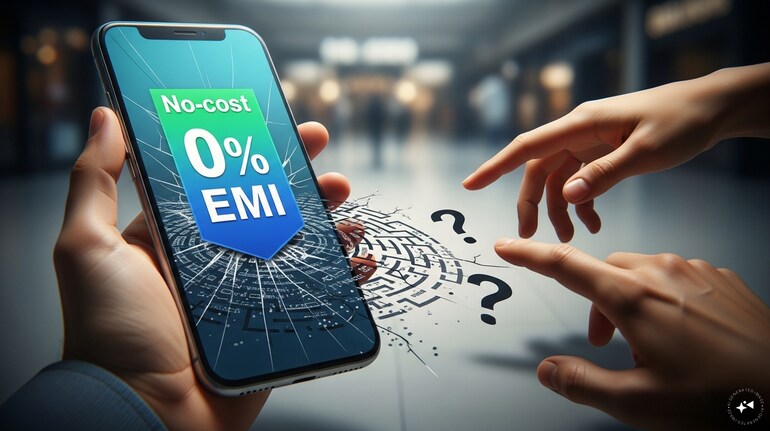

No-cost EMI has become a default option across Indian online shopping platforms. Phones, laptops, home appliances, even furniture are pushed with the same promise: split the payment into easy instalments without paying interest. For many buyers, it feels like a sensible middle path between spending a lump sum and dipping into savings. But the reality is usually messier.
How the “no-cost” part actually works
In most cases, there is interest on the loan. The difference is that the seller or platform absorbs it and presents that amount as a discount. That discount is then adjusted against the interest charged by the bank over the EMI period. On paper, everything balances out. In real life, this setup often changes the final deal in subtle ways.
The discount trade-off
The most common catch is the discount you don’t see. When you choose no-cost EMI, many platforms quietly remove instant card discounts, cashback offers, or festive price cuts. You might see a product listed at Rs 50,000 with a Rs 4,000 upfront discount if you pay in full, but only a Rs 2,500 discount if you switch to EMI. The EMI looks painless month to month, but you’ve already paid more for the same product.
Fees that show up later
Banks usually charge a processing fee for converting a purchase into EMI. It may look small, but it adds up, especially on higher-value items. On top of that, GST is applied to the interest portion of the EMI, even if the interest is being “absorbed” elsewhere. These charges are rarely front and centre. You usually spot them only after scrolling through the terms and conditions or on the first card statement.
What it does to your credit profile
Every EMI converts a purchase into a loan. One or two isn’t an issue, but multiple EMIs running together increase your overall credit exposure. That can matter later when you apply for a home loan, car loan, or even a higher credit limit. This is one reason the Reserve Bank of India has repeatedly warned against excessive reliance on short-term consumer credit for everyday spending.
When it can still be useful
No-cost EMI isn’t always a bad choice. If there’s no meaningful upfront discount, processing fees are low, and spreading payments helps manage cash flow, it can make sense. The key is comparison. Always look at the total outgo if you pay in full versus what you’ll actually pay through EMI, including fees and lost offers.
The simple takeaway
No-cost EMI isn’t a trick, but it isn’t automatically a deal either. It’s a convenience product, not free money. Before clicking through, pause for a minute, compare the numbers, and decide whether you’re buying flexibility or quietly paying for it in another form.
Discover the latest Business News, Sensex, and Nifty updates. Obtain Personal Finance insights, tax queries, and expert opinions on Moneycontrol or download the Moneycontrol App to stay updated!
Find the best of Al News in one place, specially curated for you every weekend.
Stay on top of the latest tech trends and biggest startup news.