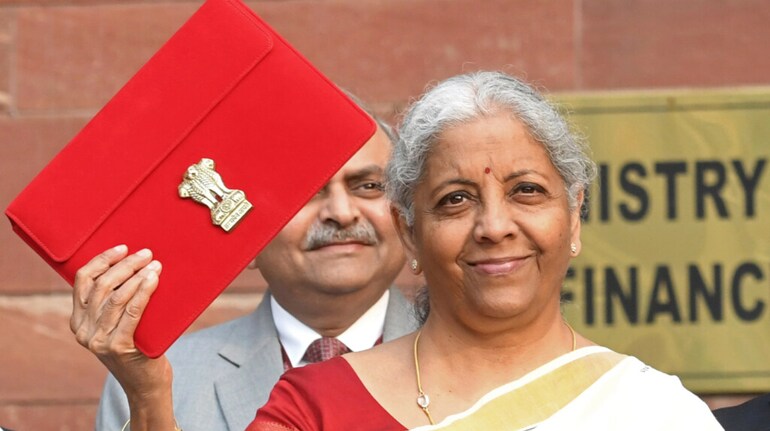

Finance Minister Nirmala Sitharaman, while presenting the Union Budget on February 1, 2026, keeps the income tax structure unchanged, opting for continuity rather than fresh relief. There are no revisions to income tax slabs under either the old or the new tax regime, no changes to standard deduction limits, and no new exemptions or rebates announced.
The income-tax slabs relevant for Assessment Year 2026-27 remain the same as those announced in Union Budget 2025.
As per Kiran Gandhi, Pune-based financial mentor, “In Budget 2026, Finance Minister Nirmala Sitharaman kept the standard deduction unchanged for FY 2026–27, offering stability but no new relief for salaried employees and pensioners. The deduction remains Rs 50,000 in the old regime and Rs 75,000 in the new regime, with existing slabs and exemptions continuing as before.”
However, while rates stay steady, compliance rules tighten further. According to Kiran Gandhi, Pune-based financial mentor, “misreporting of income now attracts a 100 per cent tax penalty, penalties for non-disclosure expand, NRIs face TDS on property sales, and small taxpayers get a six-month window to disclose foreign assets.”
For senior citizens, the union budget 2026 offers stability but little relief. Lt Col Rochak Bakshi, CFP and MD, Trunor Enterprises, notes that “Budget 2026 brings no higher exemptions or new healthcare deductions, retaining old-regime limits of Rs 3 lakh for those aged 60-79 and Rs 5 lakh for those above 80.” Long-standing demands such as expanded Section 80DDB medical relief, in-home care deductions, and higher pensions remain unmet, even as costs rise.
The Finance Minister also refrains from introducing fresh tax incentives to encourage household shifts toward debt or equity markets, despite the Economic Survey highlighting a steady move away from bank deposits.
With no headline changes, the key question for taxpayers remains unchanged: which tax regime makes more sense for your income and deductions?
Below are illustrative case studies comparing tax outgo under both regimes, based on Budget 2026 proposals. Pick the one closest to your annual income to understand how your taxes shape up now.
Salaried professional | Annual income: Rs 13 lakh
At this income, the contrast between the two regimes is already stark. Even after claiming Rs 2.5 lakh in deductions under the old regime, tax outgo stands at over Rs 1 lakh, while the new regime brings it down to zero.
Takeaway: At Rs 13 lakh, the new tax regime already results in nil tax liability. Budget 2026 status quo keeps this advantage intact.
Single parent | Annual income: Rs 15 lakh
With Rs 2.5 lakh in deductions, the old regime still leaves a tax bill of nearly Rs 1.8 lakh. The new regime, despite no deductions, cuts the outgo to under Rs 1 lakh.
Takeaway: At Rs 15 lakh, lower slab rates under the new regime outweigh the benefit of deductions available in the old regime.
Retired Navy officer | Annual income: Rs 25 lakh
Pension income offers stability, but deductions are limited. Even after claiming available exemptions, tax under the old regime is close to Rs 5 lakh, compared to about Rs 3.2 lakh under the new regime.
Takeaway: For pensioners with fewer deductions, the new regime already delivers materially lower tax outgo.
Tech influencer | Annual income: Rs 35 lakh
Despite claiming deductions under the old regime, tax liability remains above Rs 8 lakh. Under the new regime, higher taxable income is offset by lower slab rates, reducing tax by over Rs 1.6 lakh.
Takeaway: At Rs 35 lakh, lower slab rates under the new regime compensate for the absence of deductions on business income.
Doctor | Annual income: Rs 65 lakh
At higher incomes, deductions shrink in impact. Even after exemptions, tax under the old regime exceeds Rs 18 lakh, while the new regime lowers it by over Rs 1.7 lakh.
Takeaway: For high-income professionals, absolute savings under the new regime exist, but overall tax burden remains heavy.
Startup founder | Annual income: Rs 1.5 crore
Despite deductions under the old regime, tax liability crosses Rs 50 lakh. The new regime trims this by nearly Rs 1.9 lakh, driven purely by slab structure.
Takeaway: At very high incomes, the difference between regimes narrows; marginal rates and surcharges matter more than deductions.
Discover the latest Business News, Sensex, and Nifty updates. Obtain Personal Finance insights, tax queries, and expert opinions on Moneycontrol or download the Moneycontrol App to stay updated!
Find the best of Al News in one place, specially curated for you every weekend.
Stay on top of the latest tech trends and biggest startup news.