




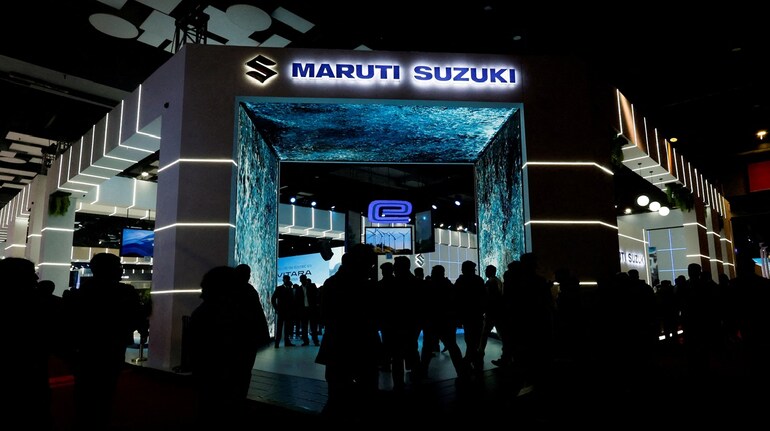
Maruti Suzuki, India's leading automaker, has significantly reduced its near-term production targets for its inaugural electric vehicle, the e-Vitara, by two-thirds, a Reuters report said on Tuesday.
This adjustment stems from a shortage of rare earth materials, according to a company document seen by Reuters. This development highlights the ongoing disruption to the global automotive industry caused by China's export restrictions on these critical minerals.
Initially, Maruti Suzuki aimed to produce approximately 26,500 e-Vitaras between April and September. However, under the revised plan, the company now anticipates manufacturing only around 8,200 units during this period. The company cited "supply constraints" in rare earth materials, which are essential for producing magnets and other components vital across various high-tech sectors.
Long-Term EV Goals and Market Impact
Despite the immediate setback, Maruti Suzuki still intends to achieve its annual output target of 67,000 EVs for the fiscal year ending March 2026. The company plans to accomplish this by substantially increasing production in the latter half of the year, with a revised target of 58,728 e-Vitaras between October and March 2026, compared to the initial goal of 40,437 for those six months.
The e-Vitara, unveiled with considerable anticipation at India's car show in January, is a crucial element of Maruti's electric vehicle strategy in India. This segment is a key focus for Prime Minister Narendra Modi's government, which aims for EVs to constitute 30% of all car sales by 2030, a significant leap from roughly 2.5% last year.
This production curtailment could also affect its parent company, Suzuki Motor, as India represents its largest market by revenue and serves as a global EV production hub. A substantial portion of the e-Vitaras manufactured in India are designated for export by Suzuki to major markets such as Europe and Japan around summer 2025.
Supply Chain Challenges and Market Position
The rare earths crisis comes at a challenging time for Maruti Suzuki, which is already working to regain market share lost to competitors like Tata Motors and Mahindra & Mahindra, both of whom lead India's EV sales with their feature-rich SUVs. Maruti's share of India's passenger vehicle market has declined to 41% from a recent peak of approximately 51% in March 2020.
Suzuki has also adjusted its sales forecast for India, reducing its target to 2.5 million vehicles by March 2031 from the previous 3 million. Furthermore, the company has scaled back its planned EV launches in India from six to four, acknowledging the intensifying competition in the South Asian automotive market. Maruti has yet to open bookings for the e-Vitara, with some analysts noting its relatively late entry into the world's third-largest car market, especially with Tesla also expected to commence sales this year.
Maruti Suzuki closed today at 12534.10, down 103.85 points or 0.82% on BSE.
(With Reuters input)
Discover the latest Business News, Sensex, and Nifty updates. Obtain Personal Finance insights, tax queries, and expert opinions on Moneycontrol or download the Moneycontrol App to stay updated!
Find the best of Al News in one place, specially curated for you every weekend.
Stay on top of the latest tech trends and biggest startup news.