Each of these factors is equally important and this may be considered as our key philosophy for the selection of stocks. The philosophy helps to make rational decisions and keep us on track.
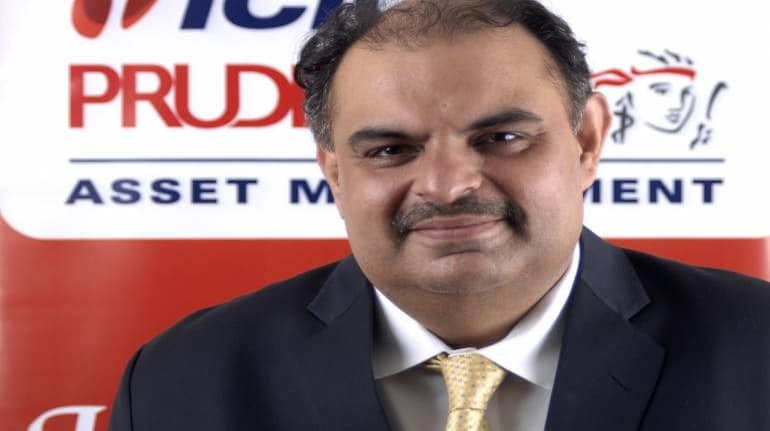
We evaluate companies based on our Core 4 framework. The Core 4 Framework is an integrated approach that covers The Quality of Business, Valuations, Sentiments and Themes, Parag Thakkar, Portfolio Manager - ICICI Prudential PMS, said in an interview with Moneycontrol’s Kshitij Anand.
Edited excerpt:What are your expectations from the Budget 2020 with respect to the PMS industry, and markets? While all efforts from the government have been in the direction of reviving the supply side, but the market is keenly looking forward to the Budget in order to provide a boost in demand and revive the economic sentiments.We expect that the government may increase spending towards capex, rural housing, rural economy and water projects.
This is likely to provide a fillip to stocks operating in this space.If we look around we see shopping malls been built, metro work progressing, governments thrust towards food security, providing clean water, improving the sub-optimal soil levels for a better quality of produce for Indians.
We believe that the government will continue to spend in these areas and which will, in turn, benefit these sectors.
As an industry participant, we feel the PMS industry is at the cusp of transformation. With proposed regulatory changes, once implemented will enhance transparency and reinstate further investor confidence in the industry, which will help the industry to grow multifold in days to come.
As a fund manager, how do you pick and choose stocks for investment? What are the key metrics you look for before pressing buy or a sell button?
We evaluate companies based on our Core 4 framework. The Core 4 Framework is an integrated approach that covers The Quality of Business, Valuations, Sentiments, and Themes.
Each of these factors is equally important and this may be considered as our key philosophy for the selection of stocks. The philosophy helps to make rational decisions and keep us on track.
Quality of Business: The business should be able to generate sustainable free cash flows. It should have effective corporate governance and an industrious capital allocation track record. In the last cycle, investors have realized the importance of effective corporate governance and businesses which have demonstrated quality governance has commanded premium compared to peers. Effective corporate governance ensures that companies take steps in the right direction for their customers and their shareholders. Valuations: Valuations are equally important. Simple ratios such as Price-to-earnings, Price-to-Book Value, Price-Earnings-Growth, Net Debt /EBITDA etc. are useful to indicate whether the stock is trading above or below its historical average. Then there are even more complex models that are used to derive the intrinsic value of a company. Sentiments: Market news, company-specific announcements, political turmoil, Government policies, central bank actions, etc., both domestic and global, are some of the components, which can easily spark an overreaction of investors. We aim to build of such overreactions. Themes: The prevailing theme also plays an important role in the stock selection. In the various phases of a market cycle, investment themes may either be dormant or dominant. One is likely to create alpha by riding dominant themes. We thus aim to adopt a thematic investing approach, which seeks to identify stocks that are likely to benefit from a particular trend. 2020 also marks the end of a decade. What are the lessons, which you have gathered from long term investment perspective? Following investments basic and not deviating from the core philosophy is the key to long term wealth creation. A few important basics that we follow are: 1. No compromise on the quality of management basis their track record. As in equity investments, we partner in the future growth of the business, thus these factors are extremely important for investment decisions. 2. Buying visible quality businesses that have the potential to generate operating cash flow over an extended period of time, and which have an efficient capital allocation track record. 3. Avoiding high leveraged companies. On timing, buying these quality businesses in times of uncertainty. This aims to give a higher margin of safety as the portfolio invests in these stocks when the crowd is running away. Q) Indian market bounced back from lows to hit a record high ahead of the Budget 2020? What is the target you are penciling in for markets for 2020? A) There are multiple factors driving the market recovery, among the important one was corporate tax cut announced by the Government in Sep 2019. Over the past three months, the market has gained momentum across sectors, essentially investor sentiments are reviving and investor participation is broadening where we have seen mid and small-cap indices delivering double-digit gains. The economy-market anomaly that prevailed in CY2019 may continue in CY2020 too. We rule out a quick recovery in the economy but expect the market to do relatively ‘better’ due to (1) likely strong earnings growth and (2) possible tax changes that may revive demand. The entire return in CY2019 for the market has come post the corporate tax cut announcement in September 2019. There is still a noticeable divergence in valuations that exists between value and growth stocks. Growth stocks still continue to trade at a premium. In order to benefit from such a divergence, it seems like a good time for a Value or Special Situations theme to play out. Q) ICICI Prudential PMS Contra Portfolio beat the Nifty returns in 2019. With AUM of nearly Rs 300 cr how has the journey been for the strategy and PMS industry in the year 2019? A) We launched ICICI Prudential PMS Contra Portfolio (A series under “Deep Value Portfolio”) in September 2018. Since then, the Portfolio has generated an absolute return of 20.5 percent as of December 31, 2019, compared with a return of 2.7 percent of the S&P BSE-200 Index. For CY2019, the Portfolio has generated a return of 13.7 percent compared with 9.1 percent of the S&P BSE-200 and 12.02 percent of the Nifty 50. In the journey of wealth creation, steady compounding is of paramount importance. Markets are non-linear, and randomness has increased due to weekly option expiries and some bit of market efficiency where prices react to each and every news flow. It is important to protect the downside while taking the benefits of the market upside. In surging markets, it is comparatively easy to perform. The real test of strength is protecting & outperforming when the market mayhem starts and fear psychosis kicks in. We believe macros play a larger role in Indian equities. Aligning the portfolio with the economic cycle works as a natural hedge in a long-only investment strategy and provides a great margin of safety. This helps to achieve the primary objective of falling less than the market in a negative market environment. One should also take benefit of negative sentiments in fundamentally strong companies during market corrections to beat the market. Q) ICICI Prudential PMS has also launched a PIPE portfolio strategy. What is the strategy all about, and how will it aim to generate wealth for investors? A) The first series of PIPE Portfolio strategy was launched in November 2013. ICICI Prudential PMS PIPE Portfolio - Series I had generated a ~300 percent return between 1 November 2013 to 31 January 2018. We had then redeemed the portfolios of clients who were invested in the strategy. As mentioned earlier our ability to take timely cues out of macro movements helped us take timely exit not only captured the upside of the Smallcap rally, but it also protected the investors from potential downside We also have correlation data which shows a strong relationship between changes in some of the macro parameters and change in the small and mid-cap balance sheet with a lag of a few quarters. Over the past couple of years, Midcap and Small caps have seen a sharp correction. The S&P BSE Small-Cap index in last 2 years as on December 31, 2019, had corrected by ~30% and the S&P BSE Midcap has seen fall of ~17% in the same period. As a result, the market cap of companies beyond the top 250 companies as a percentage of the total market cap of the NSE, fell to 10.5% in the month of December 2019 as compared to 18% in 2017. Therefore, we believe that valuations have come off from their peak. Along with this, it seems that the cost of capital has come down and we believe it may ease further. Historically, this has been one of the key drivers for equity returns. While small caps have the potential to deliver returns in the long term, the key to capturing the returns is timely entry and exit. This is easier said, than done. But our research team’s decadal study of macro data and then turning it into a valuation model has enabled us to ably exhibit this capability quite frequently. From the time the strategy has re-launched in September 2019, the S&P BSE Smallcap Index is up by 13% as on January 10, 2020. Some of the Stocks in the portfolios of clients who were with us since September 2019 have run up by 20-25%. Q) Any new trend with respect to sectors that are emerging. Which are the sectors that are likely to hog the limelight in 2020 and which ones will remain laggards? A) With an increase in global liquidity, we expect higher Capex and infrastructure spend this coupled with demand exceeding the supply in essential commodities, sharp underperformance over the past 5 years may drive up prices. In the Infrastructure space, government spending may provide a boost we expect metals and capex oriented sectors stocks may outperform in 2020. Disclaimer: The views and investment tips expressed by investment experts on moneycontrol.com are his own and not that of the website or its management. Moneycontrol.com advises users to check with certified experts before taking any investment decisions.