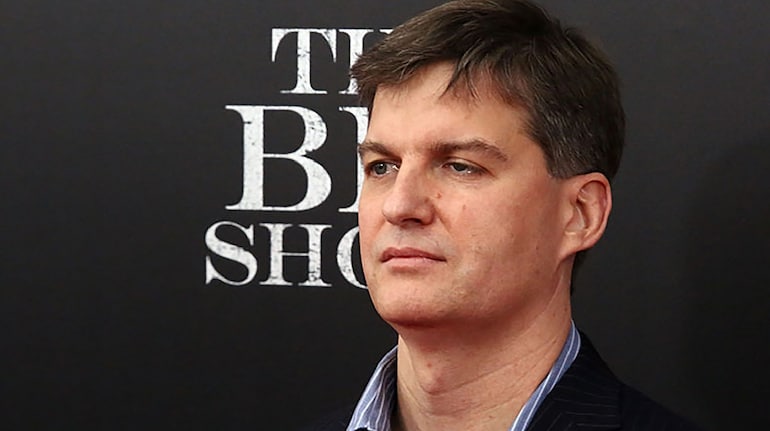
Michael Burry, the contrarian investor whose early bet against US subprime mortgages became the focus of The Big Short, has taken one of the most aggressive positions yet against the current AI frenzy. Recent regulatory filings show Scion Asset Management built large put-option exposures on Nvidia and Palantir — more than $1.1 billion in notional terms — before the firm deregistered from the SEC, ending its obligation to disclose positions.
While 13F filings do not reveal the actual amount of capital deployed, they make one point unambiguous: Burry is positioned against the AI trade at a moment when much of the market is leaning the other way.
Burry has argued that Wall Street is underestimating the extent to which reported profits in AI-heavy firms are being lifted by adjustments to depreciation schedules. In a recent post on X, he criticised the industry practice directly, saying: “Understating depreciation by extending useful life of assets artificially boosts earnings -- one of the more common frauds of the modern era.”
He has also highlighted the scale of capital expenditure in AI infrastructure, noting that aggressive assumptions about the durability of chips and servers distort the true economics of the sector. His comments have intensified scrutiny of whether the earnings profile of major hyperscalers can sustain current valuations.
The criticism prompted an unusually sharp response from Palantir’s CEO Alex Karp, who rejected Burry’s short as “bats*** crazy”, insisting that Palantir and Nvidia are central to the commercialisation of artificial intelligence.
For long-time followers, Burry’s scepticism fits a clear pattern. He famously began shorting subprime mortgage bonds as early as 2005, paying premiums for years before being vindicated during the 2007-08 collapse. That trade ultimately generated around $800 million in profits for investors, including roughly $100 million for Burry himself.
His post-crisis record has featured similarly contrarian themes: early criticism of a passive-investing bubble, a contentious short campaign against Tesla, contrarian purchases of Chinese technology stocks, and a pre-meme-era investment in GameStop.
In each case, he has been willing to hold unpopular positions through periods of prolonged discomfort -- sometimes early, sometimes right, but consistently independent of consensus.
Burry’s warnings resonate with a growing chorus of seasoned investors drawing parallels between today’s enthusiasm for AI and the late-1990s internet boom. Bill Gates, reflecting on the surge of investment across the sector, said the current wave of AI investment resembles a bubble. He added that while AI represents a generational technological shift, “tons of investments will be dead ends.”
The sentiment mirrors the dot-com experience, where the transformative power of the internet ultimately prevailed even as many early players did not.
Howard Marks of Oaktree has also pointed to classic signs of market euphoria -- narrative-driven buying and a narrow set of winners commanding disproportionate attention -- while Rajiv Jain of GQG Partners has warned that vendor-style financing and circular investment flows echo the excesses of telecom and internet stocks before the 2000 crash.
With his fund no longer obliged to publish holdings, the full scope of Burry’s current positions is now opaque. But his last disclosed trades, together with his public critiques, leave little doubt about his stance: he is wagering that AI euphoria, inflated expectations and aggressive accounting will eventually collide with economic reality.
Whether this proves to be another Big Short-style vindication or simply a bold contrarian stance remains yet to be seen. But Burry’s stand against one of the strongest market narratives of the decade ensures that investors will continue to debate whether the AI boom is the next great bubble.
Disclaimer: The views and investment tips expressed by investment experts on Moneycontrol.com are their own and not those of the website or its management. Moneycontrol.com advises users to check with certified experts before taking any investment decisions.
Discover the latest Business News, Sensex, and Nifty updates. Obtain Personal Finance insights, tax queries, and expert opinions on Moneycontrol or download the Moneycontrol App to stay updated!
Find the best of Al News in one place, specially curated for you every weekend.
Stay on top of the latest tech trends and biggest startup news.