The gems & jewellery sector, textile stocks, OEMs, along with machineries and fisheries are likely to see strong buying interest in trade on February 3, after India-US announced their trade deal. In a post on Truth Social last night, President Donald Trump announced that India's 50 percent tariff rate would be cut to 18 percent, bring India level with Asian peers.
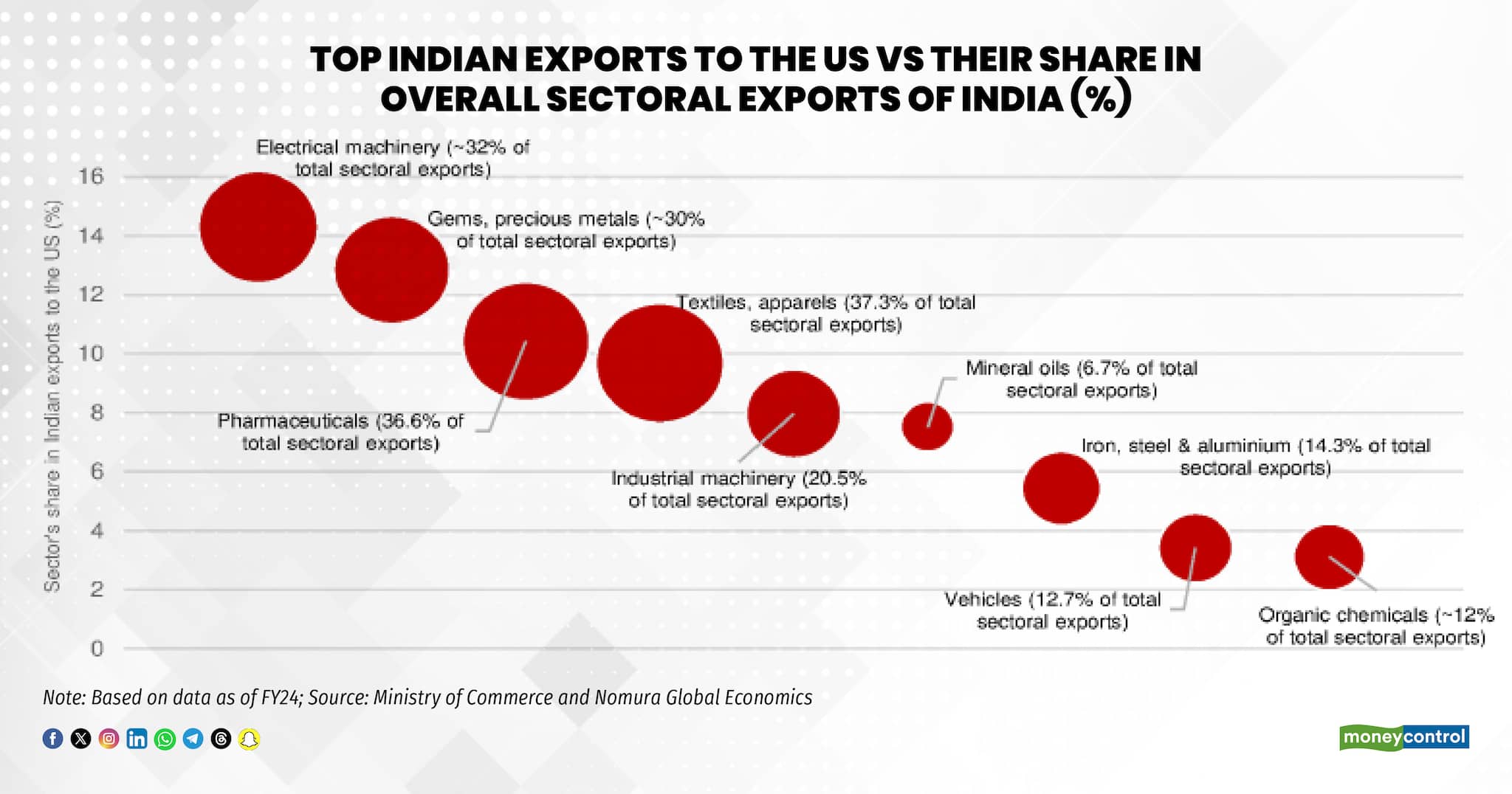
Experts had noted that 50 percent tariffs had significantly moderated Indian exports to US, with second-order hits on employment-heavy sectors like textiles and jewelry. Further, the move exacerbated FPI selling, which may see a reversal.
Both large listed companies and smaller textile and apparel players came under sharp selling pressure after the US imposed 50 percent tariffs. Nearly 32 percent of the sector’s total exports are directed to the US, which made the sector vulnerable to trade disruptions. However, with the tariff rate now moderating to 18 percent, Indian textile exports are once again looking competitive compared with Asian peers.
Gokaldas Exports, Arvind, Rajesh Exports, KPR Mill, Welspun Living and Indo Count Industries are among the key stocks to benefit. Shares of these companies had tumbled sharply following the tariff threats, as a result of their high dependence on US export revenues.
The US has accounted for nearly 48 percent for Indian shrimp exporters. With the 50 percent tariff, India was one of the highest-taxed major shrimp exporters to the US. This dragged down export volume, even as players look for alternative markets to support their exports.
However, with the tariffs moderated to 18 percent, the sector should perform well, with stocks like Avanti Feeds, Coastal Corporation, and Apex Frozen Foods set to outperform.
The gems and jewellery sector was among the worst hit. For diamond polishers, exports to the US accounted for ~25 percent to total revenue last fiscal. The reciprocal tariff, along with the already tepid demand for natural diamonds in the US and growing demand for lab-grown diamonds led to a sharp dip in revenue.
The tariff also put further pressure on the already modest operating margin of the sector due to reduced fixed-cost coverage and the onus to bear the higher tariff cost, as retailers in the US showed limited inclination to take on the burden.
Working capital cycles were elongated as inventory moves slowly and customers stretched payment cycles, noted Crisil Ratings. However, with the tariffs set to moderate, the segment may see some tailwinds yet. Listed players like Titan, which is expanding its presence in the US, are set to gain.
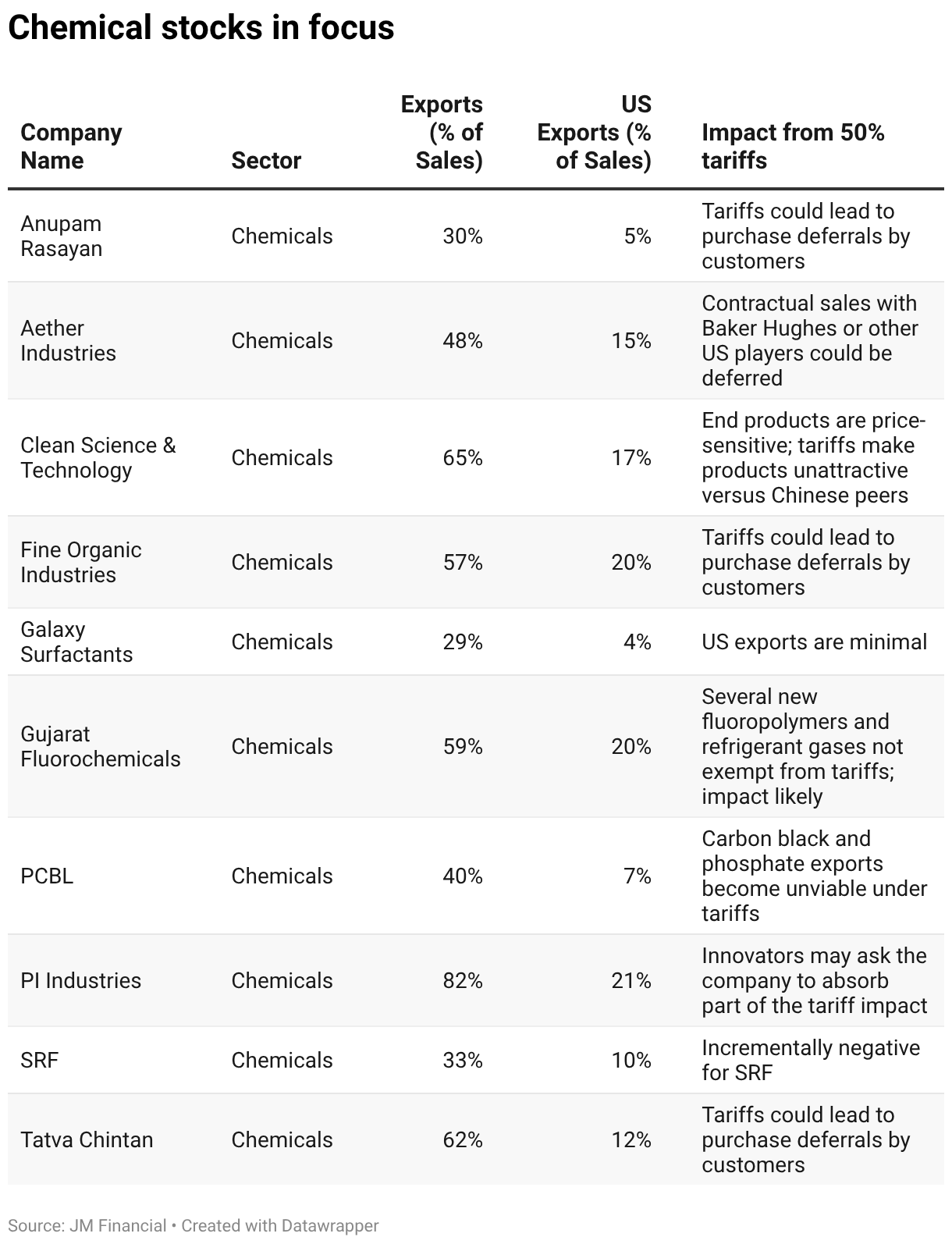
One of the key products exported to the US was chemicals, with roughly $4 billion exported per annum. For the agrochemical segment, exports accounted for 12 percent of the sector's revenue, which also faced challenges, with China being a key competitor and major supplier of agrochemicals to the US.
The specialty chemicals segment has low exposure to the US, at five percent of total revenue. However, the ability to pass on the tariffs was, Crisil added, as the sector is only just witnessing a return to normalcy after profitability pressures due to tepid demand compounded by continued Chinese dumping and inventory correction by suppliers over the past two fiscals.
The imposition of 50 percent tariffs by the US weighed on Indian auto ancillary companies by sharply raising the cost of exports and disrupting demand from North American OEMs and Tier-1 suppliers. While direct exports to the US vary across companies, the higher tariffs reduced price competitiveness, led to order deferments, and increased pressure on margins, especially for firms without manufacturing bases in North America.
Disclaimer: The views and investment tips expressed by investment experts on Moneycontrol.com are their own and not those of the website or its management. Moneycontrol.com advises users to check with certified experts before taking any investment decisions.

Discover the latest Business News, Sensex, and Nifty updates. Obtain Personal Finance insights, tax queries, and expert opinions on Moneycontrol or download the Moneycontrol App to stay updated!
Find the best of Al News in one place, specially curated for you every weekend.
Stay on top of the latest tech trends and biggest startup news.