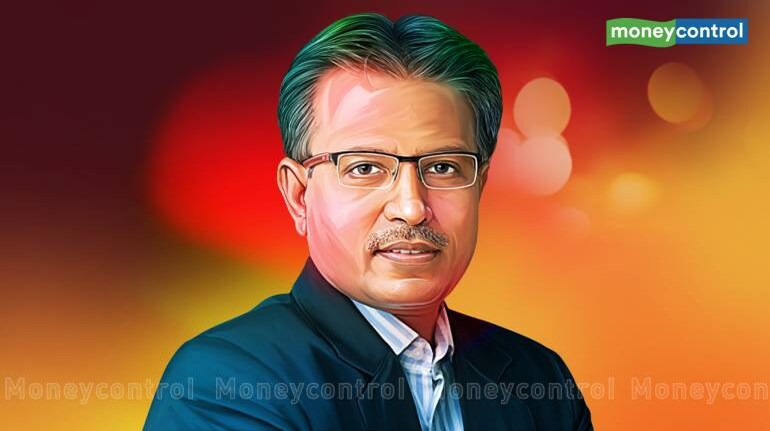
Nilesh Shah, MD and CEO of Kotak Mutual Fund, shared an interesting analogy with Moneycontrol regarding the Federal Reserve's recent announcements. Drawing from the movie "Drunken Master" that he watched as a child, Shah compared the Fed to the "drunken master." In the movie, Jackie Chan's guru, despite being a drunkard, teaches him Kung Fu. In the final battle, Jackie Chan uses the "drunk" version of Kung Fu to conquer the enemy. "I think the Fed is the drunken master. It's behaving in an unpredictable manner to ensure that markets remain confused and they are able to achieve their balancing," he said.
Addressing the media, he discussed various issues including Fed rates, Foreign Institutional Investors (FIIs), and India's unique position going into 2024. Here are some of the key highlights.
On the December 15 Fed DecisionThe Fed has been trying to balance between growth and inflation by raising interest rates without taking out liquidity. The Fed's dilemma, Shah said, is that the debt burden is huge, but they need to keep interest rates higher in order to control inflation. "We just have to hope and pray that the Fed will maintain delicate balancing going forward like they have done in the last one and a half year."
Also Read | India offers both quantity and quality gains: Nilesh Shah says foreign investors looking to enterFed, he explains, has been fairly unpredictable and they changed their stance from "transient inflation" to "higher for longer rates" to now "no longer higher". This has been a part of their attempts to maintain a delicate balance. "Unfortunately, deficit (US’s fiscal deficit) is higher than the revenue (federal revenue). Fed has to ensure that interest rates remain in the manner where this massive debt burden can be managed," he explains.
Benefit for Emerging MarketsShah sees the events unfolding in the US as beneficial for emerging markets. As the US Treasury rates decrease, there is potential for increased flows to emerging markets, including India. He had previously emphasised that India has provided good returns compared to other emerging markets, positioning it as a significant beneficiary of these inflows.
Advantage IndiaShah describes India as an oasis in the global desert, moving from being the fifth largest economy to become the third largest economy. "We are truly in 'amrit kaal' with a combination of Triveni Sangam of talent, capital and infrastructure."
Talent, he says, no longer goes out of India but now with vibrant VC ecosystem, it is easier to get a business funded. "A perfect example is the stock broking industry. Mumbai used to dominate stock broking thanks to the BSE and NSE. But today, India's largest broking company is run out of Bengaluru. The pace of disruption which is getting created by startup ecosystem is perfect example of Indian talent and capital. There is also the support of growing infrastructure," he says.
Also Read | Markets at fair value, stick to equal weight to ride out election uncertainty: Nilesh ShahShah highlighted a positive aspect of India's growth, noting that unlike many parts of the world where growth may necessitate increased borrowing, in India, debt and growth are moving in tandem. "Slowly India's contribution to incremental global growth is expanding. We used to be the coach of the global growth train now we have to become the engine," he says.
But Shah acknowledges that India needs to continue pushing reforms to avoid falling into the middle-income trap. There are also many geopolitical trends which India will have to take advantage of. "India is the giant elephant between the seesaw of Western and Eastern world. If we swing to the Western world, hopefully the western world will win. If we swing to the eastern world, hopefully the Eastern world will win. We have to really take advantage of this geopolitical trends so that we benefit," he says.
Also Read | Nilesh Shah’s EV strategy: Put your handkerchief on every seat, reserve your rideLastly, good economics should result into good politics. Some states have been pursuing the path of freebies which can cause large deficits and derail India’s growth story. "We are in a much better shape compared to many of our peers. But at the same time, we have to continue to work as hard as we did previous, so that this growth can be taken to its logical conclusion," he adds.
Indian Market TrendsPrior to the event, Shah said that he anticipates large-cap names to close the gap with small and mid-caps in 2024. While 2023 was the year of exuberance for small and midcaps, 2024 can see an outperformance from large-caps stocks. He points out that large-caps appear cheaper from a valuation perspective, making them attractive to strong foreign inflows into India. Additionally, he believes that the increased financialisation of savings in India will contribute to the next phase of market expansion, led by domestic institutional investors (DIIs).
Disclaimer: The views and investment tips expressed by investment experts on Moneycontrol.com are their own and not those of the website or its management. Moneycontrol.com advises users to check with certified experts before taking any investment decisions.Discover the latest Business News, Sensex, and Nifty updates. Obtain Personal Finance insights, tax queries, and expert opinions on Moneycontrol or download the Moneycontrol App to stay updated!
Find the best of Al News in one place, specially curated for you every weekend.
Stay on top of the latest tech trends and biggest startup news.