






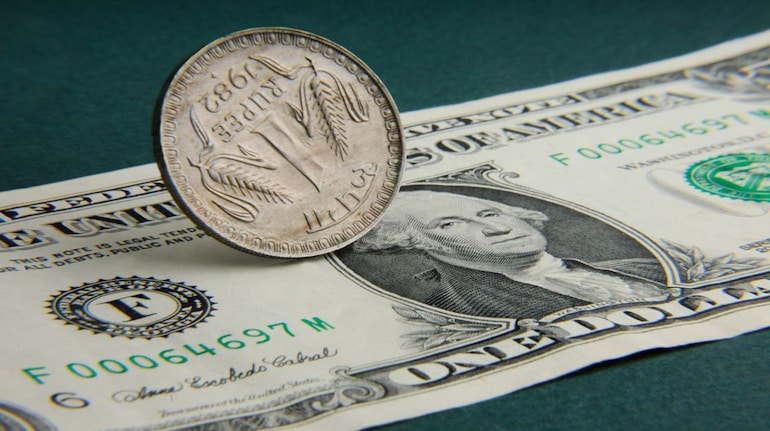

The rupee is likely to see a fresh bout of volatility and may even breach the 91 mark in the coming days after the United States revised tariffs once more, making market participants jittery about the local currency in the face of trade uncertainty.
For almost a month, the rupee has been trading in a narrow 90.40-90.80 range against the dollar, with importers and the Reserve Bank of India (RBI) trying to defend their respective levels, traders say.
“The tariff structure has changed twice in just a few days. So while the legal route has changed, the tariff pressure remains. That makes planning difficult for businesses and governments alike. Uncertainty often triggers a “risk-off” mood in global markets,” Amit Pabari, MD at CR Forex Advisory, said.
Trade uncertainty returns
On February 20, the United States Supreme Court struck down President Donald Trump’s emergency tariffs, saying the levies exceeded the federal powers of the president. Trump quickly signed an executive order imposing a 10 percent across-the-board tariff and later threatened to raise it to 15 percent.
The new levy is under Section 122 of the Trade Act of 1974 in the US. The tariff will remain in place for 150 days unless Congress approves an extension.
Following the court decision, India delayed its plans to send a trade delegation to the US as the policy direction remains unclear.
Earlier this month, India and the US reached a landmark trade deal under which the Washington would reduce tariffs on India to 18 percent. New Delhi is to eliminate or minimise tariffs on American industrial and agricultural goods.
With no immediate signs of a sustained recovery in the rupee, the currency could remain under pressure in the near term. On February 24, the rupee closed the day at Rs 90.95 against the dollar.
Slippery slope
The rupee is the worst-performing emerging Asian currency this year, while the Malaysian ringgit, Thai baht and Chinese yuan have gained between 1 percent and 4 percent.
“When investors turn cautious, capital flows slow down or move out of emerging markets. That keeps pressure on currencies like the rupee,” Pabari added.
The risk-off mood is visible in the tapering of foreign inflows in the last few months. While February saw inflows of more than Rs 16,000 crore, the previous two months saw cumulative outflows of nearly Rs 50,000 crore, data from National Securities and Depositories Ltd (NSDL) shows.
“There is some left to risk in terms of maybe both sides, especially for India, as the US may not ultimately agree to every single detail of what was agreed previously,” Michael Wan, a senior economist with MUFG said.
“Companies are still trying to rejig, but ultimately, you see some countries accelerate some structural reforms and I think that will be quite important moving forward,” he said.
Another factor that has to be taken into account is the Brent crude. For India, higher oil prices pose a challenge, as they weigh on the country’s current account deficit, and, in turn, the rupee.
Moneycontrol has reported that the rupee is unlikely go back to the Rs 85 level anytime soon, as multiple underlying factors such as geopolitical tensions and the lack of adequate inflows from foreign investors.
However, the Rs 90 level may be in the vicinity soon, according to Wan. “The reason is that the trade deficit comes down seasonally in March, especially. There's some kind of big-ticket, deal-related flows, among other things, expected over the next few months,” he said.
In the medium term, the rupee drop to record lows, falling to 93 against the dollar, as capital outflows will likely continue.
Discover the latest Business News, Sensex, and Nifty updates. Obtain Personal Finance insights, tax queries, and expert opinions on Moneycontrol or download the Moneycontrol App to stay updated!
Find the best of Al News in one place, specially curated for you every weekend.
Stay on top of the latest tech trends and biggest startup news.





