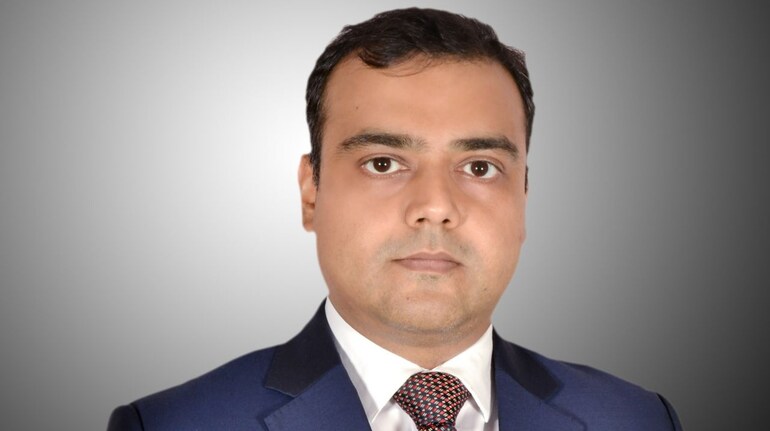

According to Prosenjit Ganguly, the Principal Officer and Head of Advisory at Lighthouse Canton, the sustaining high capital expenditure on hard infrastructure, digital systems and advanced manufacturing is essential to drive 7-8% GDP growth.
Targeted measures in the budget for job creation, MSME resilience, renewable energy scalability, EVs, and defence manufacturing will address domestic demand and global competitiveness, he said in an interview to Moneycontrol.
Further, he is of the view that policy makers are cognizant of consumption-boosting measures required in light of patchy urban demand & resilient rural recovery. These measures could include continued rationalization of income tax slabs, higher standard deductions, rural income support, & Agri-infrastructure investments to lift disposable incomes, he said.
If you were the finance minister, what would be your agenda while framing the Union Budget for 2026?
The agenda for Budget 2026 for us should get anchored to ensure high-quality growth that is resilient, inclusive, and investment led - without sacrificing fiscal credibility & quality of spending. This is key to sustaining economic momentum amid low inflation and global uncertainties.
Achieving or bettering the 4.4% fiscal deficit target remains critical in order to signal overachievement and stabilize bond yields. This would support lower borrowing costs and attracts foreign investment. Sustaining high capital expenditure on hard infrastructure, digital systems and advanced manufacturing is essential to drive 7-8% GDP growth.
Targeted measures for job creation, MSME resilience, renewable energy scalability, EVs, and defence manufacturing will address domestic demand and global competitiveness.
Do you expect the government to announce additional measures to boost consumption in Budget? If yes, are you increasing your exposure to the consumption segment?
We expect continuity of policy measures however it may or may not be a part of upcoming budget. Policy makers are cognizant of consumption-boosting measures required in light of patchy urban demand & resilient rural recovery. These measures could include continued rationalization of income tax slabs, higher standard deductions, rural income support, & Agri-infrastructure investments to lift disposable incomes.
Credit support to uplift farm households and informal sector demand will further strengthen rural consumption. The government is balancing fiscal discipline with stimulus, so measures could be targeted rather than broad-based.
We continue to watch & build selective positions in sectors such as FMCG, consumer durables, automobiles & retail which are eventually beneficiaries. Within these segments, we prefer companies with strong margins, pricing power, earnings durability & robust balance sheets.
Do you see India remaining a stable economy going forward despite geopolitical headwinds and potential trade tariff shocks?
India remains the fastest growing major economy in the world with multiple tailwinds fuelling the growth path. Recent GDP print is a validation of underlying macro led solidity amidst geopolitical headwinds, protectionism led policy distortions thus impacting near term trajectory. We believe India has managed the crisis reasonably well & major part of the turbulence is behind us. Timely policy measures have ensured opening up of other critical markets, well negotiated Free Trade Agreements (FTA) & closure of trade treaties.
We expect overall growth trajectory will continue to be well supported & tread a path of above par economic growth irrespective of intermittent shocks with respect to geopolitical or tariff led headwinds which may at its worst lead to short term deviations.
Do you believe the ongoing uncertainty surrounding US tariffs continues to hurt market sentiment but will not materially alter underlying fundamentals?
India’s exports to the US accounted for roughly 2% of their GDP, which is significantly lower than other Asian peers. In fact, if one excludes key sectors like electronics and pharmaceuticals which aren’t part of the tariff ambit, the share falls below 1.5% of GDP. Hence, at an aggregate level, ongoing uncertainty with respect to the tariffs carries limited impact.
With regards to sentiments, considering US continues to remain one of India’s largest export destinations (accounting for roughly 18-19% of overall export volumes) and the outsized impact of tariffs on certain traditional sectors like textiles, gems and jewellery, iron and steel. Thus, market sentiments have behaved on expected lines.
We are of the view that, tariff led issues will get addressed & mid path will eventually be agreed upon at some juncture in this year. Underlying pain has been well absorbed so far, policy measures have responded well, INR weakening has helped export competitiveness with newer trade destinations opening up. Growth projections have accounted much of this turmoil. Markets have gone through time corrections & consolidated. India must deliver on earnings now.
Do you expect the FPI flow to reverse this year?
Foreign investors’ share of Indian equities has indeed fallen to multi-year lows; about 16.9% as of September 2025, the lowest in over 15 years. This was at the back of intensified selling which saw heavy outflows of nearly Rs 1.66 lakh crore in 2025. By contrast, domestic institutions have been heavy buyers, cushioning the market. Selling was broad-based, though IT stocks saw disproportionate pressure as nearly half of 2025’s FPI outflows were from IT, partly on U.S. macro woes.
We believe this could very well reverse given weakening INR, emanating concerns around AI led bubble, stable macro standing & expectations around earnings rebounding for India as we head into 2026. Valuations at large have moderated & appear well placed. The positioning of the market has meaningfully improved. The key risk, however, is a prolonged risk-off environment that keeps foreign investors wary.
Do you foresee healthy double-digit credit growth this year and next? Are you a strong buyer in the banking space, given that bank valuations are below their historical averages?
Absolutely. One can see the upward trajectory of credit growth which appears to be on a strong footing. This is fuelled by robust retail and MSME loan demand alongside a nascent pick-up in corporate borrowing. We expect continuity of this given policy thrust and measures to boost consumptions which is likely to kick-in with a lag.
Deposit growth has lagged, prompting banks to compete for funds, which could narrow NIMs from recent peaks. Even though, sector fundamentals are strong: asset quality is at a multi-decade best (gross NPAs ~2.1% by September 2025) and credit costs are low.
Bank valuations too are undemanding as many frontline banks trade below their historical P/B multiples after FPI selling. Double-digit loan growth and benign credit costs could support respectable earnings, suggesting upside if valuation mean-reversion occurs. However, funding constraints (slow deposits) and any macro downturn (or pockets of unsecured loan stress) could cap growth and pressure margins, warranting a selective and a neutral stance.
Are you confident about an improvement in earnings growth in the IT sector in the upcoming quarters, especially after reviewing the Q3 results?
India’s IT sector showed signs of bottoming out in Q3 FY26 (December 2025). Major firms delivered mid-single digit revenue growth. Q3 earnings were marginally better than expected, though one-off labour cost provisions dented profits. Notably, Infosys raised its FY26 revenue growth guidance to ~3–3.5% (from ~2–3%) after reporting 8.9% YoY sales growth, indicating improving demand visibility.
Order pipelines and deal wins (including smaller, shorter AI-led projects) have been encouraging, and management commentaries suggest clients are gradually resuming discretionary tech spending. We expect a measured earnings recovery over the next 2–4 quarters helped by large deal ramp-ups, cost controls and new digital/AI opportunities rather than a sharp rebound.
However, confidence as of now is tempered by lingering macro headwinds. US/Europe IT budgets remain cautious & any worsening global growth could delay the pickup. For now, downside risks in terms of prolonged client spending freezes or geopolitical uncertainties) keep the outlook guarded.
Disclaimer: The views and investment tips expressed by experts on Moneycontrol are their own and not those of the website or its management. Moneycontrol advises users to check with certified experts before taking any investment decisions.Discover the latest Business News, Sensex, and Nifty updates. Obtain Personal Finance insights, tax queries, and expert opinions on Moneycontrol or download the Moneycontrol App to stay updated!
Find the best of Al News in one place, specially curated for you every weekend.
Stay on top of the latest tech trends and biggest startup news.