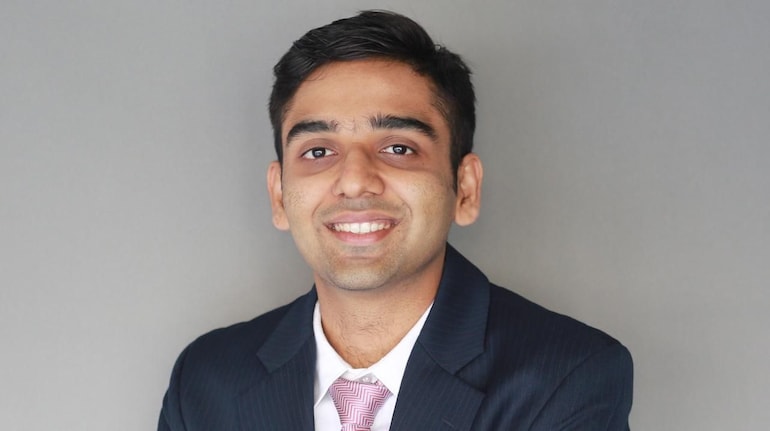
According to Rishabh Nahar, Partner and Fund Manager at Qode Advisors PMS, the Q3FY26 earnings season is likely to be more important than usual, as markets are looking for confirmation rather than commentary.
He expects significant divergence across sectors. Expectations are already priced into many pockets, so actual delivery will matter, he said in an interview with Moneycontrol.
He also believes that staples are no longer a high-growth sector in the traditional sense. Instead, they represent a steady compounding space rather than a fast-growth story.
How do you view Coforge’s large acquisition in the mid-tier IT space? Does it give confidence on IT for 2026?
The acquisition tells me that mid-tier IT companies are not waiting for demand to magically come back. They are actively buying capabilities they think clients will pay for in the next cycle, especially around digital engineering and AI. That’s a sensible move in a slow environment.
Having said that, I wouldn’t read this as a blanket signal that the IT sector is back. The opportunity is there, but the recovery is likely to be uneven.
For 2026, IT may do better than the last couple of years, but returns will depend on execution and positioning rather than just a sector-wide upturn.
Do you believe the auto ancillary sector represents a high-growth theme, supported by higher private capex?
Auto ancillaries continue to look interesting because they benefit from multiple trends at once. Even modest growth in vehicle volumes can translate into better growth for ancillaries due to higher value addition, more electronics, and export opportunities. The key, however, is differentiation.
Companies that are stuck in commoditised products may not see the same benefits. The better opportunities lie with players who have pricing power, technology depth, or strong relationships with global OEMs.
Has the staples sector matured, with single-digit growth likely going forward?
Staples is no longer a high-growth sector in the traditional sense. Many categories are mature and competition has increased, which naturally limits growth and margins over time.
From an investor’s perspective, this means expectations have to be more grounded. That said, staples still play an important role in portfolios. When rural demand improves or input costs ease, earnings can surprise positively. It’s more of a steady compounding space now rather than a fast-growth story.
Would you advise increasing exposure to gold- and silver-related stocks for 2026, including gold financiers?
Gold should be looked at more as a portfolio stabiliser than a pure return generator. It tends to do well when uncertainty rises, whether that’s global geopolitics, currency volatility, or real interest rate movements.
Within equities, gold financiers are a different discussion. Their performance depends less on gold prices and more on lending discipline, customer quality, and cost control. A rising gold price helps sentiment, but sustainable returns come from how well the business is run.
What are your expectations from the Q3FY26 earnings season?
This earnings season is likely to be more important than usual because markets are looking for confirmation, not commentary. Expectations are already built into prices in many pockets, so delivery will matter.
I expect a lot of divergence. Some companies will surprise positively, while others may struggle to meet expectations. Stock-specific factors will matter much more than broad sector trends.
Do you think the capital markets theme remains intact, and that real estate and other rate-sensitive sectors will perform well in 2026?
The long-term capital markets story remains intact because financial participation in India continues to deepen. Short-term cycles will come and go, but structurally the trend is still favourable.
For real estate and other rate-sensitive sectors, 2026 could be supportive if interest rates remain stable and demand stays healthy. However, performance will vary widely across regions and companies, so selectivity will be important.
What could be a potential surprise factor for equity markets in 2026?
One possible surprise could come from global markets. If there is a sharp correction in developed markets, especially in crowded themes, it could impact risk appetite everywhere, including India.
On the domestic side, the surprise could be earnings related. Either earnings come in weaker-than-expected, or they surprise positively if demand and margins improve faster than anticipated. Markets are currently positioned somewhere in the middle, so any deviation could move sentiment sharply.
Disclaimer: The views and investment tips expressed by investment experts on Moneycontrol.com are their own and not those of the website or its management. Moneycontrol.com advises users to check with certified experts before taking any investment decisions.Discover the latest Business News, Sensex, and Nifty updates. Obtain Personal Finance insights, tax queries, and expert opinions on Moneycontrol or download the Moneycontrol App to stay updated!
Find the best of Al News in one place, specially curated for you every weekend.
Stay on top of the latest tech trends and biggest startup news.