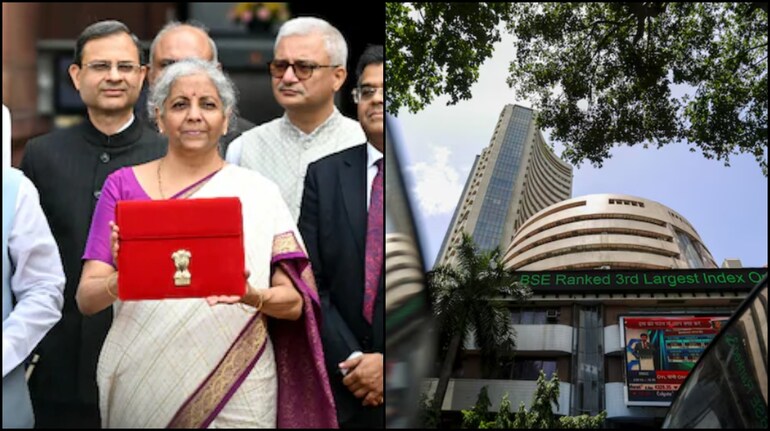

As Budget 2026 approaches, market expectations are once again circling around capital market taxes. However, several experts argue that the conversation needs to move beyond the familiar debate around LTCG and STT.
Long-term capital gains (LTCG) tax applies to profits made on equity investments held for more than 12 months, while short-term capital gains (STCG) is levied on shares sold within a year. Securities Transaction Tax (STT) is charged on every equity transaction on stock exchanges.
With geopolitical tensions simmering and fresh rhetoric from US President Donald Trump weighing on global markets, sentiment has taken a knock. Against this backdrop, expectations from the Budget are increasingly centred on domestic levers that can provide durable economic support.
Privatise, privatise, privatise
For Ajay Srivastava of Dimensions Corporate Finance Services, the wishlist is clear. “Privatise PSUs-that’s the only wishlist,” he says.
Srivastava believes excessive government capex has failed to deliver commensurate economic returns, pointing to poor infrastructure quality despite heavy spending. “Money is being spent, but not efficiently. Multiple layers of expenditure are not translating into real economic mileage,” he argues.
The two real levers: Consumption and capex
Taking a macro-oriented view, market expert Sunil Subramaniam says that while markets would welcome the removal of LTCG or STT for a short-term boost, such measures are not the real growth drivers. “The real delta lies in boosting private consumption and private capex,” he says.
Government capital expenditure has already been steady, and even a marginal increase is unlikely to change the growth trajectory meaningfully. What matters more, Subramaniam argues, is whether the Budget can nudge consumers to spend. Despite income support measures and tax relief in recent years, discretionary spending remains subdued.
A revival in consumption, he believes, would naturally lead to higher private investment. Expanding the PLI framework, incentivising public-private partnerships and offering targeted support for private capex could help lift growth closer to double-digit levels.
Subramaniam also flags persistently low inflation as a concern, particularly for the rural economy. “We need a bit of reinflation to boost nominal GDP,” he says, cautioning that aggressive rate cuts may not be healthy for earnings growth.
Foreign capital vs domestic starvation
Srivastava is also sharply critical of tax benefits extended to foreign investors. “We’ve handed out enough concessions to foreigners, including Middle Eastern sovereign funds, yet very little long-term capital has come in,” he says. “Capital exits tax-free, while domestic companies remain starved.” He adds that promoters seeking government support must be held to higher standards of accountability, warning that overly comfortable conditions suppress risk-taking and fail to revive true “animal spirits.”
Promoter stake sales raise red flags
Another key issue highlighted by Srivastava is the trend of promoter stake sales. According to data from Prime Database and Motilal Oswal, promoters sold shares worth Rs 1.5 lakh crore in 2025 - the highest level in six years. Around 70 percent of these transactions were routed through the secondary market, with the balance coming via IPOs and offer-for-sale (OFS) mechanisms.
Alluding to this trend, Srivastava says it reflects a deeper confidence issue. “If promoters themselves are selling shares, it tells you they don’t believe in their own businesses anymore,” he argues. Instead of reinvesting capital into expansion or capacity building, promoters appear more inclined to divert money into personal assets rather than productive capex.
According to him, this calls for a tougher policy stance. He suggests that the government should discourage such behaviour by tightening norms around promoter exits and nudging institutional investors to be more selective. “Mutual funds should not be buying shares off promoters who are unwilling to invest in their own companies. That would be one of the strongest signals the government can send,” he says.
While markets may cheer tax relief, the real test for Budget 2026 lies in reviving consumption, crowding in private investment, and improving the quality of public spending.
Discover the latest Business News, Sensex, and Nifty updates. Obtain Personal Finance insights, tax queries, and expert opinions on Moneycontrol or download the Moneycontrol App to stay updated!
Find the best of Al News in one place, specially curated for you every weekend.
Stay on top of the latest tech trends and biggest startup news.