






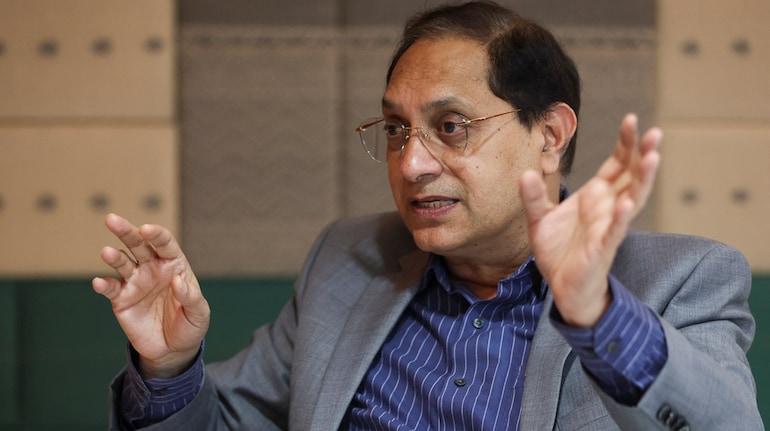
India’s capital markets have outgrown being a secondary funding channel, and with that scale comes a lower tolerance for governance failure, Securities and Exchange Board of India (SEBI) chairman Tuhin Kanta Pandey said on Thursday.
Pandey said market capitalisation has crossed Rs 470 trillion, rising to about 130 percent of GDP from 81 percent in 2015, while the number of investors has more than tripled to 13.7 crore over the same period. In that environment, governance is no longer a parallel concern but the foundation of market growth, he said.
Market size, investor base have fundamentally changed
Pandey said India’s capital markets have expanded rapidly over the past decade across both equity and debt. Together, they have facilitated average issuances of about Rs 9.6 trillion every year.
The mutual fund industry alone now has over 5.8 crore investors holding assets worth around Rs 81 trillion. The investor base has risen from 4.3 crore in 2015 to 13.7 crore in 2025, underscoring how deeply markets are now embedded in household finance.
As a result, capital markets are no longer peripheral avenues of funding, Pandey said, but a growing contributor to capital formation, allowing companies to raise resources transparently and at scale.
Governance risk outweighs business risk at scale
Markets can absorb business risk, Pandey said, but struggle to tolerate governance uncertainty. As markets expand, even small governance lapses can have amplified consequences, eroding trust faster than before.
Governance failures often appear obvious in hindsight, he said, but the real challenge lies in foresight, identifying early warning signals and acting before confidence is damaged. In larger, faster markets, reputational risks also materialise more quickly.
Boards and committees must function, not exist
Pandey said regulations only define minimum standards, while real effectiveness depends on how boards and independent directors function in practice.
Independent directors must be enabled through timely information, meaningful agendas and an environment that encourages questioning. Board committees, including audit, nomination and remuneration, and risk management, must operate as genuine oversight forums, not ceremonial bodies, he said.
Disclosure rules and compliance roles tightened
Pandey said SEBI has rolled out a series of governance reforms over the years aimed at strengthening oversight while improving ease of doing business.
These include stronger periodic disclosure requirements and a mandate for the top 250 listed companies to confirm, deny or clarify market rumours in cases of material price movement.
SEBI has also strengthened the compliance officer’s role by designating it as a key managerial position and requiring it to be a full-time role, positioned not more than one level below the board.
SEBI clears IPO disclosure changes
At its board meeting earlier this week, SEBI approved several new measures, including the introduction of an abridged prospectus at the draft offer document stage, in addition to the existing requirement at the final offer filing stage.
Pandey said the move is aimed at improving information accessibility, enhancing investor comprehension and enabling more informed participation in the IPO process.
Regulation to evolve with market complexity
Pandey said SEBI’s approach is calibrated, raising governance and transparency standards while reducing friction for compliant companies and intermediaries.
As markets grow more complex, investors become more discerning and information travels faster, governance cannot remain reactive, he said. Strong capital markets, Pandey added, are built not just on capital, but on confidence that rules are applied fairly and consistently.
Discover the latest Business News, Sensex, and Nifty updates. Obtain Personal Finance insights, tax queries, and expert opinions on Moneycontrol or download the Moneycontrol App to stay updated!
Find the best of Al News in one place, specially curated for you every weekend.
Stay on top of the latest tech trends and biggest startup news.




