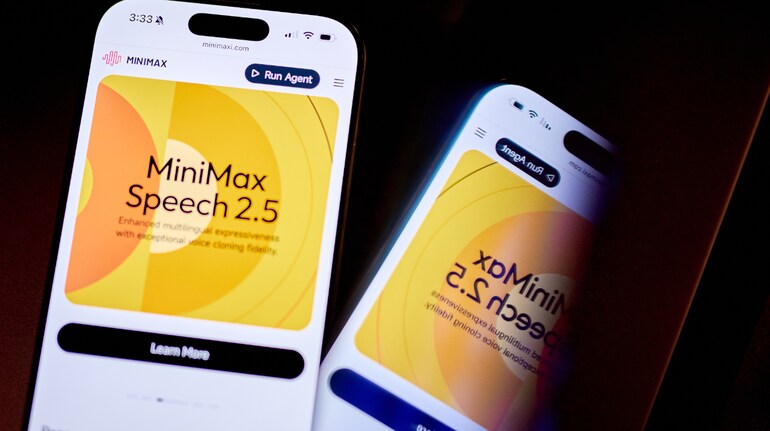

Two of China’s largest generative AI startups are set for back-to-back debuts in Hong Kong this week, testing investor appetite for an industry that blossomed in the post-ChatGPT era. Yet Zhipu and MiniMax — among the country’s earliest challengers to sector leaders including OpenAI — took very different routes to public markets.
Zhipu and Minimax begin trading Thursday and Friday, respectively, in a litmus test of whether investors believe China’s fledgling AI industry can compete on a global stage. Both epitomize the country’s no-frills approach to AI, operating with far less capital, fewer chips and leaner headcounts than the likes of OpenAI Inc. and Anthropic PBC. But they sport rather distinct pedigrees.
Zhipu is a six-year-old company founded by professors from China’s most prestigious university, backed by and serving mainly domestic institutions. The other is a younger, more traditional startup trying to one-up DeepSeek and OpenAI with consumer chatbots at home and abroad, supported by Alibaba Group Holding Ltd. and Abu Dhabi’s sovereign wealth fund.
MiniMax is run like a Silicon Valley startup, generating the bulk of its revenue from the 210 million users of its native AI apps through subscriptions and advertising. Government-backed Zhipu is popular with institutional clients, of which it has more than 8,000.
“These listings reflect a policy‑driven capital cycle as China accelerates investment into an indigenous semiconductor and AI supply chain,” said Aadil Ebrahim, group head of equities at Singapore-based Klay Group. “There is clearly strong investor appetite, as evidenced by the sharp share‑price gains of recent GPU and AI listings across both the A‑share and Hong Kong markets.”
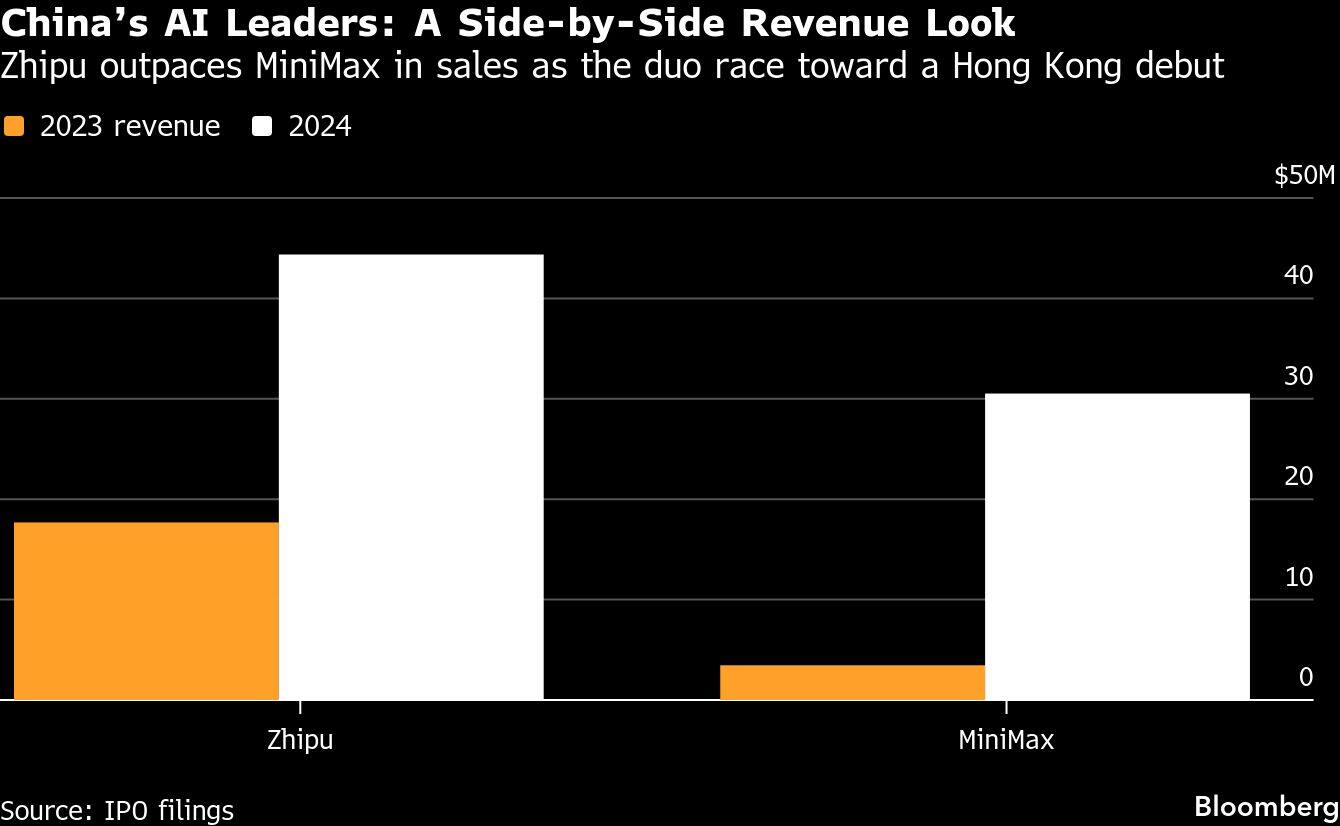
In 2024, Zhipu recorded 312.4 million yuan ($44.7 million) in revenue, topping MiniMax’s $30.5 million. Those figures represent a fraction of OpenAI’s estimated $13 billion in annualized revenue and Anthropic’s projected $9 billion, though Zhipu and MiniMax’s valuations are also far more modest at roughly $4 billion each before the listings.
 Staffed by elite AI scientists from Tsinghua University, Zhipu is celebrated as a pioneer in China’s AI industry.
It emerged in 2019 under the stewardship of renowned academic Tang Jie. After OpenAI released GPT-3 in mid-2020, the company set out to build an open-source alternative with comparable size. A team of 18 scientists, including Tang, pulled off the feat two years later with a modest budget of 4 million yuan for computing power, according to co-founder Zhang Peng, who is also the company’s chief executive officer.
“Looking at the balance sheet, it was clear that under a worst-case scenario, we wouldn’t have enough money to see it through,” Zhang said in an interview. “We essentially had just one shot to get it right.”
Zhipu’s leadership believes the Beijing-based startup embodies China’s approach to AI – one tightly integrated with the real economy and its industrial heavyweights. Zhang concedes that private on-premise deployments lack the glamor of consumer apps, but argues they are exactly what Chinese enterprises require. State-owned firms are unlikely to rely on open-source models or public-cloud infrastructure when building AI systems from scratch, creating an opening for Zhipu.
In contrast, Shanghai–based MiniMax has its roots in gaming. A devotee of the battle-arena game Dota 2, co-founder Yan Junjie first noticed OpenAI in 2019, when its bots defeated the world’s top human players. Captivated, he devoured the lab’s research papers, prompting a career pivot from computer vision to natural language processing. He pitched investors a plan to build AI agents approaching the threshold of the Turing test – which most found dubious, Yan said in an interview. He secured one of his first checks from Genshin Impact studio Mihoyo, whose founders obsess over using AI to revolutionize gaming. Mihoyo remains a key client.
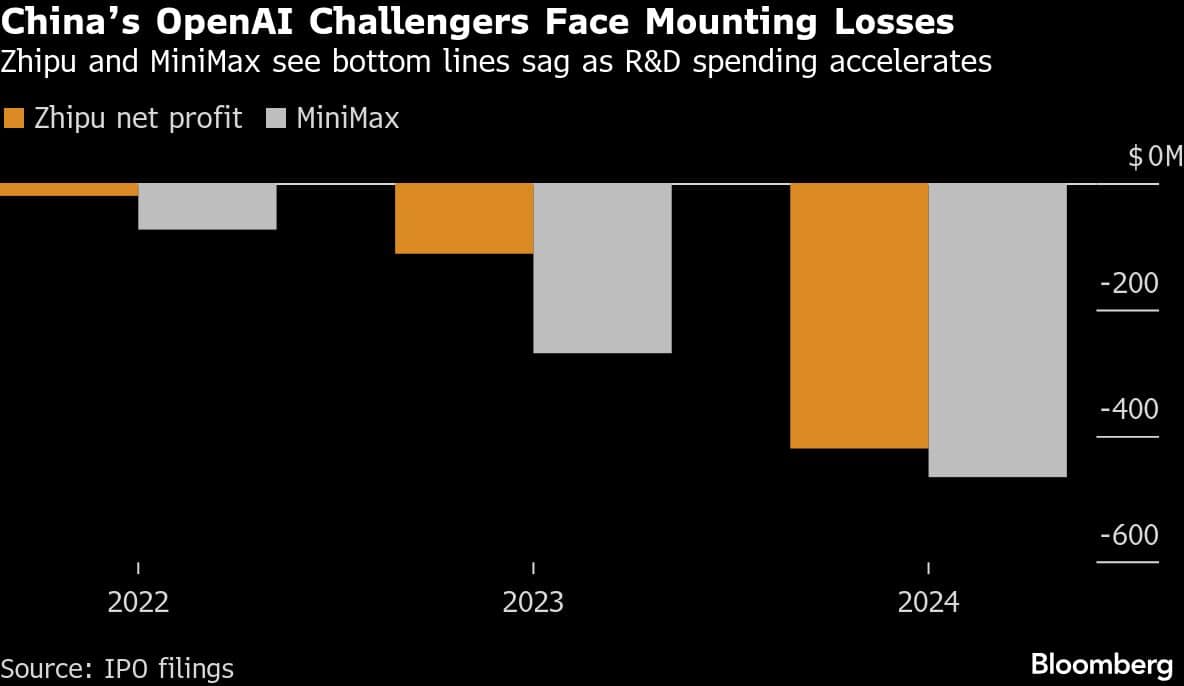
Both Zhipu and MiniMax are seeking to proliferate their tech globally, prioritizing scale over immediate profitability. Zhipu now markets an AI coding plan similar to Anthropic’s Claude, but at a fraction of the price. MiniMax competes with Sora and a long list of Chinese offerings monetizing AI video generation. Both are delving deeper into the Model-as-a-Service business – a cloud-based offering that allows users to deploy proprietary models and plug into their own applications.
But as in the US, there are also concerns in China about over-investment in AI infrastructure without clear paths to profitability.
 After surviving a brutal price war dubbed the “Battle of One Hundred Models,” each company is set to raise hundreds of millions of dollars. MiniMax secured cornerstone investors for its IPO, including Alibaba, the Abu Dhabi Investment Authority and South Korea’s Mirae Asset Securities. Constrained by a US trade-restriction blacklist, Zhipu’s backing is more domestic, featuring names like CICC and Taikang Insurance.
Retail investors subscribed to more than 1,350 times the MiniMax shares available, according to data based on margin loan applications available Wednesday afternoon on the Futubull app. The same figure was over 900 times in Zhipu’s case.
“While everyone likes to see euphoric gains and talk about them, the real test will be what happens six months to one year down the road,” said Philip Wen, managing director at MPM Capital, a Hong Kong-based family office. “I’m still in favor that the Chinese tech giants ByteDance, Alibaba, Tencent, Kuaishou will likely end up surviving the AI race long-term with pockets of segmented AI solutions offered by smaller companies.”
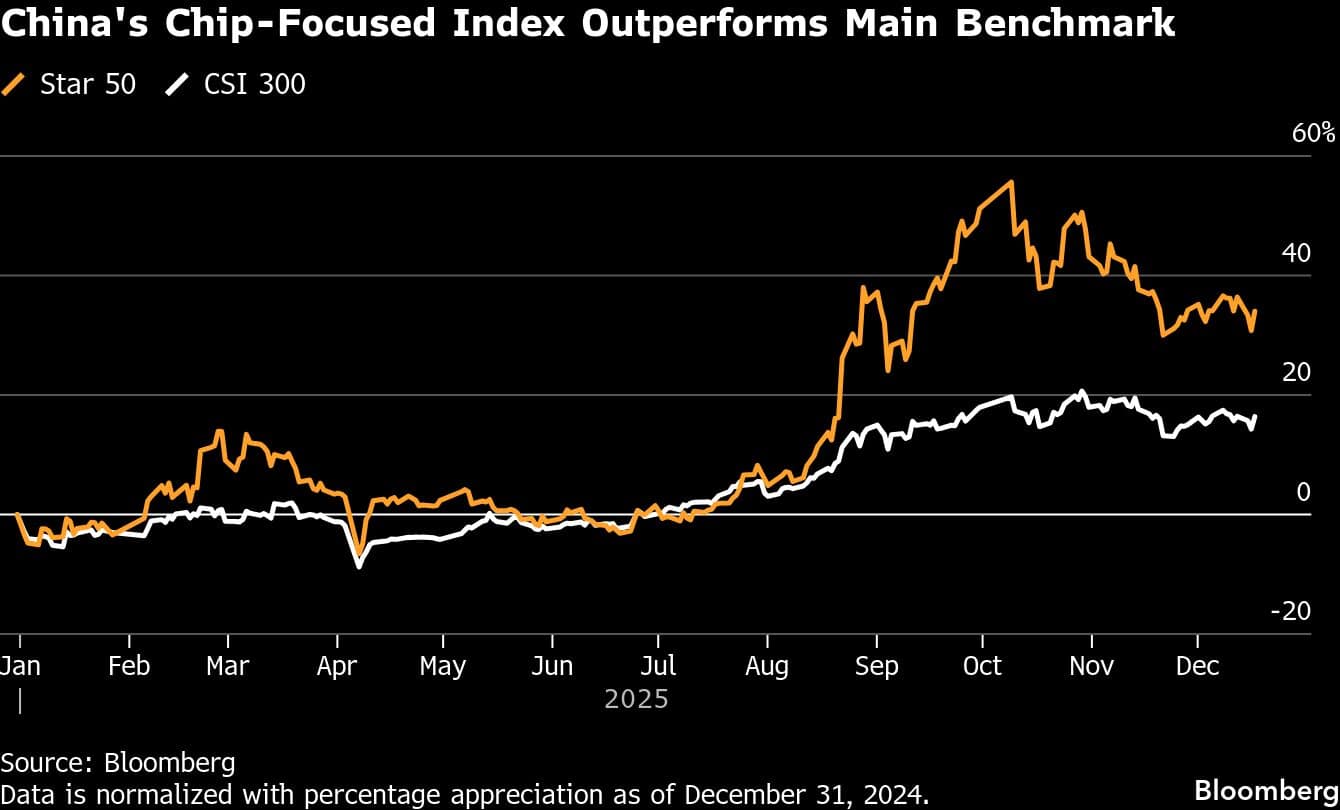
The listings follow a slew of eye-catching debuts by Chinese chipmakers considered key to the nation’s goal of technological self-reliance and winning the race on artificial intelligence. Last month, AI chipmaker Moore Threads Technology Co. saw its stock jump 425% on the first day of trading in Shanghai, followed by a 693% gain by MetaX Integrated Circuits Shanghai Co.
Discover the latest Business News, Sensex, and Nifty updates. Obtain Personal Finance insights, tax queries, and expert opinions on Moneycontrol or download the Moneycontrol App to stay updated!
Find the best of Al News in one place, specially curated for you every weekend.
Stay on top of the latest tech trends and biggest startup news.