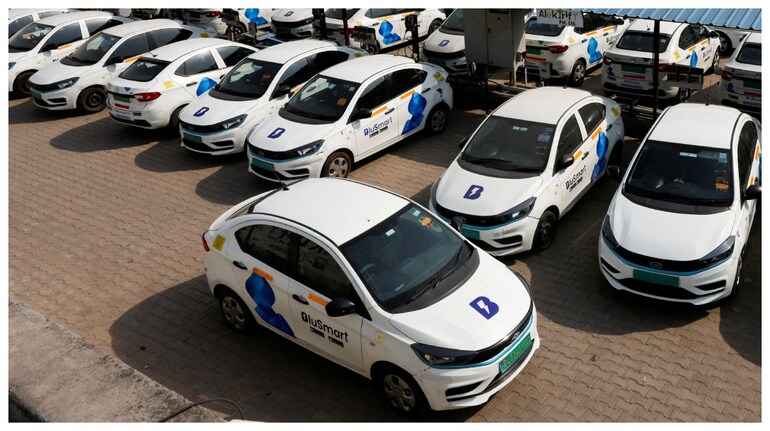
The government must seize the opportunity presented by the abrupt shutdown of BluSmart to protect clean mobility jobs and infrastructure by acquiring the company and integrating it into the newly announced Sahkar Taxi cooperative platform, writes Davinder Sandhu, co-founder and board chair at Primus Partners, in an opinion piece for The Indian Express.
BluSmart’s sudden halt in operations across Delhi-NCR, Mumbai, and Bengaluru, amid financial misconduct allegations against its founders, has disrupted the livelihoods of over 10,000 drivers and weakened public confidence in green transport ventures. But Sandhu argues that the venture’s collapse need not mean the end of its workforce or assets.
Founded in 2019, BluSmart quickly built a reputation as India’s first all-electric ride-hailing service with zero-cancellation policies, fixed fares, and a growing user base. Its environmentally conscious model was especially valued by women, elderly commuters, and working professionals.
Also Read | BluSmart appoints Grant Thornton for a forensic audit
Many of BluSmart’s drivers had switched from traditional aggregators in hopes of a cleaner, fairer system — but most did not own the vehicles they drove. Now jobless, they’re unable to shift to other platforms. Government intervention, Sandhu says, could safeguard their livelihoods and reinforce India’s EV ambitions under its Nationally Determined Contributions (NDCs).
Sandhu, in his opinion piece, proposes that BluSmart’s fleet, charging infrastructure, and tech systems be absorbed into the Sahkar Taxi scheme, launched by Union Minister Amit Shah in early 2025. The cooperative model aims to give drivers ownership, better earnings, and welfare support, a stark contrast to commission-heavy aggregator models.
With funding from the Ministry of Cooperation and the National Cooperative Development Corporation (NCDC), Phase I of Sahkar Taxi plans to onboard 20,000 driver-owners. Acquiring BluSmart would fast-track this rollout in major cities.
Do Not Miss | PFC, IREDA may auction Gensol’s EV fleet leased to BluSmart amid default fears
Sandhu suggests a phased transition, starting with government ownership through a special purpose vehicle (SPV), followed by gradual disinvestment to cooperative societies over five to seven years. Global examples like Spain’s Mondragon and Italy’s Emilia-Romagna show such models can thrive even during crises.
“BluSmart’s downfall is a cautionary tale of unchecked growth,” Sandhu writes, “but it also presents a unique chance to back ethical, sustainable innovation. India must not let one company’s failure derail its green urban mobility vision.”
Discover the latest Business News, Sensex, and Nifty updates. Obtain Personal Finance insights, tax queries, and expert opinions on Moneycontrol or download the Moneycontrol App to stay updated!
Find the best of Al News in one place, specially curated for you every weekend.
Stay on top of the latest tech trends and biggest startup news.