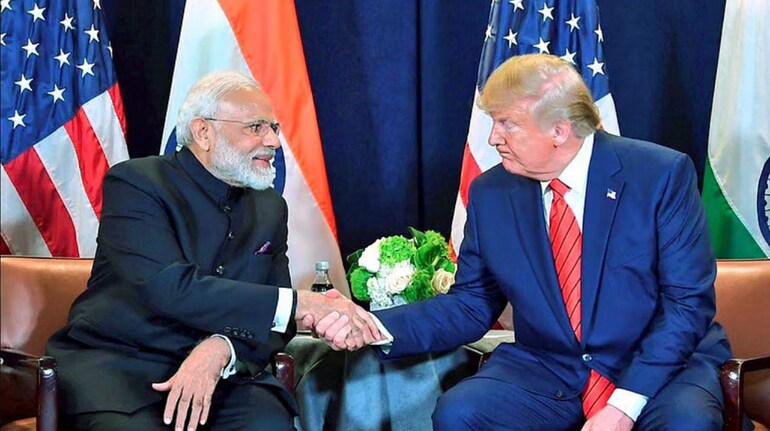

The White House fact sheet on the India-US trade agreement appears to have undergone notable revisions within hours of its release, with references to digital services taxes, pulses imports and customs duties on electronic transmissions removed in a subsequent version.
The updated fact sheet now broadly aligns with the joint statement issued earlier by the two countries, reverting to language closer to the language formally agreed.
In the initial fact sheet released on February 9, the US indicated that India agreed to purchase “certain pulses” from American suppliers, a detail absent from the joint statement issued on February 6. The agriculture component also appeared stronger in the earlier fact sheet, where India’s “intent” to buy $500 billion worth of US goods was described as a “commitment”, and agricultural products were explicitly added alongside energy, information and communication technology, coal and other goods.
Perhaps the most consequential change concerned digital trade. The first version of the fact sheet suggested that India would remove its digital services tax and continue the prohibition on customs duties on electronic transmissions, language that wasn't there in the bilateral joint statement. These references were subsequently removed.
The issue is particularly sensitive given the global debate over digital taxation and electronic-transmission duties. The World Trade Organization moratorium on customs duties for electronic transmissions, first introduced in 1998, is scheduled to expire in March 2026. While developed economies have generally favoured extending the moratorium, several developing countries, including India, have raised concerns over potential revenue losses.
The moratorium currently prevents countries from imposing customs duties on digital imports such as software, e-books, video games, music files and other digitised products. Disagreements persist over its scope, especially as digital trade expands into newer areas such as 3D-printing designs and other data-driven goods.
The revisions highlight the sensitivity surrounding trade commitments in agriculture, digital taxation and emerging areas of digital commerce.
Discover the latest Business News, Sensex, and Nifty updates. Obtain Personal Finance insights, tax queries, and expert opinions on Moneycontrol or download the Moneycontrol App to stay updated!
Find the best of Al News in one place, specially curated for you every weekend.
Stay on top of the latest tech trends and biggest startup news.