






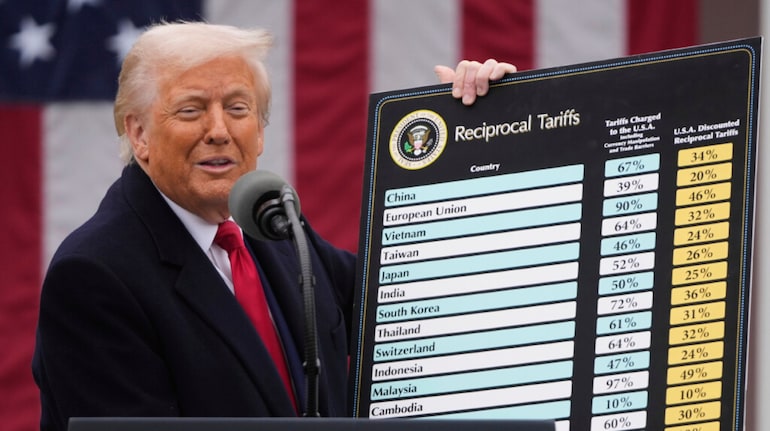

The US Supreme Court’s decision to strike down tariffs imposed during the Trump administration may provide further relief to nearly a third of India’s exports to the United States, which were sharply affected after Washington imposed a 50 percent tariff in August.
With tariffs expected to revert to Most Favoured Nation (MFN) rates — roughly 3 percent before the tariff escalation — Indian exporters could regain price competitiveness in several labour-intensive sectors. Tariffs were reduced to 25 percent after the US decision to remove Russia-related duties after the two countries signed a joint statement and were supposed to come down to 18 percent.
Between September and November, India exported close to $19 billion worth of goods to the US, of which over $6 billion — nearly one-third — saw year-on-year contractions exceeding 30 percent following the tariff hike. The cumulative hit over this three-month period amounted to nearly $4 billion, with certain commodity and labour-intensive segments experiencing a near collapse in shipments.
Some categories saw exports fall to negligible levels. Basmati rice shipments dropped to zero compared with about $83 million in the corresponding period a year earlier. Pomfret exports declined sharply, while maize and corn flour shipments also registered steep falls.
The impact was particularly pronounced in the gems and jewellery sector. Non-industrial diamond exports plunged 96 percent, declining by $156 million to just $14.4 million. Cut and polished diamonds — one of India’s largest export categories to the US — recorded a 74 percent decline despite accounting for close to $1 billion in trade during the comparable period last year.
Food and consumer goods categories also weakened. Dried pasta exports fell around 70 percent, gold jewellery shipments declined nearly 50 percent, while exports of black pepper, tea bags and battery chargers dropped by roughly half. Seasonal apparel such as woollen jackets and blazers registered a 35 percent year-on-year decline, highlighting their sensitivity to tariff-induced price increases.
Not all sectors were adversely affected. Electronics exports showed resilience, with smartphone shipments rising 217 percent and personal computer exports increasing more than fourfold during the period, reflecting ongoing supply-chain diversification and relative insulation from tariff shocks.
Overall, India’s total exports to the United States declined only about 1 percent during the September–November period compared with a year earlier, suggesting strength in certain high-value sectors offset losses elsewhere.
However, tariffs could return if the US uses other trade measures Section 122 of the Trade Act of 1974 and Section 338 of the Tariff Act of 1930.
Discover the latest Business News, Sensex, and Nifty updates. Obtain Personal Finance insights, tax queries, and expert opinions on Moneycontrol or download the Moneycontrol App to stay updated!
Find the best of Al News in one place, specially curated for you every weekend.
Stay on top of the latest tech trends and biggest startup news.





