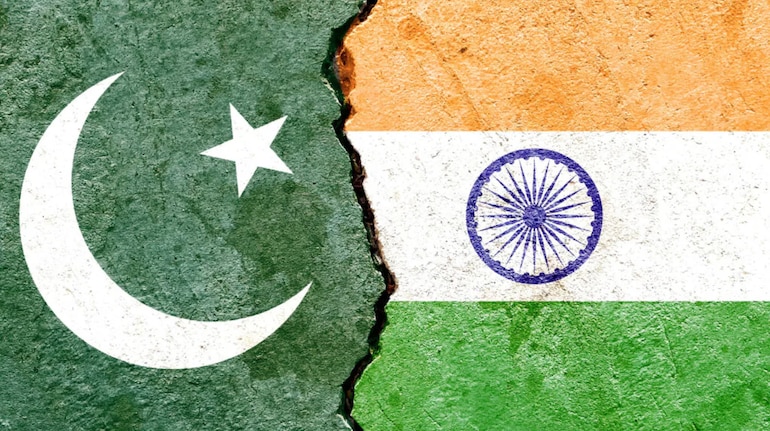

At first glance, India and Pakistan appear to be travelling similar paths in defence procurement. Over the past two decades, aircraft have dominated arms imports for both countries, reinforcing the centrality of air power in South Asia’s strategic calculus. But beneath that surface similarity lies a widening divergence. The composition of what each country buys—and what it prioritises—reveals two different military trajectories.

For India, aircraft have historically been the backbone of defence imports, but their dominance has gradually eased. Between 2007 and 2012, aircraft made up roughly 60 percent of India’s arms purchases, rising marginally to 61 percent in the 2013–18 period. Since then, their share has dropped to about 45 percent in 2019–24. This decline does not signal a reduced focus on air power. Instead, reflects a broadening of India’s procurement strategy.
Missiles have emerged as a major pillar of this shift. Their share of India’s defence imports has surged from just over 6 percent in 2007–12 to around 21 percent in the most recent period. Alongside this, spending on air-defence systems and artillery has risen steadily.
Even armoured vehicles, which had seen their share fall in the mid-2010s, have staged a modest recovery.
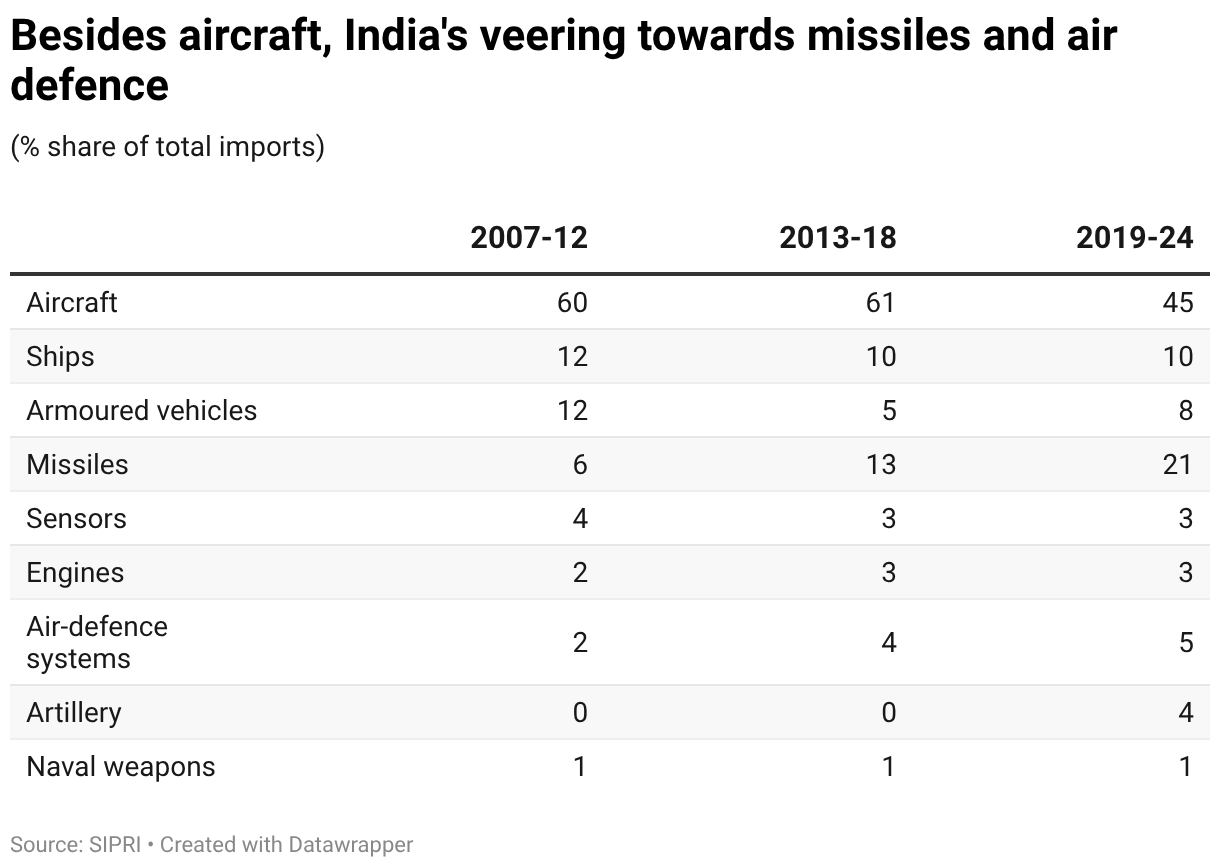
This diversification is unfolding even as New Delhi prepares for another major fighter aircraft acquisition. Following Operation Sindoor, aircraft remain central to India’s military planning. According to a January 14 report by ANI, the government may clear a Rs 3.25 lakh crore proposal to acquire 114 Rafale fighter jets from France.
France accounted for 31 percent of India’s defence imports during 2019–24, a sharp jump from just 5.1 percent in the previous six-year period and less than 1 percent between 2007 and 2012.
Pakistan’s pivot
Pakistan’s procurement profile, while also aircraft-heavy, tells a markedly different story. Aircraft have consistently formed a smaller share of its arms imports—about 45 percent in 2007–12, falling to 38 percent in 2013–18 and stabilising around 39 percent in 2019–24.
The more striking change has been at sea. Naval platforms have surged to nearly 29 percent of Pakistan’s defence imports in the latest period, up sharply from just 11 percent in the preceding decade.

Missile imports in Pakistan’s case have been far more volatile. Their share jumped to around 20 percent in 2013–18, before dropping below 9 percent in 2019–24.
Spending on air-defence systems has also fallen sharply in recent years, while artillery has accelerated. While both countries continue to value air power, India’s recent procurement choices point to an effort to integrate aircraft with missiles, sensors, air-defence networks and artillery. Pakistan, by contrast, appears to be concentrating resources on strengthening its navy, even as other segments fluctuate.
Discover the latest Business News, Sensex, and Nifty updates. Obtain Personal Finance insights, tax queries, and expert opinions on Moneycontrol or download the Moneycontrol App to stay updated!
Find the best of Al News in one place, specially curated for you every weekend.
Stay on top of the latest tech trends and biggest startup news.