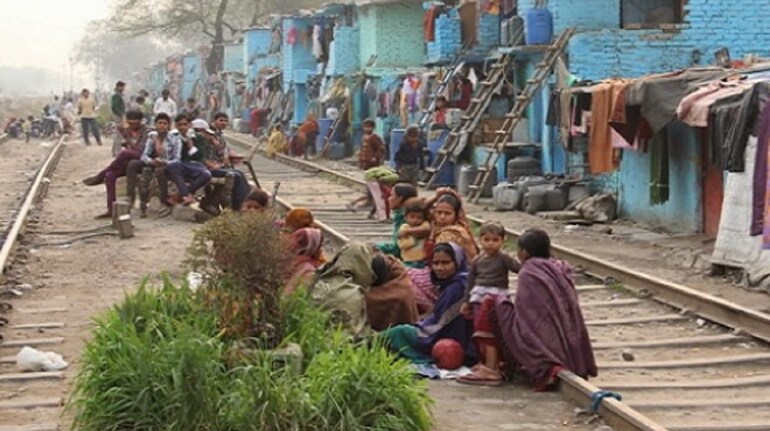

The government is planning to undertake a nationwide survey of urban slums after a gap of over a decade, a move that could substantially refresh India’s understanding of living conditions in some of its most vulnerable urban settlements, Moneycontrol has learnt.
The planned exercise, expected to begin around July 2027, will assess the physical condition of slums across cities and estimate the population living in them. It will be the first comprehensive survey of its kind since 2012, when the National Sample Survey Office conducted an assessment under its 69th round.
What did 2012 survey say?
According to the 2012 survey, India had an estimated 33,510 slums spread across urban areas, housing around 8.8 million households.
Nearly two in every five slum households were located in Maharashtra alone, underlining the scale of urban deprivation in the country’s most industrialised state. Andhra Pradesh ranked second, accounting for about 13.5 percent of slums and roughly 18 percent of the slum population.
Beyond numbers, the earlier survey highlighted a structural challenge that policymakers continue to grapple with—the dominance of non-notified slums. At the all-India level, around 59 percent of slums were classified as non-notified settlements, meaning they lacked formal recognition from local authorities. While these slums accounted for a smaller share of households than notified ones, they consistently lagged on basic indicators such as access to drainage, sanitation, garbage disposal and formal electricity connections.
One household for every 1,000 had an electricity connection in non-notified slums compared with 111 for their notified counterparts.
Maharashtra stood out not just for the scale of its slums, but also for their composition. The state accounted for about 23 percent of India’s total slums, but nearly 29 percent of all non-notified slums and close to 38 percent of slum-dwelling households nationwide.
New priorities, better targeting
The upcoming survey is expected to generate updated estimates at a time when India’s urban landscape has changed dramatically and government services have reached a larger population.
Since 2012, cities have expanded rapidly, migration patterns have shifted—especially after the pandemic—and multiple central and state-level housing and infrastructure programmes have been rolled out.
Officials say that granular data would help design and target interventions effectively.
The earlier survey had also thrown light on uneven access to government schemes. It examined coverage under programmes such as the Jawaharlal Nehru National Urban Renewal Mission and the Rajiv Awas Yojana. Among notified slums, about 323 out of every 1,000 households reported benefiting from JNNURM. For non-notified slums, the ratio dropped sharply to just 180 per 1,000 households. At the national level, less than a quarter of all slum households were covered by the central scheme.
Discover the latest Business News, Sensex, and Nifty updates. Obtain Personal Finance insights, tax queries, and expert opinions on Moneycontrol or download the Moneycontrol App to stay updated!
Find the best of Al News in one place, specially curated for you every weekend.
Stay on top of the latest tech trends and biggest startup news.