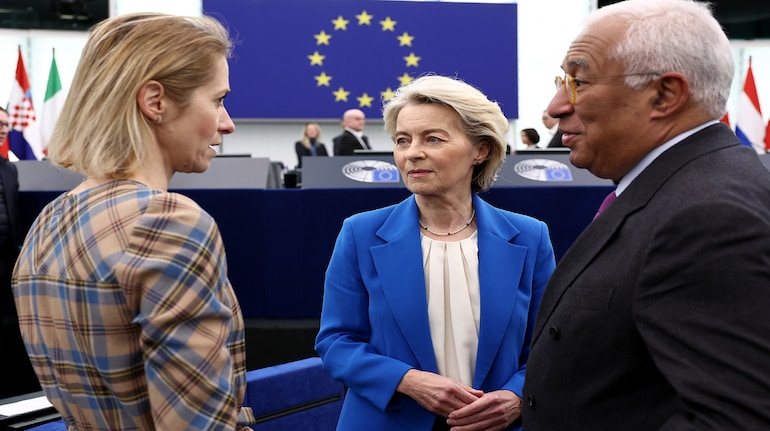

India could gain competitiveness in nearly $5 billion worth of trade as a fallout of the European Union’s agreement with the Mercosur bloc, even as New Delhi prepares to finalise its own free trade deal with the European Union, a Moneycontrol analysis shows.
India is in advanced discussions on a comprehensive trade agreement with the EU, which Ursula von der Leyen has described as a priority engagement for the bloc. The timing is significant. As the EU rebalances its trade relationships and attempts to reduce over-dependence on a limited set of suppliers, competitive dynamics are shifting, creating openings for Indian exporters in areas where Mercosur countries currently dominate.
A large part of the potential upside lies in agri and food products, where India already has scale and experience but has faced tariff and regulatory hurdles in Europe. Frozen shrimps stand out as a major opportunity. As market conditions evolve, India could gain access to nearly $525 million worth of EU demand for this category. Grapes present another opening, with an estimated $131 million market that could become more contestable for Indian exporters.
Beyond food, the spillover effects extend to labour-intensive manufacturing. In segments such as garments, leather goods and light engineering, Mercosur producers often face higher logistics costs and, in some cases, limitations in scale. If EU sourcing preferences shift even marginally, India could strengthen its position, especially if its own trade agreement lowers tariff barriers and simplifies compliance.
Chemicals and industrial intermediates offer another area of opportunity. Stricter environmental and sustainability requirements imposed by the EU could raise compliance costs for South American exporters, potentially tilting competitiveness towards Indian suppliers that are already adapting to global standards across multiple markets.
Taken together, these shifts suggest that India’s competitiveness could improve across roughly $5 billion worth of EU-bound trade where the balance between suppliers is in flux. While the gains are not automatic and will depend on how India’s EU agreement is structured and implemented, the Mercosur fallout provides a timely external tailwind.
If executed well, India’s trade pact with the EU could allow exporters to capitalise on this moment, expanding market access in food products, labour-intensive manufacturing and chemicals at a time when Europe’s sourcing strategies are being recalibrated.
Discover the latest Business News, Sensex, and Nifty updates. Obtain Personal Finance insights, tax queries, and expert opinions on Moneycontrol or download the Moneycontrol App to stay updated!
Find the best of Al News in one place, specially curated for you every weekend.
Stay on top of the latest tech trends and biggest startup news.