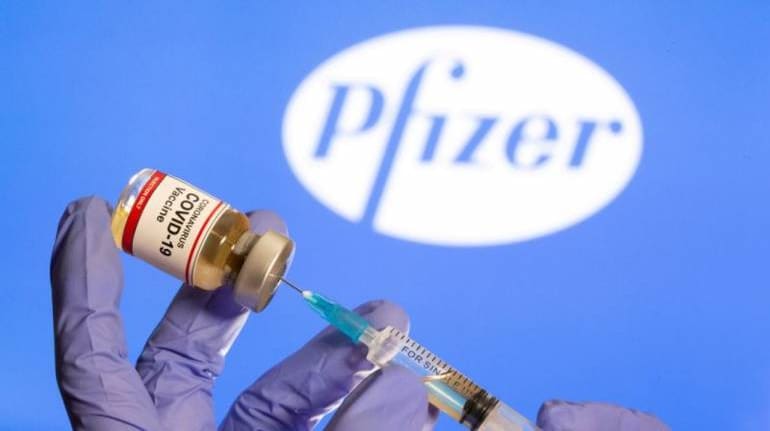
Pfizer remains committed to work with the government of India to bring its COVID-19 vaccine to the country, but its approach wouldn't change for India, the company said on June 22.
"Our frameworks in India are consistent with those anywhere in the world where our COVID-19 vaccine is being supplied," a Pfizer spokesperson told Moneycontrol.
"We continue to engage with the government to make our Pfizer-BioNTech vaccine available for use in the country. Since the ongoing discussions are confidential, we cannot provide any further comments,” the spokesperson added.
Pfizer and Moderna have been insisting on indemnity or a liability shield against potential lawsuits relating to vaccine-related adverse events.
Pfizer says countries it is supplying vaccines have agreed to indemnify it for civil-legal claims as part of the purchase pacts.
India has not agreed to this so far, although it has been reported that it may grant indemnity.
Pfizer's statement comes amid ongoing negotiations between the company and the Indian government, which have gone on for months.
Any hints of Indian government extending indemnity to Pfizer, is met with similar demands from other vaccines makers including Serum Institute of India (SII) on the basis of equity.
Emails sent to Vinod K Paul, Member (Health), NITI Aayog and Rajesh Bhushan, Secretary, Health and Family Welfare went unanswered till the time of publishing this story.
Please read here on what is indemnity and why vaccine manufacturers are demanding it in supply contracts
Granting indemnity will mean that there will be a shift of liability from the manufacturer to the government. The government will have to create a compensation mechanism for individuals if there is a damaging side effect.
On Monday, Paul in an interview to CNBC-TV18 said that supply of Pfizer vaccine is subject to conditionality, alien to India.
"They conduct supply in a certain way. We have not seen this paradigm. The gap needs to be bridged," Paul said.
"We want even our own manufacturers to be protected, but if there are adverse reactions, there has to be a legal remedy," he added.
Paul said he hoped it was possible to have vaccines from Pfizer, Moderna COVID-19 in this year.
Change of circumstancesAnalysts say signing a deal with Pfizer vaccine may be delayed as the government is hardening its position, as the COVID-19 second wave is receding, domestic manufacturers are gearing up for production, and new COVID-19 vaccines are expected to hit the market.
A section of the government also believes that Pfizer’s vaccine may lead to inequities in distribution, as the vaccine has to be stored at an extremely low temperature of -70 degrees Celsius, for which there is no facility in most of the country, barring a few metro cities.
"They are taking it slow; they want to give it more time, as they expect more supplies of Covishield, Covaxin, Sputnik V, and other vaccines," Ritika Ganju, Partner, Phoenix Legal.
Ganju says that Pfizer’s product is an effective vaccine to have in the arsenal, and India should plan for the third wave.

Discover the latest Business News, Sensex, and Nifty updates. Obtain Personal Finance insights, tax queries, and expert opinions on Moneycontrol or download the Moneycontrol App to stay updated!
Find the best of Al News in one place, specially curated for you every weekend.
Stay on top of the latest tech trends and biggest startup news.