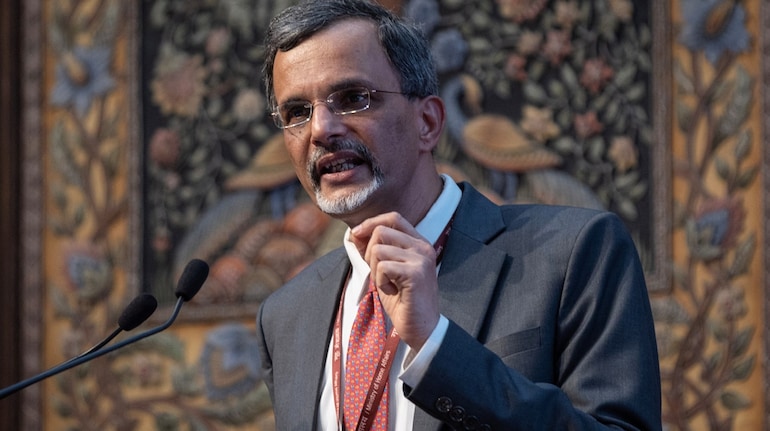

India’s chief economic adviser V Anantha Nageswaran said the Economic Survey’s suggestion to rationalise taxation on debt instruments was made in the spirit of seeing some room for re-examination of capital gains taxes in certain areas.
"Capital gains taxes were rationalised quite a bit in the July 2024 Budget. But there are still some areas that can be re-examined and, in that spirit, we made that suggestion," Nageswaran said in an interview.
"To finance sustained growth, India must strengthen long-term capital markets," a coordinated agenda, which would include rationalising tax treatment of debt instruments, according to the Economic Survey prepared under the supervision of the chief economic adviser.
Nageswaran added that the resolution of talks for trade deal has been an important factor for the rupee in the minds of investors, based on feedback from them. He added that as and when the issue is resolved, investors will naturally reassess their stance towards the Indian market.
The Economic Survey for 2025-26 was tabled in the Parliament on January 29, days ahead of the Budget.
Nageswaran said, further reforms to reduce operating costs, lower input costs, deregulation, and skill creation can lift medium-term growth higher than the estimated 7 percent.
Edited excerpts:The Economic Survey raises India’s medium term growth potential to around 7 percent. What are the top reforms needed to sustain this growth rate?
These are all evolving numbers. Three years ago, 6.5 percent GDP growth looked feasible, but now, on the back of public investments in infrastructure, reforms by the government and states, and by putting more purchasing power in the hands of the people, etcetera, all these factors gave us confidence to upgrade the growth estimate for the medium term. Obviously, if there are more reforms in the nature of reducing operating costs for businesses, lowering input costs, and further deregulation in states, and in the creation of skilled manpower in AI and non-AI related areas, then this number can go up. These are all things that evolve on the basis of real economic development.
Is 8 percent still the medium-term growth rate required to become a Viksit Bharat?
We should not fixate on a number as much as what actions we need to take.
The Survey flags large cash transfers as a risk to states’ finances and also on how they may impact sovereign borrowing costs as well. Could you elaborate on this?
We have commented on the pros and cons of large cash transfers by states and their long-term impact on both their own finances, the behavioural implications they have on employability and the willingness of people to upskill themselves when they receive such large cash transfers, and how this will cast a shadow on the overall cost of capital for even the sovereign.
By proposing to reduce the government ownership threshold in sate-run companies to 26 percent with special resolution rights, is the Economic Survey signalling a return to big, ambitious disinvestment targets?
This is in line with the policy that the government of India announced in 2021, keeping ownership in strategic sectors and divesting in other areas. We also wrote it from the perspective of widening non-tax receipts, among others, so that is where it is. The implications of this could be greater buoyancy in non-tax receipts and it could also improve liquidity in the financial markets. All this can be possible implications of this move. It is just an idea we have put out in the public domain; it is for the government to consider taking this into account as a practice as well.
Could you elaborate on the idea of disciplining Swadeshi?
Disciplining Swadeshi would mean indigenisation happening with an eye on quality and competitiveness, and therefore more protection in return for productivity and export competitiveness.
Is the Economic Survey’s recommendation to rationalise taxation on debt instruments also aimed at reducing or reworking withholding tax to attract greater foreign bond investor flows, deepen India’s bond markets, and lower the cost of capital?
Capital gains taxes were rationalised quite a bit in the July 2024 Budget. But there are still some areas that can be re-examined and, in that spirit, we made that suggestion.
The Economic Survey notes that the rupee has been punching below its weight and that its depreciation does not reflect India’s strong domestic fundamentals. Do you see a recovery path for the rupee, and how important is progress or resolution in India US trade talks in supporting that recovery?
Obviously, it, (India US trade deal resolution), has been an important factor (for the rupee) in the minds of investors, we believe, based on what we hear from different investors. As and when it gets resolved, they will naturally reassess their stance towards the Indian market.
What are your views on the food weight in the CPI basket reducing to around 37 percent? Would this increase the importance of core inflation, and if so, how would one tackle the volatility seen in core inflation as well?
The weight of food in the CPI is reducing to 37 percent from 39 percent. I do not know what kind of big impact it will have. Core inflation, outside of gold and silver, has been coming down, it has not been so volatile. We will wait and watch what comes up on February 12.
Is the private sector still on the sidelines when it comes to investments?
The private sector has done well in 2024 and 2025. It is too early to say how it has been faring in FY26. I think we have given demand visibility through direct and indirect tax reductions, and at the same time global factors are not constant, they keep changing, and the private sector will naturally have a certain understanding of uncertainty that affects their individual businesses. Whatever we need to do, we have been doing on the policy side, deregulation, tax rates, and processes, and as and when conditions turn more favourable, they will start investing. But in general, having a gross fixed capital formation rate of around 30 percent, in the current context, is a pretty decent rate of investment as a share of GDP.

Discover the latest Business News, Sensex, and Nifty updates. Obtain Personal Finance insights, tax queries, and expert opinions on Moneycontrol or download the Moneycontrol App to stay updated!
Find the best of Al News in one place, specially curated for you every weekend.
Stay on top of the latest tech trends and biggest startup news.