




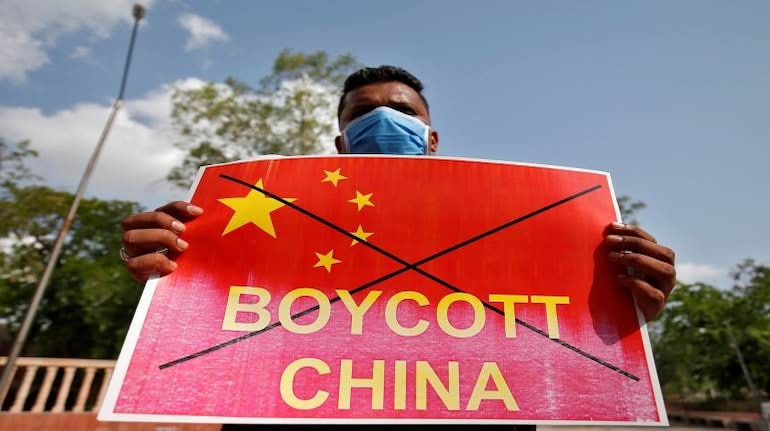
Auto - A road map needed China’s share in the overall $120 billion Indian automotive industry is just 4 percent. But that is just half of the story.
Here is the critical part. The country's share in India's automotive import is a substantial 27 percent, or $4.75 billion, of the total $17.6 billion, according to the Automotive Component Manufacturers Association (ACMA), the apex body of auto parts manufacturers.
India imports drive transmission parts, electronic and electrical items, cooling systems, suspension, braking and steering parts from China.
Despite some companies achieving localisation as high as 95 percent, some critical parts are still being imported from China. These parts are not imported by vehicle manufacturer but by their parts vendors. It is a similar story for battery cells.
A senior executive from a large company involved in supplying crucial automotive parts said, “More than giving a warning to China, it was the government’s way of telling us to be self-dependent. ‘If it is done once it can be done again in future, so better pull up your socks’, was the message to us. But automotive industry is already highly localised.”
To ensure high self-reliance, planning and incentives are needed.
“We can achieve an Atmanirbhar Bharat only when a clear roadmap of eight to 10 years is planned, and economies of scale are achieved. Our logistics costs are some of the highest in the world. Industrial power costs are also high. It's a vicious cycle," Rajan Wadhera, President, the Society of Indian Automobile Manufacturers, said.
Steel - Identifying alternatives JSW Group Chairman Sajjan Jindal was among the few leading entrepreneurs who openly talked about building local capabilities rather than depending on China.
He added that many of his industrialist friends were upset as business with China is important to maintain healthy margins, but Jindal said the situation has arisen "because of our complacency" in accepting cheaper products from across the border, instead of developing local capabilities.
His son Parth Jindal had earlier mentioned that the JSW Group will completely reduce its dependence on China over the next two years.
The Group's flagship company - JSW Steel - has already identified alternative sources for some of the raw materials it uses to run its steel plants.
"A lot of things, including ferro alloys, electrodes and refractories are imported by Indian steelmakers from China. The dependency is particularly high - 75 percent - when it comes to refractories," Joint MD and Group CFO Seshagiri Rao told Moneycontrol.
"We have a plan. We have identified suppliers in Turkey, Brazil, Norway and South Korea. In the next two years, we will get out of China," Rao said.
While that is promising, the tougher task is to find sources for capital goods used in steel industry. Even if one goes to manufacturers in Germany or Italy, these companies actually produce their equipment in China, Rao pointed out.
Critical thing, Rao said, would be for the Indian government to incentivise these German and Italian companies to set up shop here. "China insists that these companies set up local units and transfer technology. There is no reason why we shouldn't do the same," he added.
Pharma - The API puzzle Not just India, but other countries too are looking to reduce their reliance on China. And that is beginning to benefit companies in India, especially those in the pharmaceutical industry.
One of them is Aarti Drugs, which was one of the few companies to report a stellar rise in revenue and profit in Q1 FY21. The company manufactures Active Pharmaceutical Ingredient, or APIs, that are used to produce drugs.
Despite the company's obvious gains, it is too early to say if India is becoming more self-reliant in the requirement of this critical raw material. Indian pharma companies import anywhere between 60 to 90 percent of their API needs from China.
The good part is that the Indian government has announced Rs 6,940 crore and Rs 3,000 crore, respectively, for performance-linked incentives (PLIs) and bulk drug parks. Under the PLI scheme, financial incentives will be offered to eligible manufacturers of 53 identified critical APIs on their incremental sales over the base year (2019-20) for six years.
Companies, including Aarti Drugs, are already finalising plans to make the most of the incentive. But this is a long-term play.
India Ratings and Research believes material benefits, if any, will be visible only in the long term. Chinese raw material suppliers have inherent advantages in scale, cost productivity and government support, which are difficult to build in the short to medium term.
Clearly, not just for the pharma sector, but overall, that will be the critical factor in becoming Atmanirbhar - if Indian companies and the government can keep their foot on the pedal, even after the nationalism fervour subsides.
With inputs from M Saraswathy, Swaraj Baggonkar, Viswanath Pilla & Prince Mathews ThomasDiscover the latest Business News, Sensex, and Nifty updates. Obtain Personal Finance insights, tax queries, and expert opinions on Moneycontrol or download the Moneycontrol App to stay updated!
Find the best of Al News in one place, specially curated for you every weekend.
Stay on top of the latest tech trends and biggest startup news.




