






The Reserve Bank of India (RBI) seems to have chosen to steer clear of a controversial proposal made by an internal working group (IWG) that pitched for large corporate houses setting up banks. The suggestion was missing from the list of recommendations accepted by the central bank on November 26.
“Large corporate/industrial houses may be allowed as promoters of banks only after necessary amendments to the Banking Regulation Act, 1949 (to prevent connected lending and exposures between the banks and other financial and non-financial group entities); and strengthening of the supervisory mechanism for large conglomerates, including consolidated supervision,” the internal group’s recommendations that were released on November 20, 2020 said
The proposal had immediately triggered a debate.
Split wide open
A section of experts, including former central bankers, argued that letting business houses set up banks would lead to the misuse of banking institutions, which were guardians of public money.
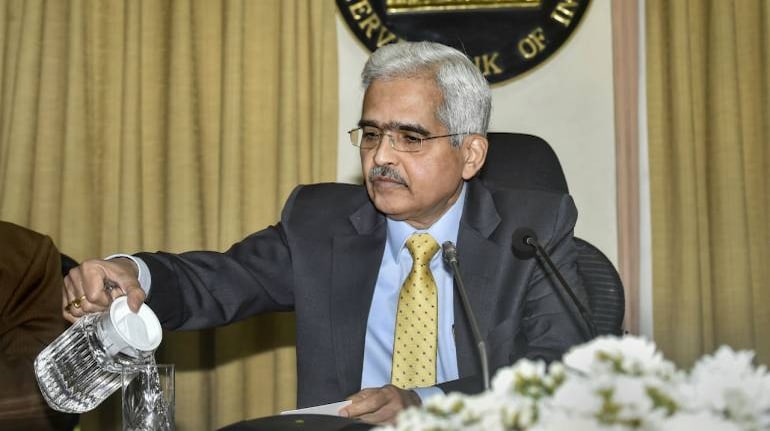
Earlier, RBI Governor Shaktikanta Das, too, had distanced from the recommendation.
The proposal was not the RBI’s official view, Das said. “It is a report of the IWG, not the RBI’s official view. The IWG has two external members. It has acted independently. They have given an extra point of view. The RBI has not taken any decision. Our approach is consultative (on this issue). The report is in the public domain. After comments, we will examine and take a considered decision,” Das said during the post-monetary policy presser on December 4.
Experts, including RBI's former governor Raghuram Rajan and former deputy governor Viral Acharya, came out openly against the idea.
Former ICICI Bank CEO KV Kamath and Bandhan Bank CEO Chandra Shekhar Ghosh, however, were among those who were in favour of the idea, saying with enough regulations, the corporate entry would be good for the sector.
Writing for Mint, Kamath said India should consider opening up the banking sector to let corporates in under tight supervision.
“Since India must broaden and deepen its financial system to achieve its national goals, we need to seriously consider letting corporate players in, albeit once appropriate checks and balances are in place to ensure systemic stability,” Kamath wrote.
He said the risks of allowing corporate houses in the banking sector were true of any sector. “The question is how we mitigate this risk with checks and balances,” Kamath said.
‘Bombshell’ proposal
Both Rajan and Acharya strongly opposed to the idea of letting private businesses in the business of banking. In a jointly written article that was shared on a social media platform, Rajan and Acharya described the IWG's most important recommendation—letting businesses own banks—as a "bombshell".
“Why now? Have we learnt something that allows us to override all the prior cautions on allowing industrial houses into banking?” they asked.
The RBI has been hesitant in letting large businesses promote banks. Rajan and Acharya questioned the urgency and timing of the proposal.
“After all, committees are rarely set up out of the blue. Is there some dramatic change in perception that it is responding to?” they said.
In the appendix, the IWG report said all experts it consulted but one opposed the idea. “Yet, it recommends the change,” Rajan and Acharya said.
The RBI has on three occasions issued licences for private banks since the nationalisation of banks in 1969.
In the first round in 1993-94, the RBI gave licences to 10 private banks—Global Trust Bank Ltd, ICICI Bank Ltd, HDFC Bank Ltd, UTI Bank Ltd (renamed Axis Bank Ltd), Bank of Punjab, IndusInd Bank Ltd, Centurion Bank Ltd, IDBI Bank Ltd, Times Bank and Development Credit Bank Ltd.
Some of these banks no longer exist as they were acquired by bigger banks.
In 2003-04, Kotak Mahindra Bank Ltd and Yes Bank Ltd were allowed in. In 2014, IDFC First Bank and Bandhan Bank were given the licence.
The IWG proposals, however, came with riders. Large corporate and industrial houses may be allowed as promoters of banks only after necessary amendments to the Banking Regulation Act, 1949, it said.
The provision was aimed at preventing connected lending and exposures between the banks and other financial and non-financial group entities and strengthening the supervisory mechanism for large conglomerates, including consolidated supervision, it said.
Rajan and Acharya, however, didn’t think it was enough. “If sound regulation and supervision were only a matter of legislation, India would not have an NPA (non-performing assets) problem,” they wrote.
With the RBI leaving out the proposal from its accepted list, it is safe to assume that the central bank is in no hurry to roll out the red carpet for corporates to set up banks.

Discover the latest Business News, Sensex, and Nifty updates. Obtain Personal Finance insights, tax queries, and expert opinions on Moneycontrol or download the Moneycontrol App to stay updated!
Find the best of Al News in one place, specially curated for you every weekend.
Stay on top of the latest tech trends and biggest startup news.