






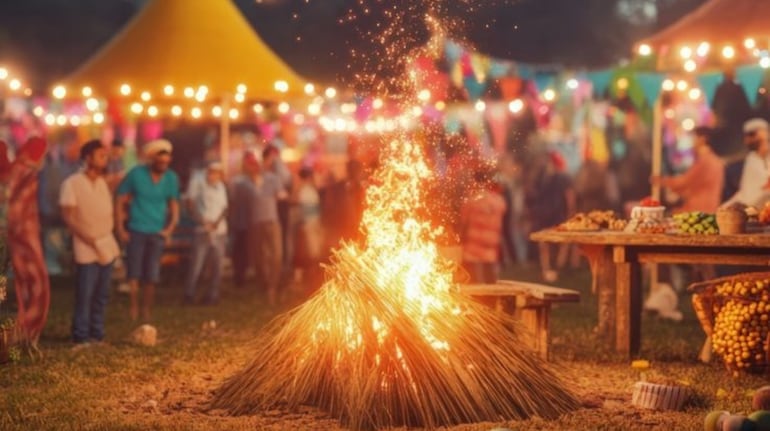

Holika Puja is significant in Hindu culture for more reasons than one. It is not just a traditional fire-burning ritual, but is also viewed as a moment when people can attain spiritual purification through a process of self-reflection and internal renewal. The ceremonial process begins with a fire to burn away all negative elements before colours spread through the atmosphere and people prepare for new beginnings.
Sridhar Joshi, Co-Founder of OM Bhakti, told Moneycontrol how the puja should ideally be performed with the right set of ingredients and also explained the significance of what one should do and avoid. Most importantly, what matters is the intent and purpose.
Holika Puja begins with Sankalp, a conscious resolve taken before the ritual starts. “Choose a clean and open area designated for Holika Dahan and approach the ritual with calm focus. Preparation is as important as participation,” Joshi said.
Also Read: Holi décor ideas: 5 innovative way to brighten your home with flowers and colour
Talking about the ingredients to use and what to avoid, he added, “A basic puja thali contains wheat or barley grains together with akshat, coconut, flowers, haldi, kumkum, ghee, jaggery, betel leaves, incense, camphor and water which is stored inside a kalash. The fire needs dry wood and cow dung cakes to create its flames. The use of synthetic materials, plastics and painted wood surfaces must be avoided because these materials contradict the fundamental principles of purification. The Holika Puja ceremony takes place during early evening hours before sunset when the transition from day to night matches the ceremonial purpose.”
Devotees perform parikrama around the pyre before lighting the fire to present water and grains and flowers as their offerings. “The circular movement represents the process of surrendering to cosmic order while maintaining continuity. The fire is ignited through the use of ghee and camphor which is followed by the placement of offerings into the flames,” he noted.
According to him, grains symbolise sustenance and livelihood while the coconut represents ego. The act of placing them into the fire signifies the release of pride and negativity. The atmosphere requires both silence and deep respect. The sacred fire exists to bring about personal transformation not for public exhibition.
The essence of Holika Puja can be diluted when the ritual becomes rushed or treated casually. “The ceremony loses its significance through three actions, including burning waste materials, skipping Sankalp and conducting the ceremony as a social event,” he added. Children should be included with explanation, not just observation, so the ritual becomes a lesson rather than a habit
Joshi said, “People who reside in apartments or cities that have space constraints, a diya functions as an Agni representation through which people make offerings and recite a brief prayer. What matters is reflection on emotions or habits that need to be released.”
Also Read: Holi fashion 2026: 7 chic affordable looks other than white, from pastels to soft glam
Working professionals can prepare a day in advance and participate briefly but mindfully. Even a few moments of focused devotion hold value when intention is clear.
Holika Puja brings families together, encourages mindful celebration, and promotes respect for tradition alongside responsibility. When performed with awareness, it prepares both the environment and the spirit for Holi. Only when the fire is approached with purpose does the colour of celebration truly gain meaning.
Discover the latest Business News, Sensex, and Nifty updates. Obtain Personal Finance insights, tax queries, and expert opinions on Moneycontrol or download the Moneycontrol App to stay updated!
Find the best of Al News in one place, specially curated for you every weekend.
Stay on top of the latest tech trends and biggest startup news.





