






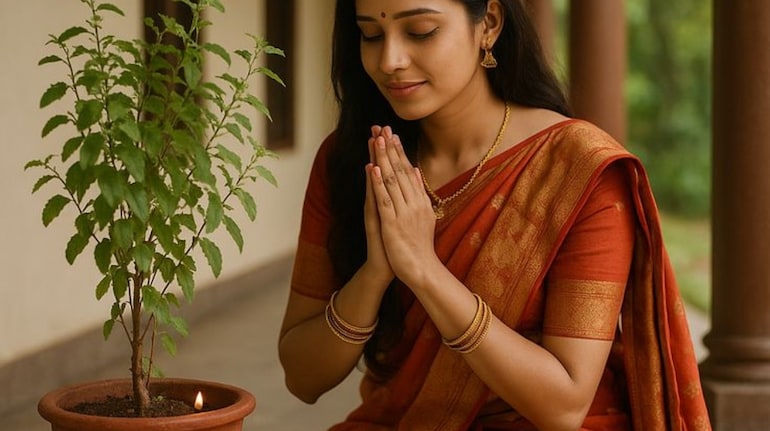

Just as dusk settles into the streets of Indian towns, a simple ritual unfolds on many balconies and courtyards. A hand reaches for a tiny lamp, earthen or brass, lights its flame, and places it gently beside a green Tulsi plant. The ritual offers peace and calm.
Lighting a diya beside the Tulsi plant each evening has been practised across generations, yet it remains deeply personal. For some, it’s about devotion and blessings; for others, it’s a moment of stillness and gratitude. What unites all of them, though, is the feeling that something ancient and reassuring is happening right in their own homes.
In an age of screens and speed, a diya beside a plant can be grounding. The tiny flame reminds us that peace is not found by chasing light, but by kindling it, gently, within the heart of our homes.
The Tulsi plant, also known as holy basil, is a living icon of purity, protection, and continuity. In many homes, it is watered with reverence, respected as a companion in daily life, and positioned where it receives light and space. Its leaves carry medicinal properties, its presence draws calm, and, in tradition, its very existence is believed to invite harmony.
There is magic in habit when it’s done mindfully. Lighting the diya just before sunset marks a transition, not merely in light, but in mood. It’s a breath between the hustle of daily tasks and the evening’s closure. This tiny pause, repeated day after day, becomes a routine that roots us deeper into presence and gratitude.
Also Read: Good luck to positive energy, 5 benefits of keeping a jade plant at home
Discover the latest Business News, Sensex, and Nifty updates. Obtain Personal Finance insights, tax queries, and expert opinions on Moneycontrol or download the Moneycontrol App to stay updated!
Find the best of Al News in one place, specially curated for you every weekend.
Stay on top of the latest tech trends and biggest startup news.





