






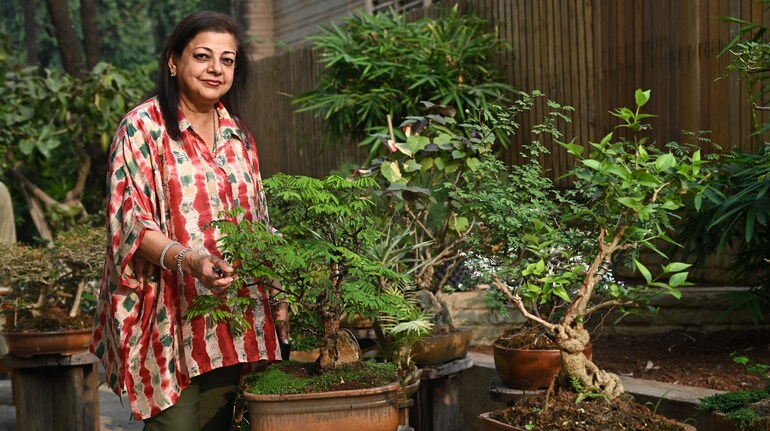
“For those living in cities or smaller homes, bonsai and Ikebana offer a meaningful way to stay connected with nature without needing large spaces,” Harsha Ashok Hinduja said over email. President of the India Friendship Bonsai Society, which began as an informal group of people interested in bonsai and Ikebana flower arrangements in Mumbai, Hinduja was responding to questions ahead of a two-day workshop-cum-exhibition organized by the society, Bonsai Blossoms 2026, that starts today at the Jamnabai Narsee School in Juhu.
Hinduja said in her email that the art of Ikebana flower arrangement and bonsai came to India decades ago, and took root here quickly — and quietly. “India’s own deep tradition of gardening and plant care made it easy for these Japanese arts to find a natural home here; the community simply grew without noise or fanfare, sustained by people who genuinely loved the practice,” she explained.
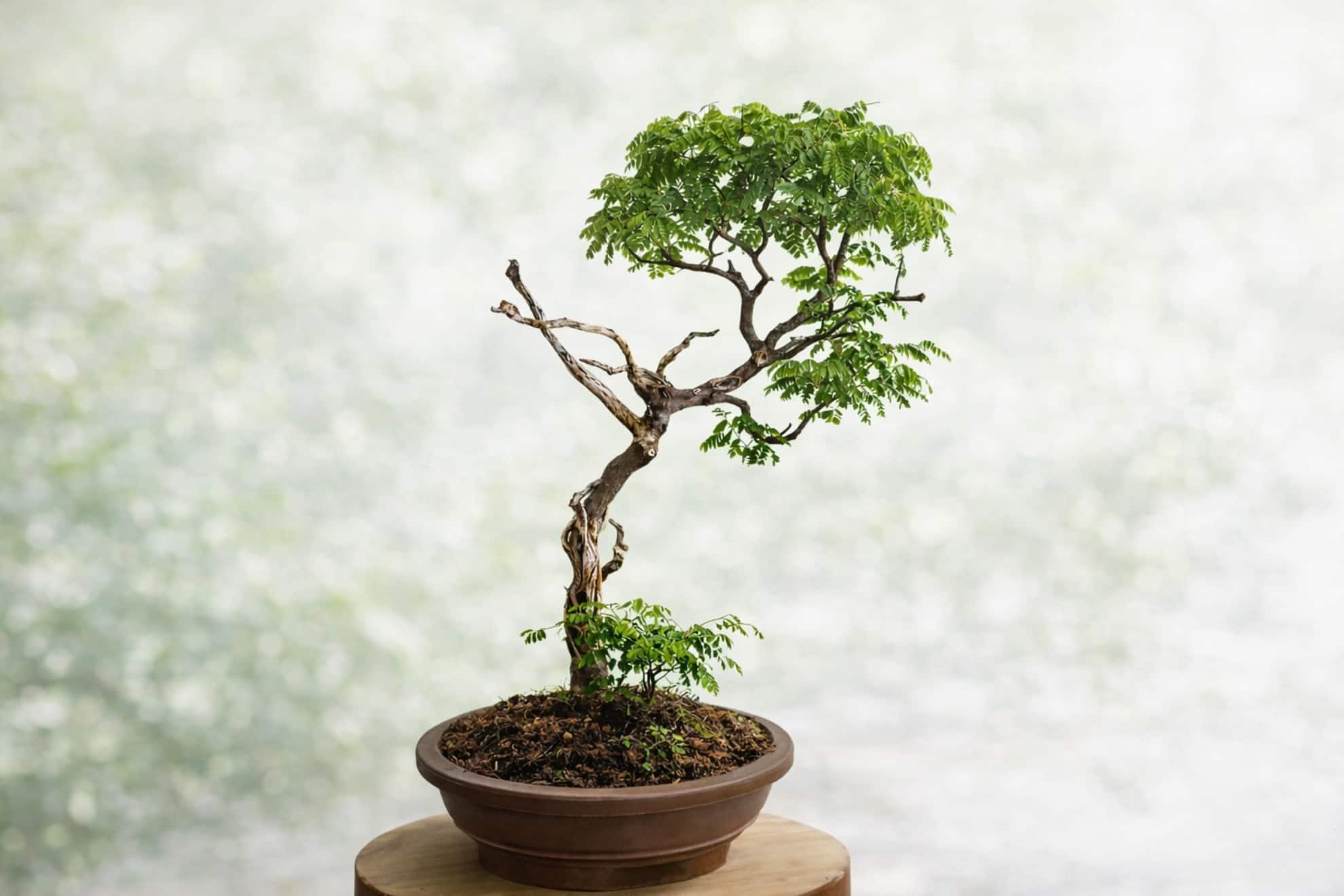 A Brazilian rain tree bonsai from Harsha Hinduja's collection. (Image courtesy Hinduja Group)
“India truly excels… in working with tropical bonsai. Ficus, bougainvillea, and jade respond incredibly well to shaping, wiring and restyling because they grow vigorously in our weather,” she added.
Of course, if you are new to the practice, growing and caring for bonsais can seem daunting. In the email interview, Hinduja shared tips for how to start building your bonsai collection, what plant varieties are best suited to the practice of bonsai in India — especially for beginners, and shared her own takeaways from engaging with bonsai plants over 40 years. Edited excerpts:
How far back does the history of Bonsai and Ikebana go in India?
Yes, both bonsai and Ikebana have a longer history in India than most people realise. These arts came to India several decades ago through cultural exchanges with Japan, visiting masters, and early practitioners who quietly built small but dedicated communities in cities like Mumbai, Delhi, and Kolkata. Ikebana societies were active as early as the 1960s, and bonsai techniques were adapted to Indian tropical varieties long before the art became mainstream. In many ways, India’s own deep tradition of gardening and plant care made it easy for these Japanese arts to find a natural home here; the community simply grew without noise or fanfare, sustained by people who genuinely loved the practice.
Botanical gardens in Bangalore and Mumbai have some beautiful examples of Bonsai. Increasingly, plant nurseries are also starting to sell Bonsai varieties — mostly Ficus trees — in Delhi. Is there any practice or plant that India excels in with respect to bonsai’s?
Yes, India does have its own strengths when it comes to bonsai. Our climate allows several tropical species, especially Ficus varieties, to thrive far better here than in many other countries. Places like Bengaluru, Mumbai, and even nurseries in Delhi have shown how beautifully these species adapt to training.
If there is one area India truly excels in, it is working with tropical bonsai. Ficus, bougainvillea, and jade respond incredibly well to shaping, wiring and restyling because they grow vigorously in our weather. Indian practitioners have also developed a natural instinct for working with these species not by copying traditional Japanese aesthetics, but by understanding how these trees behave in our soil, heat and humidity.
In that sense, India’s strength lies in creating bonsai that honour our own climate and character, rather than trying to replicate what grows elsewhere.
To people living in cities like Mumbai, or even in smaller apartments in Delhi and Kolkata, Bonsai and Ikebana might present interesting ways to bring nature into their homes. Could you suggest some resources and experts they can look to for help on this in India?
For those living in cities or smaller homes, bonsai and Ikebana offer a meaningful way to stay connected with nature without needing large spaces. A good starting point is local bonsai and Ikebana societies, many of which conduct beginner workshops, demonstrations, and learning sessions across Indian cities.
Botanical gardens in places like Mumbai, Bengaluru, and Delhi also help build understanding by showcasing mature bonsai and hosting exhibitions. In addition, several reputable nurseries now offer well-started plants and basic guidance, making it easier for beginners to begin correctly.
I would encourage newcomers to rely on credible teachers or institutions rather than quick online trends. These are lifelong practices, and strong foundations matter far more than speed.
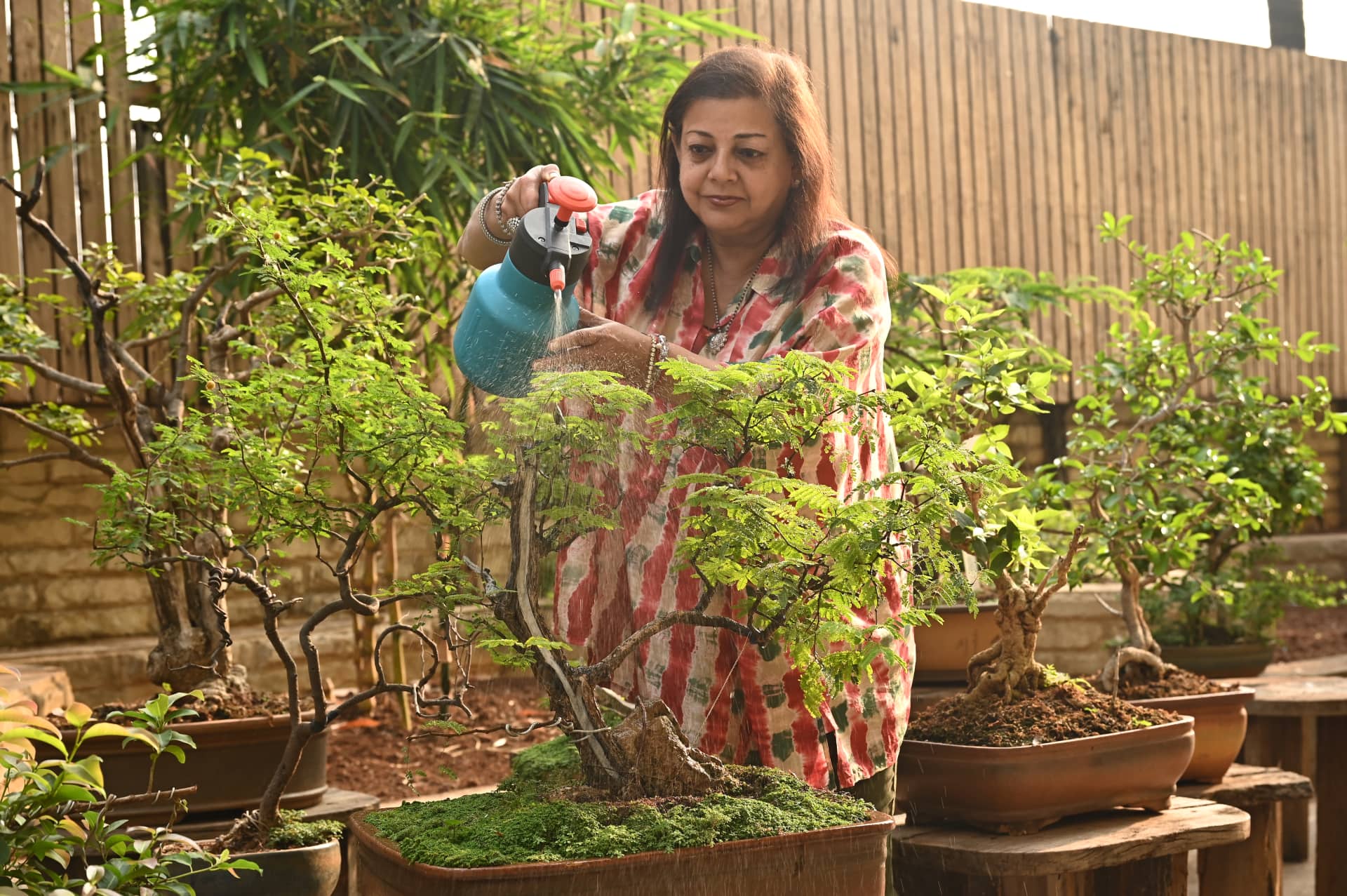 Harsha Hinduja nurturing a Blue Braya bonsai - around 11 years old. (Image courtesy Hinduja Group)
What two-three pieces of key advice would you give to someone who is just starting to build their Bonsai collection?
If you’re starting your bonsai journey, begin with one or two hardy plants and give yourself time to understand how they grow. Bonsai responds best to steady, consistent care; a few attentive minutes every day matter more than occasional effort. And most importantly, don’t chase perfection; observe the plant, let it guide you, and shape it gradually. When you stay patient, consistent, and open to learning, your bonsai begins to reflect your own growth as well.
When and how did you become interested in bonsai and Ikebana?
My journey with bonsai began soon after school, during a six-month break before college. I joined a bonsai class out of curiosity, not realising it would stay with me for over four decades. Working with a living form, observing its rhythm and growth, felt deeply grounding, a natural extension of my childhood in Colaba, where I spent countless hours tending to plants and learning from nature’s small details.
A meaningful turning point came years later when a tuition teacher noticed my plants and introduced me to Urvashi Thacker. Our shared interest quickly grew into a small learning group, which eventually became the India Friendship Bonsai Society. What began as informal exchanges evolved into a supportive community built on curiosity, practice, and mutual encouragement.
Today, this journey continues through our annual Bonsai Blossoms exhibition at Jamnabai Narsee School, where we showcase our work, host international masters, and introduce more families and young students to the art. It has grown into a meaningful cultural event that the community looks forward to each year.
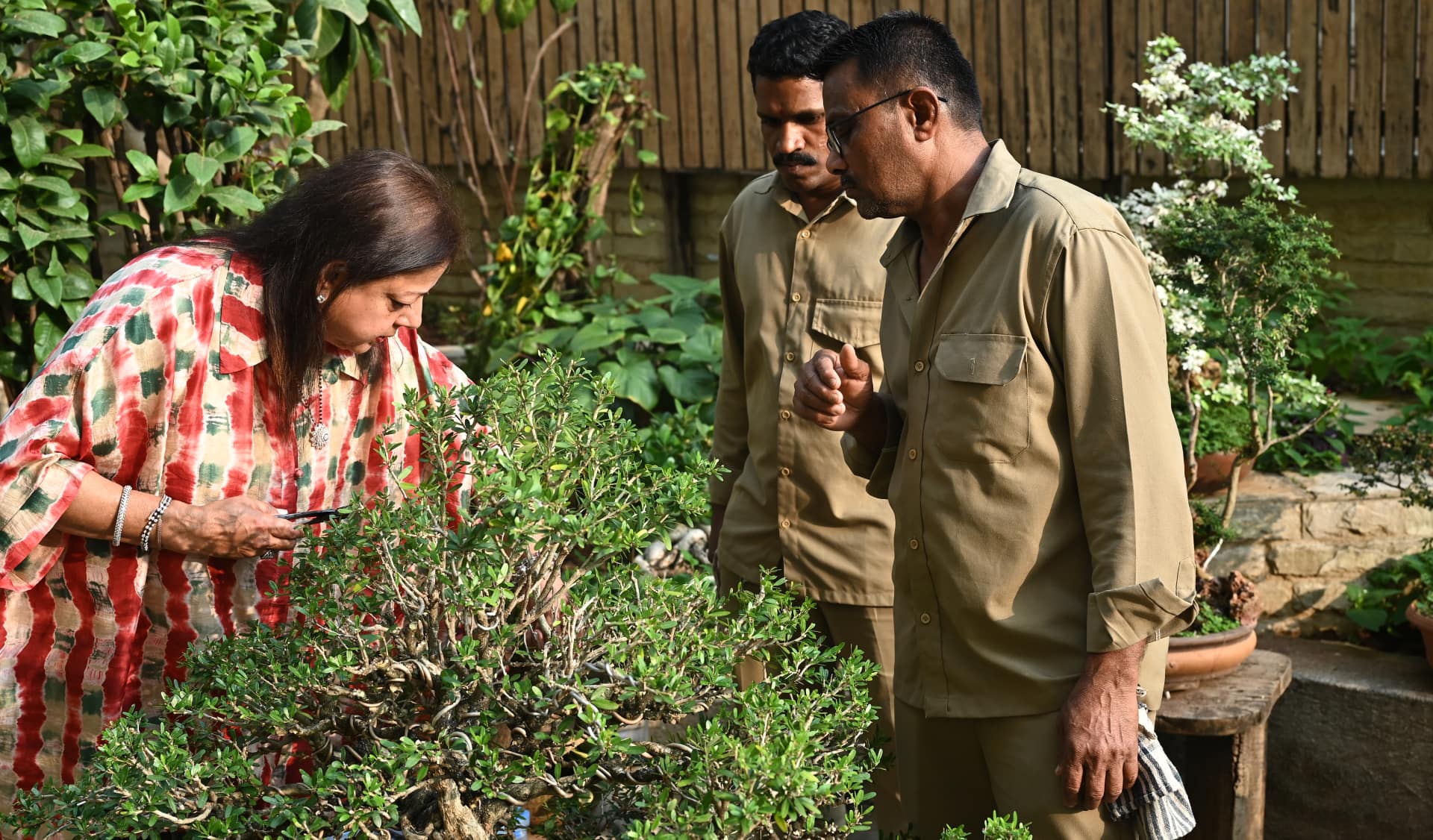 Harsha Ashok Hinduja with her horticulture team. (Image courtesy Hinduja Group)
What is your most prized bonsai and why is it important to you?
One of the pieces closest to my heart is a Bougainvillea bonsai that is over 35 years old. It’s a hardy, expressive tree that has grown with me through many stages of life. Bougainvillea is known for its vibrant colour and rapid growth, but what makes this one special is its character; it carries both strength and softness in the same frame.
Among its flowering branches, one remains bare. I’ve kept it that way intentionally. For me, it symbolizes wabi-sabi, the Japanese idea that beauty lies in imperfection. That single bare branch is a quiet reminder that growth and stillness, colour and emptiness, life and loss can coexist.
This tree has taught me that not everything needs to be perfect to be meaningful. Sometimes, the most powerful stories are held in the parts we choose not to alter.
What are your top 3-5 takeaways from maintaining and living with Bonsai plants — any learnings from this practice that you think you apply in other aspects of your life and work as well?
Bonsai teaches you how to live gently, patiently, and with a sense of purpose. Over more than four decades, living with bonsai has shaped many aspects of my life.
The first is patience, as bonsai grows at its own pace, and accepting that has helped me approach life with steadiness and trust in the process. It has also taught me adaptability: there are seasons of rapid growth and seasons of stillness, and learning to bend rather than resist has made me more resilient. Closely observing even small changes in a tree has sharpened my awareness in daily life as well, reminding me that thoughtful responses always outweigh impulsive reactions.
Another important learning is the balance between nurturing and letting go. Just as pruning allows a bonsai to grow better, releasing old patterns creates space for new possibilities in life. And above all, bonsai has shown me the quiet healing power of nature. Even on difficult days, tending to a plant brings clarity and calm. It’s a reminder that gentle, consistent care whether for a tree or for oneself can lead to the most meaningful growth.

Discover the latest Business News, Sensex, and Nifty updates. Obtain Personal Finance insights, tax queries, and expert opinions on Moneycontrol or download the Moneycontrol App to stay updated!
Find the best of Al News in one place, specially curated for you every weekend.
Stay on top of the latest tech trends and biggest startup news.




