






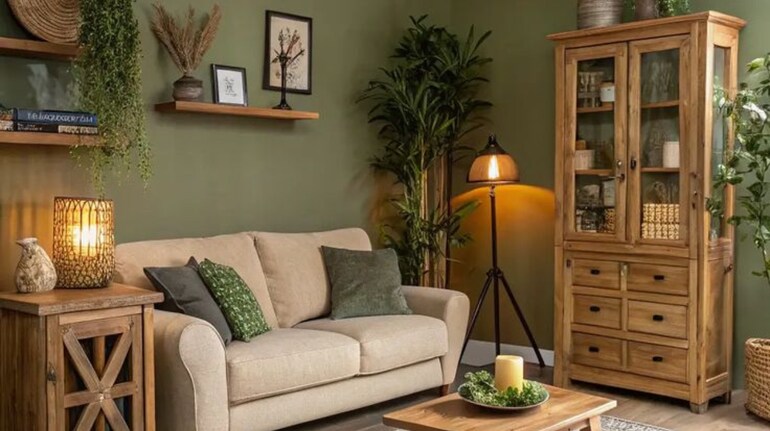

Ever walked into a room and instantly felt calmer (or oddly restless) without knowing why? Perhaps, that’s the colour scheme at work. Beyond aesthetics, colours quietly influence our emotions, behaviour, productivity and even well-being. From bedrooms to kitchens, every space responds differently to colour energy. The key is understanding the vibration each shade brings and using it intentionally.
Green symbolises life, renewal and balance — making it one of the most therapeutic colours for the home. Soft greens or deeper forest tones work beautifully in bedrooms, reading corners and study areas, where calm and focus are essential. Green is especially recommended for people seeking emotional grounding or healing, as it soothes the nervous system without dulling energy. Avoid overly dark greens in small rooms, but embrace softer, earthy variations to bring nature indoors.
Blue is known to aid concentration and mental clarity. Lighter shades like sky blue bring a sense of freedom and openness, making them suitable for studies or calm living spaces. However, blue should be used cautiously in smaller rooms, as darker tones can make spaces feel closed in. Overuse of blue may also create lethargy or trigger cold-related discomfort, according to colour therapy principles. Balance it with warm neutrals or natural textures like wood and linen to keep the energy harmonious.
Yellow radiates warmth, positivity and mental stimulation. It’s an ideal colour for children’s rooms, where imagination, learning and emotional growth are key. Soft yellows or light lemon tones energise without overwhelming, making them perfect for play areas or homework zones. Yellow is also recommended for individuals with behavioural challenges, as it encourages clarity and emotional stability. In dining spaces, touches of yellow can uplift conversations and create a welcoming atmosphere.
Red is powerful, and should be used with care. It stimulates appetite, excitement and physical energy, making it well-suited for kitchens, dining areas and home gyms. Subtle red accents like flowers, table linen or small décor pieces, can boost vibrancy without tipping into aggression. Overuse of red, especially in bedrooms, can cause restlessness, stress and sleep disturbances. Balance red with white, silver, light orange or rose tones to soften its intensity while keeping its benefits intact.
Purple and lavender are associated with spirituality, wisdom and introspection. These hues are ideal for meditation rooms, prayer areas or quiet corners meant for reflection. Violet tones also encourage imagination and decisiveness, making them suitable for creative studios or personal sanctuaries. Keep the shade soft and muted to avoid heaviness, especially in smaller spaces.
Also Read: 4 Feng Shui colours that attract wealth and abundance in your life
One universal rule across colour therapy — keep ceilings white or off-white. White reflects light, opens up spaces and creates a sense of clarity, making it the ideal neutral anchor for every room. Warm colours work best in high-activity areas like living and dining rooms, while bedrooms thrive on soothing shades like pink, peach, light yellow and soft green. Light colours make rooms appear larger, while dark shades shrink space visually. Avoid excessive black and grey, as they can feel heavy or depressing over time.
Discover the latest Business News, Sensex, and Nifty updates. Obtain Personal Finance insights, tax queries, and expert opinions on Moneycontrol or download the Moneycontrol App to stay updated!
Find the best of Al News in one place, specially curated for you every weekend.
Stay on top of the latest tech trends and biggest startup news.





