






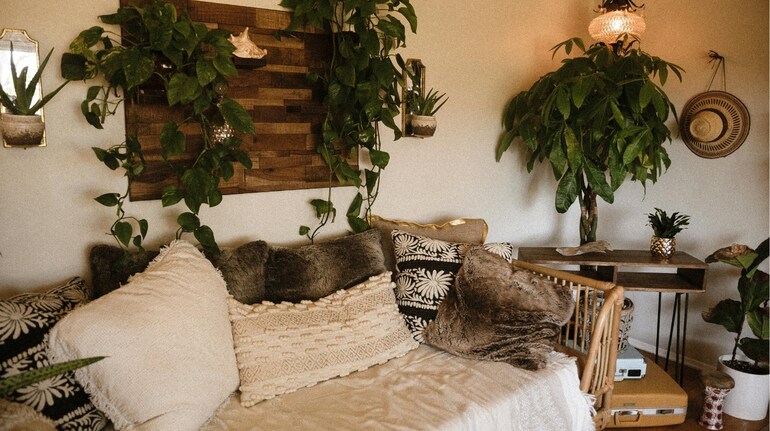
As 2025 unfolded, it became clear that the most meaningful shifts in design weren’t happening in showrooms or trend forecasts alone, but inside our homes. Sustainability moved beyond buzzwords and checklists, becoming a lived value that guided how people built, furnished, and experienced their spaces.
Homes were no longer styled just to look good; they were shaped to feel right, function better, and tread lightly on the planet.
This growing awareness is deeply tied to how homeowners made decisions that were more pro-planet and budget-friendly. Sarah Arora, Co-Founder at Sansaar, a D’Decor brand, observes, “Looking back at 2025, one thing is clear: today’s customer is more conscious when it comes to decision making. One defining trend over the past year is that customers are becoming a lot more curious. People want to know how their fabrics are made, where it comes from, and its environmental impact. We’re seeing a shift towards sustainable materials, non-toxic finishes, responsibly sourced fabrics, and innovative eco-alternatives as well.”
Also read | Brown is the colour to covet in 2026, here's how to use it in home decor
The idea of sustainability in 2025 was not about deprivation or minimalism for the sake of it. Instead, it was about intention. Décor choices reflected a deeper desire to live thoughtfully and responsibly. Homes evolved into nurturing environments, designed to support well-being while respecting natural resources. Rohini Bagla, Founder of Studio Rohini Bagla, explains how this shift shaped interiors, noting that sustainability became part of everyday choices rather than an abstract goal.
Says Bagla, “Natural textures rose to prominence, carrying the quiet strength of stone, clay, wood, and woven fibres. Sunlight became a guiding force that shaped the mood and energy of interiors. Technology blended gracefully with natural processes, creating spaces that are efficient, intuitive, and gentle to the planet. Interiors grew softer and quieter, shaped by the companionship of plants and the wisdom of nature.”
Nature-inspired designmoved far beyond the token houseplant. In 2025, biophilia became a holistic philosophy that influenced materials, colours, and spatial planning. Earthy palettes, tactile surfaces, and organic forms helped interiors feel grounding and restorative, especially in fast-paced urban settings.
Also read | Quirky décor trend: How playful statement pieces are transforming modern Indian homes
Designers and homeowners alike leaned toward muted tones, layered neutrals, and finishes that aged gracefully over time. Arora notes, “There is also a strong return to nature-driven design. Biophilia has taken on a deeper meaning, with homeowners gravitating toward materials and palettes that feel grounding. It’s less about adding plants as decor and more about creating a restorative environment that mirrors the outdoors. We’ve consistently seen earthy, muted tones completely outperform brighter palettes across our own ranges this year, underscoring just how deeply this shift has taken hold.”
Sustainability in 2025 also meant adaptability. Urban homeowners sought multi-functional spaces and fabrics that supported flexible living and materials that were durable, stain-resistant, and designed to last. Fewer pieces, chosen well, replaced trend-driven clutter. Technology played a quiet but important role, enhancing efficiency without overpowering the natural flow of the home.
Discover the latest Business News, Sensex, and Nifty updates. Obtain Personal Finance insights, tax queries, and expert opinions on Moneycontrol or download the Moneycontrol App to stay updated!
Find the best of Al News in one place, specially curated for you every weekend.
Stay on top of the latest tech trends and biggest startup news.




