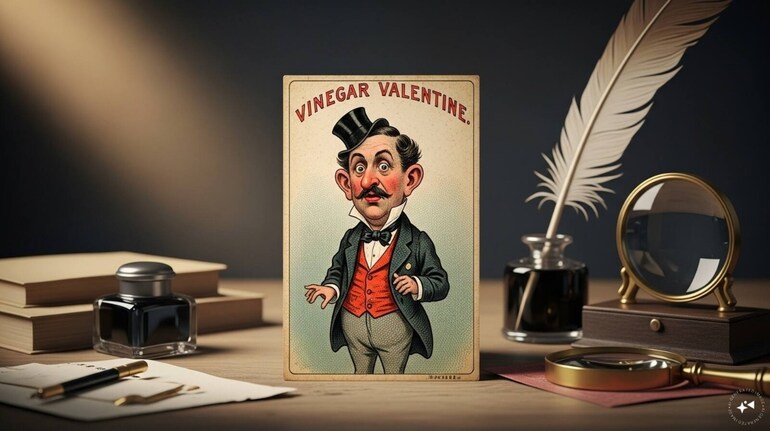

Those who love a little history would be intrigued to know that Valentine’s Day in the Victorian era, up until the 20th century, wasn’t just a time for lovers to exchange romantic letters, poems, or notes; some also sent insulting and mocking messages. These were directed at those who nursed resentment against someone, sought social correction, or wanted to let admirers know they were unwanted.
Vinegar valentines were basically commercially bought postcards that went against the spirit of love-filled Valentine’s. They contained a crass poem or an illustration, meant to insult and mock the receiver. While they were sent anonymously, the receiver had to pay postage on delivery, adding to their woes.
Reportedly, these crude and offensive cards were mostly sent to those who were socially disliked, be it drunkards, unmarried men and women, flirtatious women, and others. By 1847, these sarcastic cards were as popular as Valentine's cards. Some of them were playful, while others carried bitter, stinging illustrations.
Also read | 15 most romantic landmarks in the world to visit this Valentine’s week
According to Atlas Obscura, a vinegar valentine called “Old Maid,” later reprinted by Orange Coast magazine in 1984, is particularly cutting, as it read, “Tis all in vain your simpering looks, / You never can incline, / With all your bustles, stays and curls, / To find a Valentine.”
These cards often targeted a certain set of people, including landlords, gossipers, and especially women, particularly in the late 19th and early 20th century, when they began to fight for their right to vote. This brought another class of vinegar valentines, which took on a political edge. They depicted suffragettes as ugly, aggressive, or abusive.
It is unclear, though, if these cards were mailed to suffrage activists to harass them or simply shared among those who opposed women’s rights. While the suffragists enjoyed their own pro-women’s rights Valentine’s on February 14 with the cards, there were women who found this the opportune time to woo their lovers by taking a stand against the cause of women’s rights.
Also read | Valentine’s week 2026: How each zodiac sign will experience love over 7 days
Both Valentines and vinegar valentines enjoyed great business, but their popularity began to decline as expensive dinners or gifts took over. By the late 1800s, social reformers began to condemn the practice of sending such cards, leading it to fade away from the spotlight completely by the 1940s.
Discover the latest Business News, Sensex, and Nifty updates. Obtain Personal Finance insights, tax queries, and expert opinions on Moneycontrol or download the Moneycontrol App to stay updated!
Find the best of Al News in one place, specially curated for you every weekend.
Stay on top of the latest tech trends and biggest startup news.