






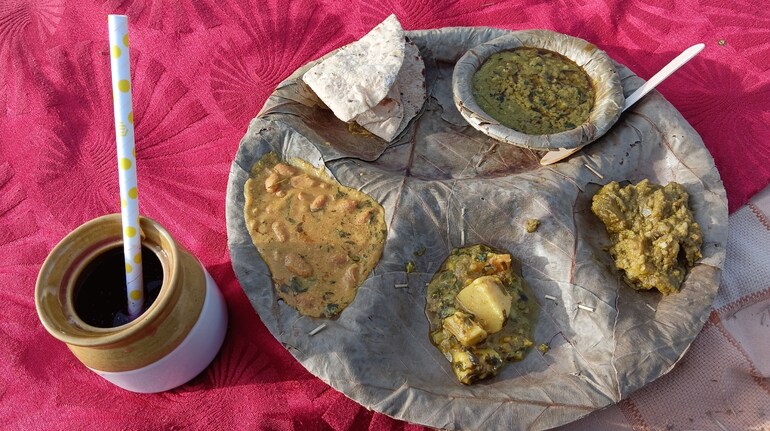
There’s something about eating in the mountains that feels instinctively nourishing. Himachal’s traditional winter cuisine has evolved over centuries to support life in cold, high-altitude conditions, making it one of the most thoughtfully balanced regional food traditions in India. If you’re planning a winter holiday in the hills, missing out on dishes like siddu, dham, and slow-cooked lentils would mean skipping a vital part of the Himalayan experience.
Designed to provide sustained energy and natural warmth, pahadi food relies on desi ghee, yogurt, pulses, and warming spices such as cardamom, cloves, and cinnamon. These ingredients help stimulate digestion, maintain internal heat, and keep the body resilient through long, harsh winters. When enjoyed traditionally by sitting on the floor, served on leaf plates (pattal), often after a trek or spiritual visit — the meal becomes more than nourishment.
Local sourcing is the backbone of Himachali winter cooking. When snow limits access to markets, communities turn inward — to their land, stores, and age-old practices. Staples like desi ghee, fermented wheat, pulses such as rajma and chana, buckwheat, and seasonal winter greens form the foundation of everyday meals.
Also Read: Why Punjabi food is the perfect blend of health, flavour, and comfort for winters
In temple-style dham, prepared by traditional Brahmin cooks known as Botis, food is approached with ritual purity and intention. Every step, from ingredient selection to cooking, follows a disciplined process, making the meal both nourishing and spiritually uplifting. Sukhvinder Singh Sudan, Founder of Rajmaan Singh Eco Resorts, mentions, “A traditional Himachali Dham, for instance, is a complete and balanced meal. It combines lentils, grains, curd, vegetables, and healthy fats, offering essential proteins, carbohydrates, and nutrients in one wholesome feast. Slow-cooked lentil dishes like Sepu badi or Madra are rich in plant protein and are filling without being heavy, making them ideal after physical activity such as trekking or long walks in cold weather.”
Pahadi winter dishes reflect a philosophy rooted in balance, and is good for both body and spirit. Siddu, a steamed wheat bread often served with ghee or walnut chutney, is especially cherished during winter. It is energy-dense, gentle on the stomach, and deeply warming. Modern hill kitchens have also introduced thoughtful variations such as chocolate siddu, a playful twist that appeals to travellers and younger diners while retaining the essence of the traditional dish.
Desi ghee remains central to winter cooking, offering healthy fats and long-lasting warmth. Speaking about the nutritional add-ons, Sudan informs, “Fermented wheat, used in dishes like siddu, enhances digestibility and gut health while adding depth of flavour. Pulses and lentils supply high-quality plant protein and help build strength and stamina, essential for cold climates and physically demanding lifestyles. Foraged and locally grown greens such as kale saag, sarson saag, colocasia leaves (patrodu), and lotus stem (bhey) bring vital nutrients and minerals while keeping meals seasonal and chemical-free.”
Buckwheat-based dishes like aktori, commonly eaten in tribal regions, are another winter staple. Naturally gluten-free and nutrient-rich, buckwheat provides warmth and energy, making it perfectly suited for cold mountain weather.
Traditional cooking techniques elevate Himachali winter cuisine from comforting to deeply restorative. Fermentation, slow cooking, and wood-fired chulhas are integral to both flavour and nutrition. Fermented foods like siddu and beverages such as Chhang or Lugdi support gut health and improve nutrient absorption. Slow cooking in ghee and yogurt, as seen in Madra and Dham lentils, allows flavours to mature gently while keeping meals soothing and balanced.
Discover the latest Business News, Sensex, and Nifty updates. Obtain Personal Finance insights, tax queries, and expert opinions on Moneycontrol or download the Moneycontrol App to stay updated!
Find the best of Al News in one place, specially curated for you every weekend.
Stay on top of the latest tech trends and biggest startup news.




