






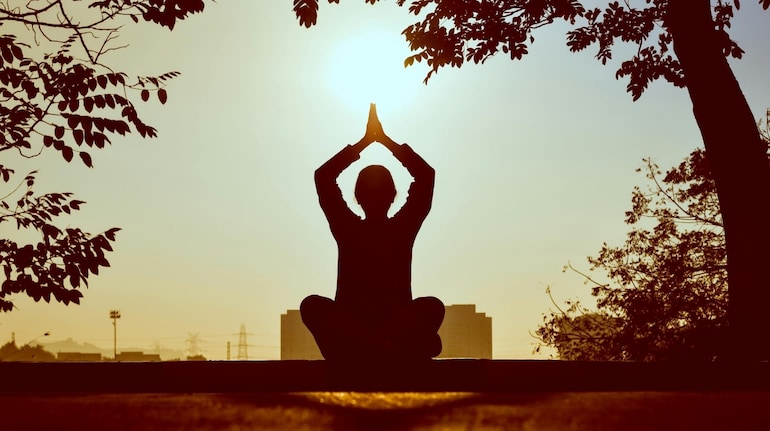
The United Nations has designated December 21 as World Meditation Day. In view of rising stress, trauma and mental problems in the world, this development has come about. As part of this, on December 21, 33-hour synchronized meditation will happen across 100 countries.
On World Meditation Day, educational workshops will take place and people will be educated about the benefits of transcendental meditation. The event will begin at 8 am in New Zealand and conclude at 5 pm in Hawai’i, following the sun across time zones.
The 33 sessions that will take place on December 21 will last for about 20 minutes each. The UN has said that meditation-based practices are practical and good for improving mental well-being, resilience and overall performance too.
People cutting across all backgrounds and faith can participate in the sessions on World Meditation Day. As per an estimate of Transcendental Meditation organization, around 10 million people from across the world have learnt this in the past 5 decades.
On the day, international leader of the transcendental meditation movement will announce the creation of permanent meditator groups at several global locations and it will be done as part of the long-term goal of reducing stress and conflict world over.
Moneycontrol team spoke to Dr Pavitra Shankar, associate consultant, psychiatry, Aakash healthcare, to understand more about how meditation helps, what is the best time to meditate and more.
"In this day and age, most of us are so busy in the hustle and bustle of life that we hardly get any time to gather our thoughts and feel at ease. Meditation helps people to learn how to handle their fast-moving thoughts. At the same time, it also helps alleviate their anxiety levels. Another problem that we are increasingly seeing is people dealing with sleep-related problems. Well, though meditation one can improve their sleep quality as well," shared Dr Shankar.
Besides, research has also shown that practicing meditation daily enables people to manage their stress hormone levels in a much better way. "When a person meditates sincerely, it helps improve their ability to focus and become emotionally stable. A sense of calmness wraps the person, thereby allowing them to make better decisions in life," she added.
Also read: Are the eggs you eat for breakfast safe? Doctor says beware of this one substance
A lot of people often wonder what is the best time to meditate to obtain optimum results. As per Dr Shankar, the optimal time for meditation is during early morning hours after waking up. "This is because at the wee hours of morning, the brain is more alert and plus there are no interruptions as well," she said.
Dr Shankar added that a lot of people prefer to meditate in evening to beat the stress and keep disturbing thoughts at bay. This is also alright in her opinion, however, she maintains that the best time is in mornings only.
"See, at the end of the day, the key element is consistency. So, one has to find the most suitable time for meditation in view of their daily tasks and meditate every now and then to see the difference," Dr Shankar told Moneycontrol.
Dr Shankar shared that per se, there are no strict prerequisites. "All one needs to meditate is intention and sincerity. Other than this, nothing is required. No clothing or equipment is needed. Of course, you need to meditate at a spot where it's quieter and you can feel at ease," she added.
"A lot of people tell me that they find it difficult to keep their thought at bay while meditating. I always tell them it's a gradual process and there are many stages in it. The objective is to develop awareness slowly instead of achieving complete perfection. The practice of guided meditation together with yoga-based exercises and mantra meditation can provide best results over a period of time," she emphasised.
"One of the biggest misconceptions is that meditation is only for monks and saints and those who practice spirituality. However, the truth is that we all can and must introduce meditation to our daily routine to live a harmonious and peaceful life," Dr Shankar concluded.
Q. What is meditation?
Meditation is a practice that helps calm the mind, improve focus, and promote emotional and physical wellbeing.
Q. What are the benefits of meditation?
It can reduce stress, anxiety, and blood pressure, improve sleep, concentration, and overall mental health.
Q. How long should I meditate daily?
Beginners can start with 5–10 minutes a day and gradually increase to 20 minutes or more.
Q. Do I need special training to meditate?
No, basic meditation can be practiced at home, though guidance from a teacher or therapist can help.
Q. Who should practice meditation?
Anyone can benefit, but people with mental health conditions should consult a professional before starting.
Disclaimer: This article, including health and fitness advice, only provides generic information. Don’t treat it as a substitute for qualified medical opinion. Always consult a specialist for specific health diagnosis.
Discover the latest Business News, Sensex, and Nifty updates. Obtain Personal Finance insights, tax queries, and expert opinions on Moneycontrol or download the Moneycontrol App to stay updated!
Find the best of Al News in one place, specially curated for you every weekend.
Stay on top of the latest tech trends and biggest startup news.




