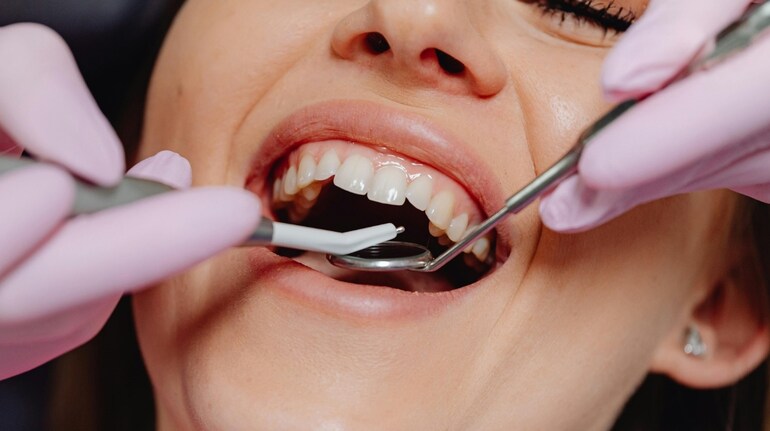
You know that sharp twinge when ice-cold water hits your teeth? Or the dull ache after too many fizzy drinks? That’s your enamel crying out for help, once it’s gone, it’s gone. But now, scientists believe they’ve found a way to bring it back. And the secret ingredient? Hair.
A team from King’s College London has discovered that keratin, a protein naturally found in hair, can rebuild enamel, the tough outer layer that protects teeth. When mixed with minerals from saliva, keratin forms a new, mineralised coat that mimics natural enamel and stops decay in its tracks.
“Enamel doesn’t grow back on its own,” explains Dr Sherif Elsharkawy, consultant in prosthodontics and senior author of the study. “But with keratin, we can help it repair and protect itself again,” he adds.
Also read | Tooth decay causes and prevention: How to avoid cavities, remove plaques naturally
In laboratory tests, researchers extracted keratin from wool and applied it to damaged tooth surfaces. When exposed to saliva’s natural minerals, the protein built itself into a crystal-like shield, just like real enamel.
Over time, it continued to attract calcium and phosphate, forming a durable coating that blocked sensitivity and halted further erosion. The results revealed that keratin didn’t just protect teeth, it helped them heal.
Causes of weak enamel
From your morning coffee to that last glass of cola, everyday habits slowly wear down enamel. The new keratin-based paste could offer a way to fight back, and do so sustainably. Unlike fluoride, which only slows decay, keratin rebuilt the protective barrier entirely in early studies. Researchers say it could appear in shops within two or three years, in toothpaste or in gels applied by dentists.
Also read | How sugar sneaks up on your teeth, here's the surprising link between diet and cavities
What you need to know:
It repairs instead of replaces: Keratin restores lost enamel rather than just patching it.
It's an eco-friendly source: It’s made from recycled biological materials like hair and wool.
It's gentle on teeth: Forms a natural, enamel-like coating that eases sensitivity.
There are no toxic plastics: Avoids the harsh synthetic resins used in many fillings.
Looks natural: Matches the original colour of teeth better than traditional materials.
Lead researcher Sara Gamea calls keratin “a transformative alternative”, one that could make dentistry greener and more effective. By recycling what’s normally thrown away, it bridges biology and oral care in a way that feels almost poetic.
Dr Elsharkawy says, “We may soon be growing stronger smiles from something as simple as a haircut.”'
FAQs on Causes of Cavities
1. What causes cavities in teeth?
Cavities are primarily caused by bacteria in the mouth that produce acid when they come into contact with sugar. This acid erodes the enamel, leading to tooth decay.
2. How does sugar contribute to cavities?
Sugar fuels bacteria in the mouth, causing them to produce acid. This acid attacks and weakens the enamel, resulting in cavities over time.
3. Can poor oral hygiene lead to cavities?
Yes, poor oral hygiene allows plaque to build up on teeth. This plaque contains bacteria that produce acid, which can erode enamel and cause cavities.
4. Do acidic foods and drinks cause cavities?
Acidic foods and drinks, like citrus fruits and soda, can erode the enamel, making teeth more susceptible to decay and cavities.
5. Can dry mouth cause cavities?
Yes, saliva helps neutralise acids and wash away food particles. A dry mouth reduces saliva production, increasing the risk of cavities.
Disclaimer: This article, including health and fitness advice, only provides generic information. Don’t treat it as a substitute for qualified medical opinion. Always consult a specialist for specific health diagnosis.
Discover the latest Business News, Sensex, and Nifty updates. Obtain Personal Finance insights, tax queries, and expert opinions on Moneycontrol or download the Moneycontrol App to stay updated!
Find the best of Al News in one place, specially curated for you every weekend.
Stay on top of the latest tech trends and biggest startup news.