






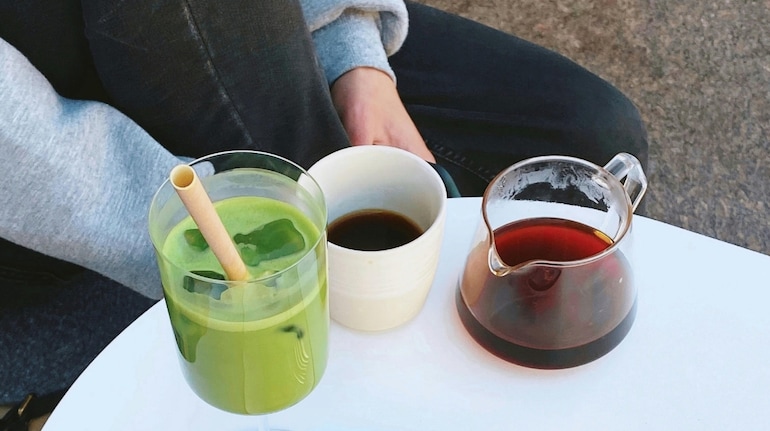

For millions of people in all corners of the globe, sitting down and consuming a hot, refreshing drink is one of their favourite morning rituals. Among these, coffee and matcha are undoubtedly the two most frequented beverages with unique tastes, cultural backgrounds and potential health effects. Coffee, with its bold fragrance and quick caffeine hit, has been a staple for centuries in Western diets. Matcha, a finely-ground powder green tea, hit mainstream acceptance owing to its high antioxidant content and gentler caffeine jolt.
But many of you are left wondering: which one is actually better for you? Dr Harhil Saxena, MD, Clinical Nutrition Specialist and Consultant- Nutrition at Vinayak Healthcare, Delhi told Moneycontrol that both the beverages have different nutrient profiles with difference in caffeine content and each one leaves a unique impact on our body. Some experts say the optimal choice will depend on personal health objectives, sensitivity to caffeine and lifestyle preferences.
Knowing the impact of each drink on your energy level, metabolism, heart health and mental focus can help you make an informed decision. Let’s break down some of what nutrition experts have to say about coffee vs. matcha, and which one could be the better choice for you.
Also Read: 6 health benefits of black coffee, from keeping you alert to improving digestion, more
Caffeine Matcha has much less caffeine per serving than coffee. Your average cup of coffee has between 90–100mg of caffeine and matcha weighs in from around 35–70 mg. Coffee works fast but that quick surge can also result in jitters, anxiety or an energy crash later.
Matcha, by contrast has L-theanine, an amino acid that promotes relaxation without sedation. It’s the caffeine plus L-theanine combo that results in a more even, long-lasting energy lift. Many experts recommend matcha for those who are sensitive to caffeine.
Matcha is known for its high levels of antioxidants, specifically catechins like EGCG (epigallocatechin gallate). These chemicals help fight off oxidative stress, which plays a role in aging and chronic disease.
Though coffee is very antioxidant-rich as well — loaded with things like chlorogenic acid, for instance — matcha generally contains more because you’re consuming the entire leaf in powdered form, not breaking it down into a brew. When it comes to antioxidant help, matcha is more helpful.
Studies indicate that both may be good for heart health. The new study shows that moderate coffee drinkers fare better on such measures than non-coffee drinkers.
Matcha could potentially decrease LDL (“bad”) cholesterol levels and increase fat oxidation. There are some who argue that matcha’s more mild caffeine effect might be better for people with high blood pressure, but both drinks in excess can make you jittery by raising your heart rate.
Coffee is acidic and for some, it might make the stomach lining feel irritated, possibly causing that burning sensation of acid reflux or indigestion.
Matcha is also(usually) lower in acidity as well and maybe easier on the stomach. But drinking it without eat can still give some people mild nausea. Some experts recommend eating food with either drink if you’re digestion sensitive.
Coffee boosts alertness, but it can also spike cortisol (the stress hormone), especially if drank in abundance.
L-theanine found in matcha naturally promotes alpha brain wave activity, which will encourage a state of relaxation and alertness. Meantime, matcha is usually recommended by professionals for those who are stressed or dealing with anxiety as the healthier alternative.
Both coffee and matcha are not universally better than the other, says the Doctor. Coffee might be the best choice for people who look for a really strong kick-starter and want to improve their sports performance with it. Matcha offers the potential for more controlled energy, antioxidants and stress relief.
Also Read: Pain medicine expert shares health benefits of matcha, and its risks
Ultimately, moderation is key. Two to three cups of coffee, or one to two servings of matcha a day is OK in a healthy lifestyle. The ideal option will come down to your body’s reaction, health goals and personal preference.
1. Which has more antioxidants, coffee or matcha?
Matcha generally contains higher levels of antioxidants since you consume the entire leaf in powdered form.
2. Is matcha better for people with high blood pressure?
Matcha’s milder caffeine effect might be better for those with high blood pressure, though both drinks in excess can raise your heart rate.
3. Can coffee cause digestive issues?
Coffee’s acidity can irritate the stomach lining, potentially causing acid reflux or indigestion for some people.
4. Does matcha provide a more sustained energy boost compared to coffee?
Yes, matcha provides a more even, long-lasting energy lift due to the combination of caffeine and L-theanine.
Disclaimer: This article, including health and fitness advice, only provides generic information. Don’t treat it as a substitute for qualified medical opinion. Always consult a specialist for specific health diagnosis
Discover the latest Business News, Sensex, and Nifty updates. Obtain Personal Finance insights, tax queries, and expert opinions on Moneycontrol or download the Moneycontrol App to stay updated!
Find the best of Al News in one place, specially curated for you every weekend.
Stay on top of the latest tech trends and biggest startup news.





