






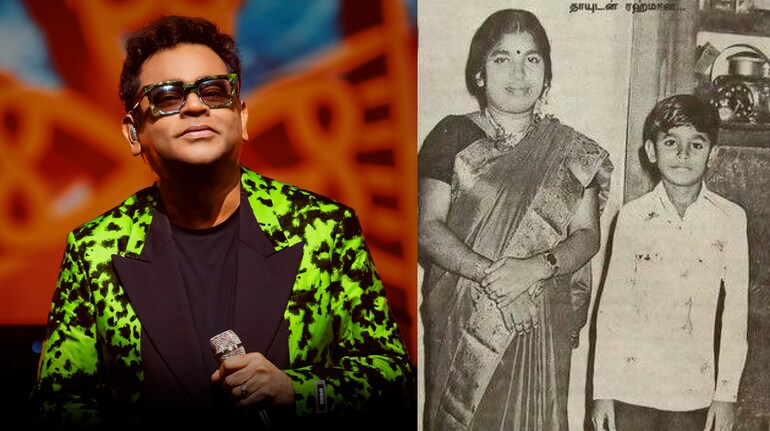

AR Rahman may today be celebrated as one of India’s greatest musical icons, but the calm, composed presence he carries has been shaped by a childhood marked by deep loss and quiet endurance. In a recent throwback conversation, the Oscar-winning composer opened up about the painful early years that defined him long before global recognition followed his name.
Speaking to entrepreneur Nikhil Kamath on his YouTube channel, Rahman revisited memories from a time when life forced him to grow up far earlier than most children. At just nine years old, he lost both his father and his grandmother, events that left an imprint he says stayed with him for years.
“I think when I was growing up, I went through a lot of things, like my father’s and grandmother’s deaths. I was just nine years old when this happened, and I was seeing trauma every day,” Rahman shared. The loss pushed his family into emotional and financial uncertainty, with his mother suddenly becoming the sole pillar holding everything together.
Rahman spoke with deep respect about his mother’s strength during those years. “My mother was a single mother, and she was a very confident lady. She took all the pain, and she had to go through so much to protect us. She was such a strong woman who withstood all kinds of humiliations and single-handedly brought us up,” he said.
While most children his age were immersed in school routines and playground friendships, Rahman’s world looked very different. His childhood unfolded largely inside music studios, where survival and learning happened side by side. These studios became his classroom, workplace and refuge all at once.
“I spent most of my childhood inside studios,” Rahman recalled, explaining how he learned by observing musicians much older than him. He spent long hours watching 40- and 50-year-old professionals at work, absorbing discipline, patience and focus rather than textbooks or schoolyard lessons. Social life, he admitted, barely existed.
Another stark memory Rahman shared was of his family being thrown out of their home by relatives, leaving them with nothing. “Yes, I have spent most of my life in Chennai. I was born there, and my father used to work in the studios. We used to live in the belly of the beast, near Kodambakkam, where all the studios used to exist,” he said.
He added, “My father and mother were thrown onto the street by his family members. He started living in a rented house and worked day and night to get us that house.”
To make ends meet, Rahman’s father took on multiple jobs in Chennai’s demanding studio circuit. “Working three jobs at the same time, and then because of that, his health went berserk. That’s the dark side of my childhood, and it took a lot of time to get over that trauma,” Rahman said.
Looking back, Rahman acknowledged that while those years were filled with pain, they also quietly shaped his discipline, sensitivity and relationship with music. The studios taught him how to listen, observe and work with total attention. Over time, the trauma he carried found an outlet through sound, rhythm and melody.
Today, as audiences continue to shower him with love across generations and continents, Rahman’s journey stands as a reminder that behind timeless music often lies a childhood that learned resilience the hard way.
Discover the latest Business News, Sensex, and Nifty updates. Obtain Personal Finance insights, tax queries, and expert opinions on Moneycontrol or download the Moneycontrol App to stay updated!
Find the best of Al News in one place, specially curated for you every weekend.
Stay on top of the latest tech trends and biggest startup news.





