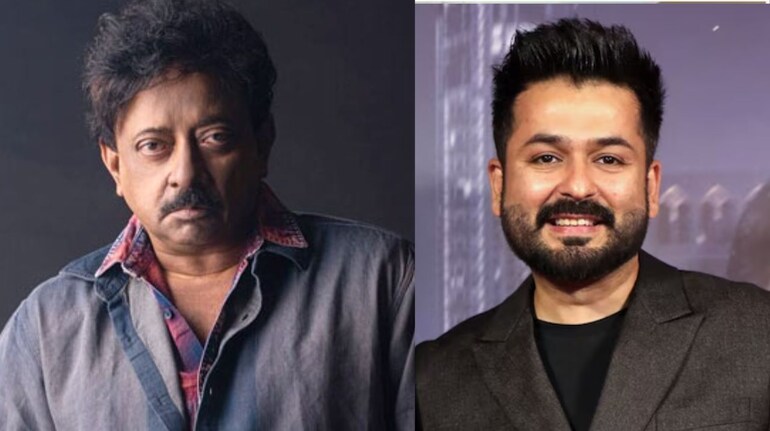
Veteran filmmaker Ram Gopal Varma has heaped praise on Aditya Dhar’s spy thriller Dhurandhar, going as far as comparing the director’s craft to legendary American filmmaker Francis Ford Coppola. In his tenth post on social platform X (formerly Twitter) about Dhurandhar, RGV extolled the virtues of the Ranveer Singh‑starrer, calling it a new benchmark for Indian cinema and highlighting its innovative storytelling and cinematic depth.
His note started with, "From COPPOLA to ADITYA DHAR, A director’s growth is not only shaped by what they learn from filmmakers who came before them but also from those who come after them. In that context, here are my new learnings from Aditya Dhar’s Dhurandhar”
“From Coppola I learnt intense closeted drama, which I tried to emulate in Satya, Company, Sarkar etc. But now Dhurandhar shows that approach can work far more effectively with scale.”
“ Writing scenes assuming the audience will feel even before they understand is a new one. I was one of the first mainstream Indian directors to refuse elevation of heroes. Bhiku Mhatre was terrific inspite of not being celebrated and Amitabh Bachchan worked in Sarkar without a single slow motion shot. But Dhurandhar invents a never-before-seen or experienced new kind of elevation in creating flawed but consequence-driven heroes.”
“Making a star disappear into the story is a new one. Another lesson is that violence should hurt the viewer, not just entertain them. To design action as an organic and emotional projection rather than loud, illogical choreography is a new one—a must-learn lesson, especially for pan-India filmmakers.”
“I never believed in the so-called three-act structure, but Dhurandhar extends that belief to almost a breaking point, proving that even uneven and fractured narratives can command attention.”
“The ingredients of Dhurandhar can push stories to be abrupt, unresolved, and sometimes even unfair. It breaks away from the clich of tying knots just for the sake of untying them. My use of sound created dread without visual excess, but Dhurandhar showed that sound and music in a strange mating ritual can become the lead psychological forces, even more powerful than dialogue and visuals.”
“I once assumed it was intelligence, but later on my intention to deliberately keep on provoking replaced the honesty in me. In sharp contrast to that, Dhurandhar respects the audience without explaining anything.”
“I was always anti-trend and confronted it, but mostly for shock value. Whereas Dhurandhar doesn’t chase validation because it announces a higher purpose. I always believed that scale should be shown internally and not as a bloated display, but Dhurandhar proves that scale can coexist with restraint in order to create a symphony of previously unfelt emotions.”
“My final learning is that I don’t need to grow by myself, but I need to catch up with what others have become. Hey @AdityaDharFilms, thank you for becoming the new Ayn Rand of my life.
He concluded his note by quoting Russian-American writer and philosopher Ayn Rand: "Art is not what it is; Art is what it could be."
From COPPOLA to ADITYA DHAR A directors growth not only from what he learnt from previous directors who came before him , but also from directors who came after him ..In that context here are my new learnings from Aditya Dhar’s DURANDHAR From Coppola I learnt intense closeted…— Ram Gopal Varma (@RGVzoomin) December 26, 2025
Dhurandhar, directed by Aditya Dhar and featuring stars including Ranveer Singh and Akshaye Khanna, has dominated both critical conversation and box office charts. RGV’s comparison to Coppola underscores the growing recognition of Indian cinema’s evolving narrative ambitions.

Discover the latest Business News, Sensex, and Nifty updates. Obtain Personal Finance insights, tax queries, and expert opinions on Moneycontrol or download the Moneycontrol App to stay updated!
Find the best of Al News in one place, specially curated for you every weekend.
Stay on top of the latest tech trends and biggest startup news.