







The global conversation around Artificial Intelligence in entertainment is often hijacked by fear of replacement, loss of authorship, of creativity being reduced to code.
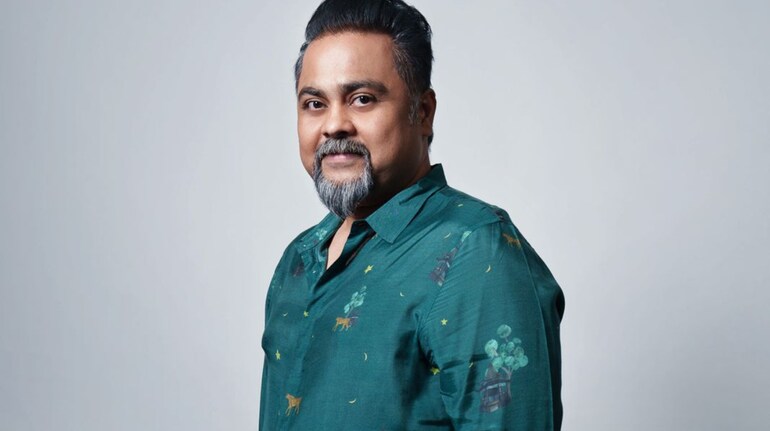
But Dipankar Mukherjee, CEO & Co-founder of Studio Blo, in an exclusive chat with Moneycontrol offered a far more nuanced, human-first vision of what the AI-powered future of cinema and advertising could look like.
Dipankar says at the heart of Studio Blo’s philosophy is that AI is not here to erase artists, but to protect, scale, and dignify creative labour.
From FAIMOUS, its AI celebrity cloning platform, to India’s first AI feature film Warlord, the studio is positioning AI as infrastructure, not authorship.
"The human remains the creative source. The clone becomes an asset," said Dipankar Mukherjee, underscoring a future where talent is treated as scalable intellectual property rather than expendable labour.
With legendary filmmaker Shekhar Kapur steering AI ethics and creative stewardship, and Hollywood collaborations expanding Studio Blo’s global footprint, Dipankar is clear-eyed about both promise and peril.
Also Read: The rise of Ranveer Singh: From Band Baaja Baaraat to Dhurandhar, making of a RS 1000 cr superstar
He also stressed that consent, traceability, and control are non-negotiable, as without them the industry risks collapsing the very trust it depends on.
In this wide-ranging conversation with Moneycontrol, he stressed on the fact that AI clones can co-exist with actors and also why India must move beyond 'low-cost AI labour,' and how storytelling will define the post-AI era.
Excerpts from the exclusive conversation:
Studio Blo is pioneering AI-driven storytelling and celebrity cloning through FAIMOUS. How do you see AI clones co-existing with real actors?
Dipankar: AI clones don’t replace actors. They replace unlicensed use, and turn a celebrity’s identity into a controlled, monetisable asset, with consent and traceability at the core. The human remains the creative source. The clone becomes an asset, like a digital stunt double, a brand ambassador, and a distribution channel rolled into one. Actors become scalable IP, not just “days on set.” A star can show up in 50 places without physically being there.
But without consent and control, AI cloning becomes dangerous, it amounts to identity theft, commoditisation of talent, and rights chaos. That’s why FAIMOUS is built on one principle: consent, traceability, and control. If we get this right, clones unlock scale with dignity. If we get it wrong, 'seeing is believing' dies, and that’s catastrophic.
Your collaboration with Hollywood producer Chad Greulach marks a global leap. What kind of IPs are you building, and where does India stand?
Dipankar: Chad brings deep Hollywood experience. Our first IP together is a series on Alyssa Carson, who’s training to be the first human on Mars. We’re also working with major musicians, talent agencies, and celebrity estates in the US for a 2026-plus slate. AI has democratised filmmaking, but India must drop the crutches of jugaad and ho jayega. My fear is that Indian AI studios become low-cost operators, repeating the IT outsourcing story. That would be tragic.
India should emerge as a storytelling superpower, with writers and cinematographers bringing a new global voice. Only then can we truly stand shoulder to shoulder with Hollywood.
With Shekhar Kapur leading AI Ethics & Creative Stewardship, what safeguards are essential as AI becomes a creative collaborator?
Dipankar: Consent, control, attribution, and representation are non-negotiable. Using a face, body, or style endlessly without permission isn’t innovation, it’s digital colonisation. Control is where ethics usually collapse. The moment a creator can’t approve or withdraw usage, AI starts hollowing out talent. Attribution still matters even when output is synthetic, AI amplifies authorship; it doesn’t erase it.
Representation is the most underestimated risk. Without human stewardship, AI flattens culture. Ethics isn’t a layer added later, it has to be baked into the system.
Studio Blo is developing India’s first AI feature film Warlord. How is AI transforming filmmaking—and what should it never replace?
Dipankar: We’re not chasing “firsts.” We’re focused on good stories and immersive worlds. Partnering with Shekhar Kapur on his first AI foray is a privilege. We’re traditional in story-building—great writers, designers, cinematographers. AI eases logistics like locations, lighting, and sets. Creative control remains human. Even with synth humans, we direct real performances and emulate them.
The question isn’t what AI can’t replace, but what it shouldn’t. Let’s pay writers and cinematographers more instead of burning budgets on logistics.
After 24 years in brand storytelling, what excites you most about AI for brands?
Dipankar: My favourite advice to copywriters is: write a Ridley Scott film for that 10-second brief. Audiences want entertainment. Brands are becoming content platforms. AI should help tell richer stories—not mediocre content at scale.
AI threatens traditional jobs. How do you balance innovation with livelihoods?
Dipankar: Disruption is inevitable. We’re partnering with global institutions to upskill film professionals. Every department must understand AI. Our real secret sauce isn’t the algorithm, it’s seasoned human talent. With understanding comes innovation, not obsolescence.
AI content is criticised for not having emotion, so how do you respond to it?
Dipankar: Comparing AI footage to shot footage is like comparing oil painting to digital art. Both can move audiences. I’ve seen people laugh, smile, and cry watching our AI content without knowing how it was made. Performance capture has suspended disbelief. When emotion comes through every pixel, that’s true validation.
How do you protect IP and celebrity likenesses in a piracy-prone ecosystem?
Dipankar: We follow global protocols, CSA AI Trustworthy Pledge, C2PA Coalition, and EU AI ethics frameworks. Security and traceability aren’t optional; they’re foundational.
Is AI-led cinema commercially viable without compromising art?
Dipankar: AI isn’t expensive to scale, it saves costs. The real question is how studios redistribute those savings. Do they hoard profits or reward human creators more? I hope it’s the latter.
If you could build an AI cinematic universe rooted in India, what would it be?
Dipankar: I’m tired of glowing gods and CGI palaces. AI isn’t for spectacle, it’s for complexity at scale. I’m drawn to pre-1947 espionage dramas and to the North East’s layered heritage. We’re also developing a multi-format universe—film, series, and gaming—based on ancient Indo-Tibetan lore across three time periods.
Who owns an AI-generated performance?
Dipankar: Ownership follows consent, contribution, and liability. If a real identity is used, that person or their estate is a rights holder. If it’s fully fictional, it’s like animation, the studio owns it. What it never belongs to is the AI. AI doesn’t intend or take responsibility. Giving it ownership would just dodge human accountability.
What’s the biggest ethical risk ahead? Are we prepared?
Dipankar: The biggest risk isn’t fake reality, it’s reality becoming optional. Trust erodes slowly. We’re not prepared enough. We need systems where origin and authenticity are clear from the start. Otherwise, the slow erosion of trust will cost us far more than any technology ever could.
As India steps into the next phase of global content creation, Dipankar says there should be a clear and practical roadmap and use AI to reduce inefficiencies rather than creative value.

Discover the latest Business News, Sensex, and Nifty updates. Obtain Personal Finance insights, tax queries, and expert opinions on Moneycontrol or download the Moneycontrol App to stay updated!
Find the best of Al News in one place, specially curated for you every weekend.
Stay on top of the latest tech trends and biggest startup news.





