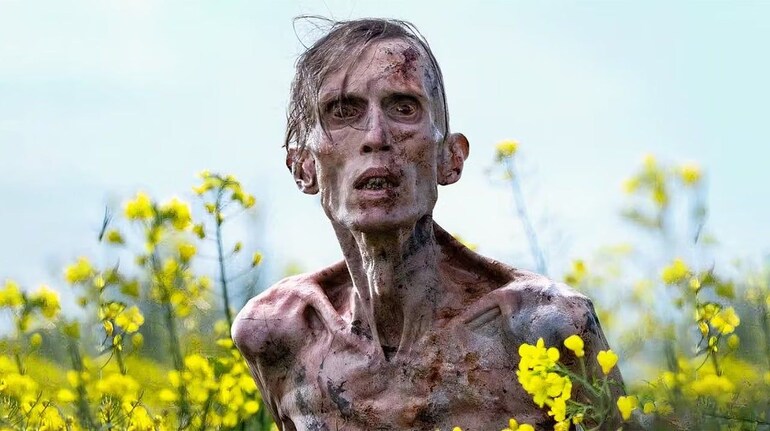
Eighteen years is a long wait, especially when it’s for a follow-up to a film that redefined the modern zombie horror genre. Danny Boyle returns to the director’s chair for ‘28 Years Later,’ the third installment in the cult-favourite ’28 Days’ series. The visual flair is intact, and the film opens with tremendous promise—unsettling, immersive, and shot with Boyle’s signature kinetic energy. But that momentum doesn’t carry all the way through.
Somewhere between trying to recapture the raw panic of the original and injecting a new emotional core, the film gets caught in two minds and ends up feeling disjointed. It’s not that the film lacks ambition—in fact, it’s packed with ideas—but the uneven tone and a lukewarm ending make it fall short of the legacy it hopes to uphold.
An island, a son, and a risky journeyThe story starts in the tranquil Scottish Highlands, a stark contrast to the chaos we remember from the earlier films. A community of survivors has carved out a peaceful life on an island that’s miraculously free from the Rage virus. Jamie (Aaron Taylor-Johnson), a protective father, lives there with his ailing wife, Isla (Jodie Comer) and their teenage son, Spike (Alfie Williams).
Wanting to prepare Spike for the real world, Jamie takes him to the mainland—a decision that sets off the events to follow. There, they quickly encounter remnants of the infected world, including the more evolved Alphas. While they survive and return, Spike soon learns of a mysterious doctor who might be able to cure his mother. Determined yet naive, he ventures back to the mainland with his mother, unknowingly putting them both at risk.
Strong ambience, uneven storyThere’s no denying Boyle’s command over atmosphere in the first act. The way he builds tension, especially during the mainland scenes, is masterful. The mix of folk horror and post-apocalyptic dread gives the film a unique texture. But things begin to unravel with the introduction of several undercooked subplots—particularly those involving Erik and Dr. Kelson—which sidetrack the core narrative. The emotional pull between a son and his mother is clearly meant to anchor the film, but it competes with the virus-thriller framework instead of blending with it. As a result, the tone shifts drastically in the second half, dragging down the urgency that had been built so well early on. Some character choices are also hard to digest, making the narrative feel contrived at crucial points.
Performances outshine the plotWhat holds the film together, despite its storytelling inconsistencies, are the performances. Aaron Taylor-Johnson brings quiet strength and vulnerability to Jamie, a father wrestling with guilt, fear, and hope. Jodie Comer as Isla gives a quietly affecting performance—frail on the outside, but with hidden reserves of steel that surface in the film’s final act. But it’s Alfie Williams as Spike who becomes the emotional anchor.
His performance is subtle yet powerful, portraying a mix of innocence, resolve, and desperation that’s hard to look away from. Ralph Fiennes appears in the final act as Dr Kelson, a character that’s part shaman, part cult leader—drawing parallels with Marlon Brando’s Colonel Kurtz in ‘Apocalypse Now.’ His presence adds a strange new layer to the film, though whether it’s entirely necessary is up for debate.
Ambitious but falls short‘28 Years Later’ isn’t an exceptional film. It’s beautifully shot, occasionally gripping, and filled with strong performances. But it carries the weight of its predecessors, and in trying to live up to two very different earlier films, it loses clarity of purpose. The first film had raw novelty and social commentary. The second thrived on relentless tension. This one wants to do both—and add emotional heft—but ends up spreading itself too thin. Still, Boyle’s direction and some performances keep it watchable. For fans of the series, there’s enough here to justify a return, but perhaps not enough to remember it by.
At its best, the film reminds us of why the original worked so well. At its weakest, it feels like a spin-off that’s trying too hard to be something else. It’s not the triumphant return one hoped for, but it's not without merit either. Maybe the Rage virus isn’t the only thing that’s evolved—the franchise has too, just not always in the right direction. It’s worth a watch for the atmosphere and acting, but don’t expect the genre-defining brilliance of the original.
Cast: Aaron Taylor-Johnson, Jodie Comer, Alfie Williams, and Ralph Fiennes
Director: Danny Boyle
Rating: 3/5
(’28 Years Later’ is playing in theatres)
Discover the latest Business News, Sensex, and Nifty updates. Obtain Personal Finance insights, tax queries, and expert opinions on Moneycontrol or download the Moneycontrol App to stay updated!
Find the best of Al News in one place, specially curated for you every weekend.
Stay on top of the latest tech trends and biggest startup news.