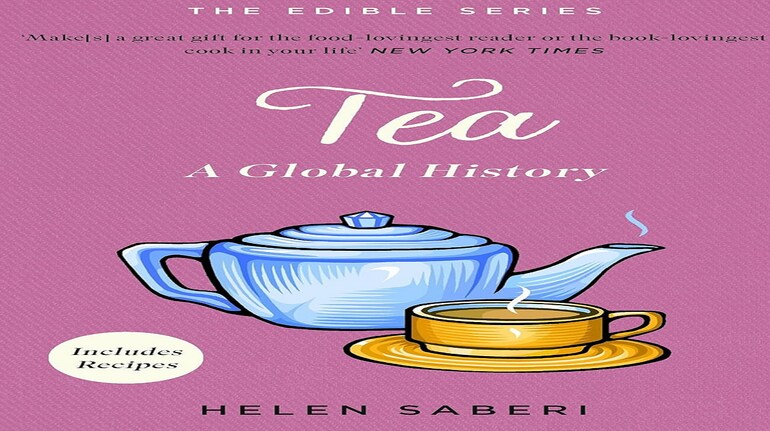
Book Extract: Excerpted with permission from Tea: A Global History (Edible Series) by Helen Saberi, published by PanMacmillan India.
The Tea Road
Another caravan trading route out of China is the Tea Road, sometimes called the Great Tea Route. In 1689 the Treaty of Nerchinsk between Russia and China opened up this road. Starting in Kalgan in northern China the road went northward through the Gobi Desert, then west across the taiga of Siberia, arriving at the cosmopolitan centres of the Russian empire. Even though the journey was long and arduous (taking more than a year), this road became a major trading route.
Furs and other goods were sent to China and traded for Chinese valuables, such as silks, medicinal plants (especially rhubarb) and tea.
The first samples of China tea are said to have been brought to Russia in 1616 by a Cossack called Tyumenets returning from a diplomatic mission to Mongolia. He reported that his mission ‘drank warmed milk and butter, in it unknown leaves . . . ’. Two years later, in 1618, a Chinese Embassy presented several chests of tea to the Russian court in Moscow. In 1638 the Mongol Khan sent 200 packets of tea as a precious gift to Tsar Mikhail Fedorovich. At that time very little was known in Russia about China and tea.
After the opening of the ‘Tea Road’ the amount of tea imported into Russia gradually increased. During the eight - eenth century, especially during the reign of Catherine the Great (r. 1763-96), tea became fashionable among the Russian nobility and eventually spread to other classes.
Until the 1850s Russia imported loose leaf tea packed into chests. Later this was replaced by brick tea made in Russian factories in Hankou. When the Trans-Siberian Rail way was completed at the beginning of the twentieth century the era of the camel caravan came to an end and tea was either transported by rail or shipped to the Black Sea port of Odessa. Tea plantations were established in Georgia at about the same time resulting in the spread of tea-drinking to all sectors of Russian society.
Russians evolved their own tea-drinking customs, the most important of which is the use of the samovar, meaning ‘self-boiler’ in Russian. The samovar is usually considered to be exclusively Russian but in fact it is used in the Central Asian states, Iran, Afghanistan, Kashmir and Turkey as well as other Slavic nations. Its origin is a matter of dispute. Some people believe it is of Oriental origin and suggest that Chinese and Korean vessels used for heating food were its forerunners. Other theories suggest that the ancestor of the samovar was a Chinese teapot that sat atop a brass charcoal burner or the Mongolian firepot which it resembles.
The samovar is a portable water heater traditionally made of brass (although some were made of silver and even gold). The water, which is poured into the reservoir, is heated by pine cones or charcoal fired through a central funnel. Boiling water is drawn off by means of a tap into a teapot containing tea leaves and then poured into porcelain cups or tea glasses. Sometimes the tea is made very strong and kept warm by placing the teapot on top of the samovar. A little of this strong tea is poured into cups or glasses and then diluted with boiling water from the samovar.
Samovars were not produced in large numbers in Russia until the late eighteenth century. Tula, a long-established metal working centre south of Moscow, became the centre of manufacture.
Russian tea is usually served steaming hot, without milk, but perhaps with a slice of lemon, in traditional glasses held in elaborately crafted metal cupholders with handles. It is the custom to serve tea with something sweet, often a spoonful of fruit preserve.
From Russia the samovar and tea came to Turkey although tea was also imported by sea from the south east. Turkey is usually associated with coffee-drinking but Turks are also great tea-drinkers.
It is thought that originally tea was brought to Anatolia as early as the twelfth century. The earliest mention of tea in Turkish literature was in 1631 and comes from the pen of the famous Ottoman travel writer Evliya Çelebi. He mentions that the servants at the Custom Offices in Istanbul offer visiting officials of the Empire, beverages like coffee from Yemen, saleb and tea.
By the nineteenth century tea became important in the daily life of the Ottoman Turks. It was served in private homes and in public places – tea rooms and tea houses blossomed.
Sultan Abdulhamid ii (1876–1909), although a coffee addict, showed keen interest in tea, especially its cultivation and realised its economic importance. Experiments in planting saplings and seeds were conducted in various parts of the Ottoman Empire and as they were brought from Russia (although originally a China tea) the tea was known as Moscow Tea. The eastern Black Sea coast area, which has a mild climate, high rainfall and fertile soil, proved to be ideal for growing tea. Unfortunately, due to troubled times and wars, cultivation was interrupted and it was not until the late 1930s that serious attempts were resumed. Atatürk, the founder of the Turkish Republic, encouraged home-grown tea as an alternative to imported coffee, which had become expensive and at times unavailable in the aftermath of the First World War. Turkey quickly became self-sufficient and in 1947 the Rize Tea Factory exported its first shipment abroad. Virtually all of the tea produced comes from the Rize province on the Black Sea coast, most of which is for domestic consumption. Today Turkey is the sixth largest tea producer in the world.
For those who do not have a samovar, a tea-kettle (çaydanlık) is used. Water is boiled in the kettle and poured over tea leaves in a demlik (tea pot), which is then placed on top of the kettle, allowing the tea to brew. The tea can then be served light or strong according to taste. For most Turks the ideal is a transparent rich red. A little tea is poured from the demlik into tulip-shaped glasses called ince belli, or occasionally porcelain cups, and then diluted according to the desired strength with boiling water from the tea kettle. The glass is usually held by the rim in order to protect the drinker’s fingers. The tea is often sweetened with sugar and sometimes served with a thin slice of lemon but never with milk. Serious tea-drinkers go to a tea house where a samovar is kept constantly on the boil.
Traditional herbal teas, including those made with apple, linden or lime blossom, rose hip and sage, are also popular. Recently an ‘apple tea’ was introduced to the local market especially for tourists. It has nothing to do with traditional Turkish tea. It is sweet, caffeine-free, slightly tart, with a mild apple flavour. Interestingly the list of ingredients doesn’t mention apple, only sugar, citric acid, food essence and vitamin c .
……
India, Sri Lanka and Indonesia
Tea consumption in north-eastern India probably dates back many centuries but not as the sort of drink we know. The hill tribes of this region (including Burma and Thailand) were using the wild tea plant to make a kind of pickled or fermented tea called miang or lephet. In the Himalayan regions tea was also drunk as a kind of thick soup similar to the butter tea of Tibet.
Dutch merchants first brought China tea to India early in the seventeenth century and it quickly became popular, although at that time it was considered a medicinal drink. Albert Mandelslo, a gentleman of the court of Holstein who visited the English trading post on the west coast at Surat in 1638, recorded:
At our ordinary meetings every day we took only Thé, which is commonly used all over the Indies, not only among those of the country, but also among the Dutch and the English, who take it as a drug that cleanses the stomach, and digests the superfluous humours, by a temperate heat particular thereto.
The Reverend John Ovington, who was chaplain at Surat between 1689 and 1693, was an early enthusiast of tea drinking. In his book Voyage to Surat in the Year 1689, he records:
Tea likewise is a common Drink with all the Inhabitants of India, as well Europeans as Natives; and by the Dutch is used as such a standing Entertainment, that the Tea-pot’s seldom off the Fire, or unimploy’d.
He also explains how the Banians, members of a trading caste took their tea:
with some hot Spice intermixt and boiled in the Water, [it] has the Repute of prevailing against the Headach, Gravel, and Griping in the Guts, and ’tis generally drunk in India, either with sugar-Candy, or, by the more curious, with some Conserv’d Lemons.
After his return to England Ovington did much to popularise tea by means of an essay he wrote in 1699: An Essay upon the Nature of Qualities of Tea.
But both Mandelslo and Ovington were mistaken in their assumption that tea was a common drink in India. It was not until the mid-nineteenth century that the British discovered that the tea plant was indigenous to north-east India as well as to China and it was not until the mid-twentieth century that tea became a drink for the masses in India.
As early as 1774 the East India Company was exploring the possibilities of growing tea in other countries apart from China and sent a few seeds to the British emissary in Bhutan to plant there. Several years later Sir Joseph Banks, the famous British naturalist, was engaged to recommend crops to the East India Company that might be grown for profit and he suggested tea. However, little was done for nearly fifty years.
It was a Scottish major called Robert Bruce who, while working in Assam in 1823, noticed that the inhabitants were making tea from a plant which looked similar to the Chinese Camellia sinensis. (It was the Assam variety.) There was much confusion about the tea plant. The English thought black and green tea came from two different species and dubbed the indigenous Indian plant Bohea (a black Chinese tea). The two plants differ in that the Chinese plant has smaller leaves than the Indian.
Robert Bruce died in 1824 but not before he had told his brother Charles about his discovery and had sent him some seeds. Charles arranged for some of these plants to be cultivated in the botanical gardens of Calcutta. Convinced that this was tea, he informed the government in 1832.
In the 1830s the British East India Company became concerned that they might lose the monopoly of the China trade. There was a great demand for tea in Britain and it was in her interests that tea cultivation be established in India. In 1834 the Company was indeed stripped of its monopoly and a Tea Committee was set up. A plan was developed to introduce tea culture into India. Opinions were divided as to whether the Chinese tea plants or the Assam variety should be cultivated. Some insisted that only the China plants were good enough for commercial production and that native plants would yield an inferior tea. Others favoured cultivating the Assam tea plant which would be much better suited to local conditions.
Many mistakes were made. China plants were chosen for experimental plots but then there was disagreement about where they should be planted. The plants imported from China fared badly. Some died on the way, others were planted in poor soil, but a few survived. Another mistake was bringing in Chinese workers to work on the plots. The English assumed that all Chinese people would know about growing and producing tea, which of course was not the case. Many knew nothing about tea. However, despite these problems the first black tea produced from Chinese plants was processed and several tea chests were shipped to London and delivered in 1838. The consignment was auctioned at India House in January 1839. The Assam Tea Company was formed in 1840 and established its own plantations in Assam.
Although tea was much consumed in Europe and America very little was known about it and in an attempt to learn more a Scottish botanist called Robert Fortune was sent to China in 1842. In 1848 he was sent again by the East India Company specifically to obtain the finest tea plants to be grown. At that time travel for Europeans within China was much restricted by the Chinese government and it was forbidden for anyone to purchase tea plants. Fortune, who had become well acquainted with China, the people and the language, managed to penetrate the tea-growing areas by travelling in disguise. It was an early instance of industrial espionage and he managed to smuggle out a large quantity of seed and 20,000 seedlings to the East India Company’s Himalayan plantations.
Fortune’s book A Journey to the Tea Countries of China in 1852 gives an account of his quest and adventures. Here he describes how a Taoist priest who had given him hospitality gives him some tea plants, much to his delight:
He went out to his tea plantations and brought me some young plants which he begged me to accept. I felt highly pleased . . . and gladly accepted the plants, which increased my store very considerably; these with the other plants were carefully packed with their roots in damp moss, and the whole package was then covered with oil-paper. The latter precaution was taken to screen them from the sun, and also from the prying eyes of the Chinese . . .
Both Chinese tea plants and the local Assam variety were cultivated but the Assam plants proved more successful and gradually took over. In the 1860s tea plantations were developed in other parts of India, notably Darjeeling. Tea mania struck and entrepreneurs scrambled to set up tea plantations in order to make their fortunes. But it was not until the 1870s that the tea industry in India stabilized and finally began producing good-quality tea at a profit, and tea-drinking by the British in India got under way. It was drunk in the same way as it is today in Britain, with milk and sugar (in India the sugar might be in the form of jaggery or date palm sugar). Sometimes spices and other ingredients were added. Bea - trice Vieyra in her book Culinary Art Sparklets, published in India in 1904, gives a recipe for Cutchee Tea that includes not only milk and sugar but almonds, sago, cardamom pods and rosewater.
During the nineteenth century many British women travelled to India, often in search of husbands. They brought with them the tradition of afternoon tea, which became embedded in colonial life. It was usually served after tiffin. (Tiffin is an Anglo-Indian term used in parts of India to mean lunch, but it can also mean a light snack in the middle of the day or in the afternoon.) Flora Annie Steel describes a typical Anglo-Indian tea in her book The Complete Indian Housekeeper and Cook (1888): ‘In regard to eatables, plain bread and butter should invariably be a standing dish. Many people do not care for cakes, and yet find a cup of tea or coffee better for something to eat with it.’
In Indian cities and at hill stations the British set up exclusive clubs centred on sports, the bar and the dining room.
Afternoon tea was served in wood-panelled rooms, on shady verandas, or out on manicured lawns accompanied by typical Anglo-Indian fare such as club sandwiches, toasts grilled with toppings of garlic, green chillies and grated cheese, and, always, spicy pakoras, samosas and English cakes. Tea planters established clubs too, like the Darjeeling Club and High Range Club in Munnar.
In British India the day began early, often before dawn with chota hazri (‘little breakfast’), sometimes called ‘bed tea’. Servants brought an early morning pot or cup of tea with milk and sugar and perhaps some fruit or a biscuit for their employers, often administrators or army officers, who liked to work in the cool period before sunrise. For travellers on Indian trains chota hazri became an established custom, as it did with those who went riding before the main breakfast, which was served at about 9 or 10 o’clock.
Tea-drinking was strongly associated with the British in India but for the Indian population tea was too expensive and tea-drinking was slow to be taken up. In 1881 the Tea Association of India was set up to formulate policies for the development and growth of the tea industry, but it wasn’t until 1901 that they realized that there was potentially a large market for tea in India. They set up a marketing campaign by employing a superintendent and two ‘smart European travellers’ to visit grocers and persuade them to stock more tea. This early campaign was not very successful and it was not until the First World War that the campaign began to gain momentum and to show some signs of success. Tea stalls were set up in factories, coal mines and cotton mills and workers were allowed tea breaks. On the Indian Railways, the Tea Association equipped small contractors with kettles and cups and packets of tea and set them to work at the major railway junctions in the Punjab, the North-West Frontier and Bengal. Tea vendors would call out ‘Char! Gurram, gurram char!’ ‘Tea hot, hot tea!’ as they walked down the platform. The first thing rail passengers hear on waking up on a train in northern India is the chai wallah, calling out ‘chai, chai, chai’ as he strides through the carriages with his kettle swinging in one hand and glasses in the other.
Tea shops were set up in the large towns, cities and ports. But it was not until the 1950s that tea became the drink of the masses. Today tea is a normal part of everyday life of India. It is brewed at railway stations, bus stations, bazaars, offices and sold by the chai wallahs, who usually do not have much more than a simple table, perhaps a rickety chair or bench and a portable stove. They watch over their kettles, buffalo milk and sugar and keep the tea (which is boiled with the milk and sugar) at the correct strength and temperature by adding more hot water, then more milk or sugar as needed, constantly adjusting the proportions. The chai is served in ‘disposable’ low-fired clay cups called kullarhs. These are made by hand out of native clay in open fires. Customers sip the hot, milky, sweet tea and then throw away the empty cups. Tasty fried snacks such as samosas and bhel poori are often served with the tea. This ‘railway tea’ is the most common tea in India. Masala chai has spices added and this is particularly popular in the Punjab, Haryana and elsewhere in northern and central India; in eastern India (West Bengal and Assam) tea is generally drunk without spices.
Irani Cafes
At the end of the nineteenth century and the early twentieth century Zoroastrian immigrants came to Bombay from Iran in search of a better livelihood. (Bombay was also home to another Zoroastrian community, the Parsis, who had come to India from Iran from the eighth century onwards.) Known as Iranis, they were quick to recognize a good business opportunity in providing workers of the city with tea and a variety of snacks from small stalls on street corners. Later they moved into shops which became known as ‘Irani’ cafes or restaurants. They are furnished with marble-topped tables and bent teakwood chairs; the walls are typically adorned with portraits of Zoroaster and full-length mirrors. On the walls, or over the sink where you wash your hands at the back, might be an officious notice or set of instructions. Nissim Ezekiel’s poem ‘Irani Restaurant Instructions’ sums up the brisk, yet welcoming essence of the Irani cafe:
Please
Do not spit
Do not sit more
Pay promptly, time is invaluable
Do not write letter
Without order refreshment
Do not comb
Hair is spoiling floor
Do not make mischiefs in cabin
Our waiter is reporting
Come again
All are welcome whatever caste
If not satisfied tell us
Otherwise tell others
god is great
Irani cafes became well known for their strong milky sweet tea called paani kum chai. Paani kum means boiled in milk. At first the Iranis made their accustomed weak tea but the Indians, who preferred strong milky sweet tea, always asked for tea made with less water. So paani kum chai was born out of the needs of the customer. Also served are bread buns split and spread with butter called brun maska, which are so crusty they are dunked into the tea. Coffee, cakes and salted biscuits were also on the menu as well as Parsi specialties such as akoori (spicy scrambled eggs). These cafes became well known in Bombay and later in Hyderabad. Sadly, from an estimated 350 cafes in the 1950s barely 25 have survived today.
Tea is also consumed in the home. Although tea was slow to be accepted in south India, and took second place to coffee for a long time, tea is often served with tiffin, especially in Andhra Pradesh and Tamil Nadu. It is customary to be offered a ‘tiffin’ as a courtesy when you visit a Tamil resident. ‘No day is complete without tiffin, an afternoon snack, to fill the gap between lunch and dinner. There are mobile carts, coffee shops, sweetshops and cafes on every street in Madras, selling sweets and savouries with coffee and tea.’
The tradition of afternoon tea continues in West Bengal. Middle- and upper-class Bengalis drink tea accompanied by Western-style cakes and Indian savoury snacks.
****
Helen Saberi Tea: A Global History (Edible Series), published by PanMacmillan India, 2025. Pb.
Tea is sipped, whisked, boiled, iced, flavoured, spiced, mixed with milk and sugar, or enjoyed with salt and butter across various geographies. It is an essential element of both ceremony and leisure in various cultures – a universal symbol of harmony and hospitality.
But do not be deceived by its unassuming appearances, food historian Helen Saberi warns us – tea has a rich and vivid history steeped in ritual and religion, adventure and enterprise, smuggling and revolution, literature and social change. From its legendary beginnings in China to the role of India in bringing this prized plant to the world; how it came to symbolize the American pursuit for independence, and finally, the myriad varieties of tea being cultivated everywhere from Argentina to Zimbabwe today – tea has truly established itself as a binding global cultural force.
This concise volume maps the evolution of tea-drinking and hospitality, tracing the history of its trade along ancient caravan routes, its arrival in the West aboard clipper ships, the various traditions around tea gardens, teahouses, tea dances and the British afternoon tea, the invention of tea bags and iced tea, and the newest addition to this marvellous legacy – the bubble tea. With vivid illustrations and recipes from around the world, Tea is a rejuvenating treat for curious minds.
India's tea trade is the second-largest producer of tea globally and among the top 5 tea exporters globally, contributing about 10% of total global tea exports. India's tea industry is a major employer, with over 3.5 million people involved in tea production, cultivation, and processing.
As of 2022, a total of 6.19 lakh hectares of area was cultivated in India for tea production. India is also among the world's top tea-consuming countries, with 80% of the tea produced in the country consumed by the domestic population. In FY24, India’s tea production stood at 1,382.03 million kgs, compared to 1,374.97 million kg in FY23, whereas during FY25 (April-December) production stood at 1,186.62 million kgs.
India's total tea exports during FY24 in quantity were 250.73 million kg and worth US$ 776 million. During the FY25 (April-December), quantity of India’s total tea exports stood at 187.14 million kg worth US$ 627.36 million. In FY24, the unit price of tea was US$ 3.10 per kg, whereas during FY25 (April-December) the unit price stood at US$ 3.36 per kg.
From April-December 2024, the total value of tea exports from India stood at US$ 627.36 million. Indian Assam, Darjeeling, and Nilgiri tea are considered one of the finest in the world. Majority of the tea exported out of India is black tea which makes up about 96% of the total exports. The types of tea exported through India are black tea, regular tea, green tea, herbal tea, masala tea and lemon tea. Out of these, black tea, regular tea, and green tea make up approximately 80%, 16% and 3.5% of the total tea exported from India.
India exports tea to more than 25 countries throughout the world. Russia, Iran, UAE, USA, the UK, Germany, and China are some of the major importers of tea from India. During FY25 (April-December) UAE, USA, Iraq, UK and Russia imported US$ 123.31 million, US$ 70.97 million, US$ 61.2 million, US$ 51.40 million and US$ 51.29 million of tea from India, respectively. UAE, USA, Iraq, UK and Russia are India's top 5 tea export destinations with a share of about 17.90%, 10.30%, 8.93%, 7.46% and 7.45% of total export, respectively.
Some of India's other tea export destinations are Poland, Canada, Saudi Arabia, Egypt, Afghanistan, Bangladesh, China, Singapore, Sri Lanka, Kenya, Japan, Pakistan, and Australia, etc.
The Edible Series is a fascinating collection of books that PanMacmillan India is making available locally. Although these originated in the UK with the incredible Reaktion Books making it a sturdy and regular offering in their frontlists. But it seems that this series has proven to be a steady bestseller, so the back and front lists exist side by side. The template it fairly simple with a detailed and concise history of the food. These are heavily illustrated with four-colour images that complement the written text beautifully. There are images from historical sources, contemporary sources, photographs, illustrations etc as some of the images accompanying this book extract show. At the end of every book there is a collection of recipes — a combination of the familiar and unfamiliar as the authors prefer to give a balanced representation to the geographies where the food under discussion is to be found/cooked/consumed. It is truly remarkable that in the internet age when recipes are to be easily found on the internet as well as histories, a print book series on food history has found its niche and continues to sell.
Helen Saberi is a London-based food historian and food writer. Her books include Afghan Food and Cookery; Trifle (co-authored with the late Alan Davidson); The Road to Vindaloo: Curry Cooks and Curry Books (co-authored with David Burnett) and Tea: A Global History. Her latest book, co-authored with Colleen Taylor Sen, is Turmeric: The Wonder Spice.
Discover the latest Business News, Sensex, and Nifty updates. Obtain Personal Finance insights, tax queries, and expert opinions on Moneycontrol or download the Moneycontrol App to stay updated!
Find the best of Al News in one place, specially curated for you every weekend.
Stay on top of the latest tech trends and biggest startup news.