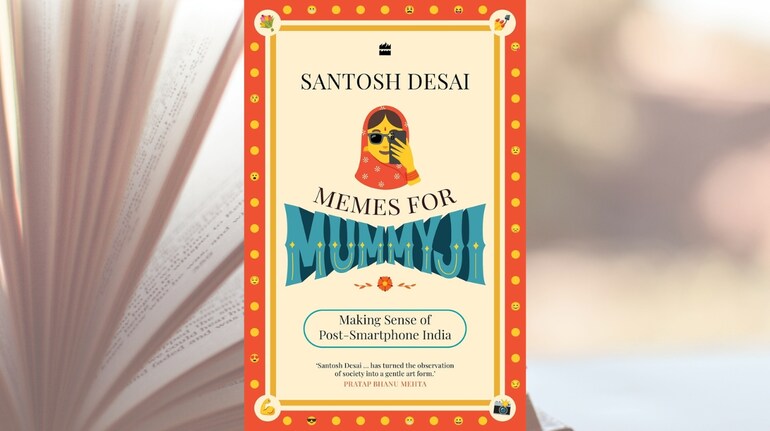
Excerpted with permission from the publisher Memes For Mummyji: Making Sense of Post-Smartphone India Santosh Desai, published by HarperCollins India.
***
THE MORE WE CONSUME, THE LESS IT’S MEANINGFUL
COME DIWALI, AND CONSUMPTION IS in the air. Bazaars are swollen with shiny merchandise, everything glitters in its thrall and everyone looks like mithai. And yet, the desire for things, while exhibiting an avidness that seems to keep growing, lacks something. Things lose lustre very quickly; we buy things and get bored, and as a way out of that boredom and as a way of passing time, buy some more things. This is true of many kinds of new things – traditional stuff like clothing or new technologies that come with frequent upgrades. The next big thing is awaited with anticipation, and gets absorbed into our lives virtually instantly, without creating a sense of satisfaction.
It is a strange paradox. Consumption is a much bigger factor in our lives today; we attach exaggerated significance to our own selves, and everything we buy is a tribute to our magnificence. Consumption is today an act of curating the self-building identity blocks bit by bit, as we define who we are through what we buy. Traditional sources of identity are being gradually hollowed out, and the new sources are those that can be acquired. The car we drive, the brand we wear, where we holiday – these are all things that add up to define who we are. The selfies we click are an anxious document of our own work, and we can never click enough selfies to satisfy ourselves.
But there used to be a joy about buying something, a sweetness in the act of putting one’s heart into every act of purchase, that seems missing now. Scarcity created desire of a kind that burned slowly and long, eating up one’s insides in a quiet way. Things burrowed their way into us by not being there, their absence creating a palpable space that cried out to be filled. By the time something was bought, it had already been consumed several times over in one’s imagination. Things lived twice over, once as yawning absences and then as presences that were made to linger, till every last drop of juice was extracted from it.
The idea of the new had a magical quality – it was a miracle that needed to be preserved, nurtured, taken pleasure in for as long as one could. The new was a different state of being; it beamed with a sense of inner bliss, rubbing off its alchemic power on the proud owner. When consumption becomes a habit, things change. When was the last time someone said ‘new pinch’ to you? There is no need for inflicting compensatory pain in a world where the new is no big deal.
I don’t know if other people do it, but I find myself putting myself in the shoes of my adolescent pre-liberalization self and seeing the world that I inhabit today with those wide eyes. This is the only way that consumption begins to become meaningful. How would those eyes see the way one lives today? If only one could extract the same kind of pleasure from consumption that one was able to earlier, then the greater ability to consume today would have some meaning. One recalls the pleasures of consumption without now being able to summon anywhere near the same intensity of feeling that it once evoked.
The pleasure of having a ten-rupee note in one’s pocket, the heat that ‘jeb-garmi’ generated, the cornucopia of possibilities that nestled within one’s grasp, cannot be recaptured in any way. No amount of actual money today can measure up to the feeling of wealth that was experienced then. For the middle-class children of this generation, money has material value, but they are equally aware of the limits of what it can buy. The ladder of desires today is far too high for any amount to be really meaningful, but in the days gone by, it took little for money to feel infinite. Consumption is a currency today, and the idea of an ascending array of choices makes it impossible for desire to be terminally quenched. One never has the latest, the best or the most expensive or most exclusive version of one’s desired object or experience. In an earlier time, consumption was a terminal destination; for instance, once a car was bought, that was the end of that.
The idea of affluence in India is that state where every act of spending does not automatically need to be filtered through the lens of affordability, when one can spend without thinking about it. A little treat here, an impromptu vacation there, something that one ‘picks up’ on a whim, buying a spare set ‘just in case’ – these are the true luxuries for a generation that grew up worrying about spending any money whatsoever.
There is, of course, a vast section of society that is experiencing this new found ability to consume for the first time today. The lament of being jaded about consumption is the privilege of a fortunate few. For the rest, consumption is a vital force that courses through the lives of people, giving it energy and purpose. The power of consumption is that it is a universally accessible language, and is able to dot every day with a sense of progress. Every act of consumption becomes an affirmation of one’s upward journey, a granular map of one’s gradual ascent in life.
For those who have been consumers for a while, new games have to be invented for consumption to have meaning. We buy things not because of what they are but because of who we want to be. Increasingly, consumption is overtly about creating meaning. We buy brands that tell us stories about ourselves, and pay premiums to hear a good story told well. The irony is that the more we consume, the less its power to deliver meaning. When we barely consumed anything at all, consumption had the most meaning. Consumption today is the smoke that we blow at the mirror called the self.
**********
Santosh Desai, Memes For Mummyji: Making Sense of Post-Smartphone India, HarperCollins India, 2025. Pb. Pp. 400
A portrait of India in mid-sentence — caught between tradition and transformation, noise and nuance.
From selfies and what they mean to the travails of modern love and the new vocabulary of politics, Santosh Desai returns to chronicle the invisible revolutions of Indian life with his signature wit and insight. In Memes for Mummyji, he explores how the mobile phone — now as common as the pressure cooker — has quietly reshaped everything: how we shop, flirt, pray, protest, and parent.
This is not a book about technology. It's about us. Our habits, our contradictions, our new-found freedoms - and the deep cultural software that still runs underneath. Warm, keenly perceptive and deeply human, this book, with essays drawn from over a decade of observation, is a love letter to the everyday theatre of Indian life in the digital age.
Santosh Desai, author of the book Mother Pious Lady: Making Sense of Everyday India and the columnist behind the long-running column ‘City City Bang Bang' in The Times of India, is regarded as one of India's leading social commentators. His work documents the changes India is going through, viewed from the lens of everyday life. In another life, he is one of India's foremost brand thinkers, having spent over two decades in advertising and eighteen years in brand consulting. He is also a founder at Think9 Consumer Technologies, a company that helps early-stage start-ups to scale up. He is a graduate in economics and a management graduate from IIM-Ahmedabad.
Discover the latest Business News, Sensex, and Nifty updates. Obtain Personal Finance insights, tax queries, and expert opinions on Moneycontrol or download the Moneycontrol App to stay updated!
Find the best of Al News in one place, specially curated for you every weekend.
Stay on top of the latest tech trends and biggest startup news.